
As voters prepare to choose their governor next Saturday in Osun State, the bigger question is whether Nigeria’s electoral umpire can translate its technological investments and institutional reforms into an election whose credibility survives the pressure of money, logistics and political power
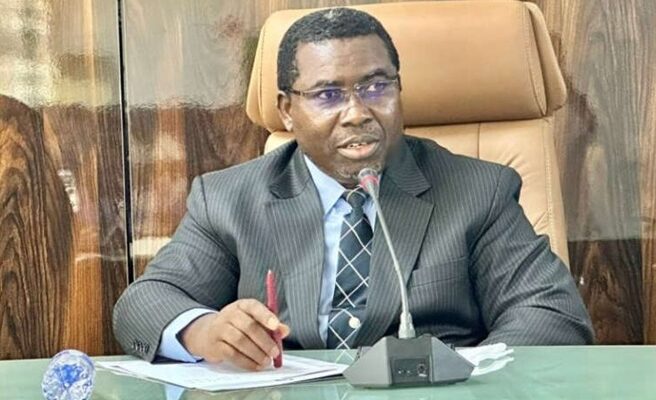
For the Independent National Electoral Commission (INEC), the Osun State governorship election is no longer merely another off-cycle poll. It is becoming a referendum of sorts on how far Nigeria’s electoral administration has evolved and how much remains unresolved. When voters go to the polls next Saturday, August 15, they will determine who occupies the Government House in Osogbo. But for INEC and its Chairman, Professor Joash Amupitan, the significance of the election stretches beyond the contest between Governor Ademola Adeleke, All Progressives Congress (APC) candidate Bola Oyebamiji and other contenders.
The election is a test of whether the commission can simultaneously manage technology, logistics, security, political pressure and the increasingly sophisticated practice of vote-buying. That concern became more pronounced on Friday when INEC expressed worry over the growing threat of vote-buying, warning that the practice could undermine the credibility of the election if not decisively checked.

The warning deserves more than the routine attention usually given to pre-election statements. It goes to the heart of Nigeria’s democratic problem. For all the investment in biometric accreditation, electronic transmission of results and other technological interventions, the integrity of an election can still be compromised before a voter ever places a ballot in the box. And this is precisely where Osun presents INEC with one of its most difficult challenges.
The enemy is no longer simply ballot-box snatching Nigeria’s electoral conversation has changed. A decade ago, much of the public anxiety surrounding elections centred on ballot-box snatching, stuffed ballot papers, intimidation and manipulation of result sheets. Technology has made some of those practices more difficult. But political ingenuity has not disappeared. It has moved. Vote-buying has become one of the most persistent threats to electoral credibility, particularly in an environment where economic hardship makes cash inducement attractive to vulnerable voters. The sophistication of the practice also makes it difficult to police. Money may be distributed through party agents, intermediaries, community influencers or informal networks. In some cases, voters may be identified before election day and monitored after voting. Allegations involving oaths, photographs and other mechanisms designed to establish whether voters complied with agreements have further complicated the landscape.
Reports emerging in the final days of the Osun campaign illustrate the intensity of the problem, with political parties trading allegations over an alleged video involving voters and oath-taking. The claims and counterclaims remain politically contested and should not be treated as established facts.But the controversy itself reveals the atmosphere surrounding the election. The more competitive an election becomes, the greater the incentive for political actors to deploy every available instrument of mobilisation. And Osun is expected to be competitive. That is why INEC’s warning matters.
The commission can regulate polling officials, enforce electoral guidelines and deploy technology. But it cannot, by itself, arrest every individual allegedly attempting to buy a vote. That responsibility rests substantially with the security agencies. The success or failure of Osun’s anti-vote-buying effort will therefore depend on whether the police and other relevant agencies treat vote-buying as a serious electoral crime rather than an inevitable feature of Nigerian elections.
The Independent Corrupt Practices and Other Related Offences Commission has also indicated that it will deploy personnel to monitor and combat vote trading. That is encouraging. But enforcement must go beyond election-day arrests. If political actors understand that the worst consequence of buying votes is the occasional arrest of a few agents, the incentive remains intact. The real deterrent is prosecution. Technology cannot compensate for weak logistics
INEC’s technological preparations for Osun are among the most visible aspects of its readiness. The commission has configured thousands of Bimodal Voter Accreditation System devices for the election, with additional units available as backups. Earlier figures put the deployment at 4,427 devices, including 664 backup units, for 3,763 polling units. The commission has also insisted that there will be no return to manual accreditation, reinforcing BVAS as the principal gateway through which voters must be authenticated before casting their ballots. This is an important institutional position. It demonstrates that INEC is not retreating from the technological architecture developed over successive elections. But technology, by itself, does not conduct an election, People do and people need roads, transport, communications, power, secure storage, reliable network connectivity and properly coordinated deployment systems.
This is the less glamorous side of electoral administration, but it is often where credibility is won or lost. A BVAS device may be perfectly functional in an INEC warehouse and still fail the democratic process if an election official cannot reach the polling unit on time. A polling unit may have all its materials and still disenfranchise voters if communication infrastructure is inadequate or security concerns prevent officials from deploying. The lesson is straightforward: electoral technology is only as effective as the infrastructure supporting it. This is particularly important in rural and difficult-to-access communities. INEC’s preparations have reportedly progressed significantly, including the receipt of a substantial proportion of non-sensitive materials. The commission has also extended PVC collection and declared itself ready for the election. Those are positive indicators. But election readiness is not a declaration. It is an outcome.
Nigerians will judge the commission not by how many materials it says it has received or how many BVAS devices it has configured, but by whether polling units open on time, voters are properly accredited, materials arrive securely and results are transmitted in accordance with the rules. That distinction matters. Osun should be viewed through the lens of Ekiti. The immediate reference point for INEC is the Ekiti governorship election. The commission conducted the June poll successfully enough to produce a clear result, but allegations surrounding vote-buying and technological difficulties ensured that the election was not free from controversy.
The lesson for Osun should not be that technology failed. Nor should it be that technology solved everything. The lesson is that modern electoral administration requires several systems to work simultaneously. A credible election requires functional technology, trained personnel, secure logistics, professional security agencies, transparent result management and political actors willing to respect the rules.
A weakness in any one of these areas can contaminate public confidence in the entire process. This is why Osun presents Amupitan with an unusual opportunity. He does not need to promise Nigerians a perfect election. That would be unrealistic. What he must demonstrate is an electoral institution capable of detecting problems, responding quickly and explaining its decisions transparently. The quality of an electoral commission is not measured by the absence of every technical problem. It is measured by its resilience when problems occur.
The security question
The security environment is perhaps the most unpredictable element of the election. INEC has repeatedly warned political actors against violence, while security authorities have urged contestants and their supporters not to turn the election into a contest of force. The Inspector-General of Police has also issued warnings as political tensions rise, while concerns over possible violence have grown in the final days before the poll.
This is significant because election violence does not have to be widespread to damage credibility.
A few strategically targeted incidents can be enough to discourage voters in particular communities.
Once voter turnout becomes artificially suppressed in specific areas, the legitimacy of the eventual result may come under suspicion. Security agencies must therefore understand that their responsibility extends beyond preventing violence. I They must protect the right to vote.
That means ensuring that voters can reach polling units safely, election officials are not intimidated, political agents do not take over polling locations and security personnel themselves remain politically neutral. INEC can only conduct a credible election if the security architecture around it works.
The political neutrality test
There is another challenge that cannot be measured by BVAS statistics. It is perception. INEC’s credibility depends not only on whether it acts impartially, but on whether contestants and voters believe that it acts impartially. This becomes particularly important in an election involving a sitting governor and a major opposition party backed by the Federal Government. Every administrative decision from the movement of materials to accreditation, collation and result declaration will inevitably be subjected to political interpretation.
That is why INEC must communicate more, not less. Where there is a delay, explain it. Where a technical problem occurs, disclose it. Where a complaint is unfounded, say so. Where an official violates the rules, take action. Silence creates a vacuum, and political actors are usually more than willing to fill that vacuum with their own narratives. In an increasingly polarised electoral environment, transparency is therefore not simply a public-relations strategy. It is an electoral safeguard.
The 2027 shadow over Osun
Ultimately, however, the importance of Osun lies in what comes next. 2027 is already looming over Nigeria’s political landscape. The next general election will be exponentially more complicated than any governorship election. It will involve presidential, National Assembly and state legislative contests across the federation, with millions of voters and tens of thousands of polling units.
If INEC is to persuade Nigerians that the lessons of 2023 have been absorbed and that the institution is prepared for the enormous logistical and technological demands of 2027, it must demonstrate measurable improvement in smaller elections. Osun is therefore a laboratory. Its electorate is large enough to expose weaknesses but sufficiently manageable to permit close institutional scrutiny. The state has 30 local government areas, 332 wards and 3,763 polling units, with more than 2.3 million registered voters. What happened on August 15 should therefore be studied beyond the question of who wins.
INEC should conduct its own post-election audit. Where did logistics succeed? Where did they fail? How many BVAS devices malfunctioned? How quickly were replacements deployed? How many polling units opened late? What was the principal cause? Where were vote-buying incidents reported? How did security agencies respond? How many complaints were resolved on election day?
Those are the questions that can transform an election from an isolated political event into institutional learning.
Beyond the commission
There is, however, a danger in making INEC the villain or hero of every Nigerian election. The commission matters enormously, but it does not operate in a vacuum. Political parties determine whether campaigns become violent or issue-based. Candidates determine whether voters are treated as citizens or commodities. Security agencies determine whether electoral laws have consequences. Courts determine whether violations are ultimately punished. Civil society and the media determine whether abuses are documented accurately. And voters themselves retain perhaps the most important responsibility: refusing to surrender the long-term value of their democratic choice for the temporary benefit of election-day inducements.
That last point is particularly difficult in a country where economic hardship is real. It is easy for political elites to condemn a voter for accepting ₦5,000 while ignoring the circumstances that make the money meaningful to that voter. But the answer cannot be to normalise vote-buying. If democracy is to produce accountable government, the vote must remain a political instrument rather than a tradable commodity. That requires both enforcement and broader political reform.
The real verdict
The Osun election will ultimately produce one winner. But INEC faces a separate contest. Its opponent is not Adeleke, Oyebamiji or any other candidate. It is the accumulated distrust of Nigerians who have watched electoral reforms promise more than they sometimes deliver. The commission has invested in technology. It has strengthened biometric accreditation. It has expanded backup capacity. It has intensified stakeholder engagement and repeatedly promised a credible poll.
Now comes the difficult part: delivery. The challenge before Professor Amupitan is to ensure that the sophistication of the commission’s electoral technology is matched by the quality of its human and logistical systems. He must also ensure that the fight against vote-buying does not become another pre-election warning that disappears once voting begins.
The police and other security agencies must demonstrate that electoral offences have consequences. Political parties must recognise that winning an election through inducement or intimidation may produce political power but cannot produce democratic legitimacy. And INEC must remain sufficiently transparent to make it difficult for either side to manufacture a narrative of electoral manipulation where none exists.
Osun, in that sense, is bigger than Osogbo. It is a test of whether Nigeria’s electoral system is learning. It is a test of whether technology is genuinely strengthening the ballot. It is a test of whether security agencies can protect voters without becoming political actors. It is a test of whether political parties are prepared to compete without turning citizens into commodities.
Above all, it is a test of whether INEC can convert institutional promises into public confidence. Next Saturday, the people of Osun will decide who governs them. But, in another sense, the election will also ask INEC a question of its own: Can Nigeria’s electoral umpire make the ballot more powerful than the money, fear and political machinery surrounding it? The answer will matter long after the final result is declared. It may, in fact, be one of the clearest indications yet of what Nigerians should expect when the much larger battle for 2027 finally arrives.
– Ajuluchukwu Brown
The Guardian, Abuja