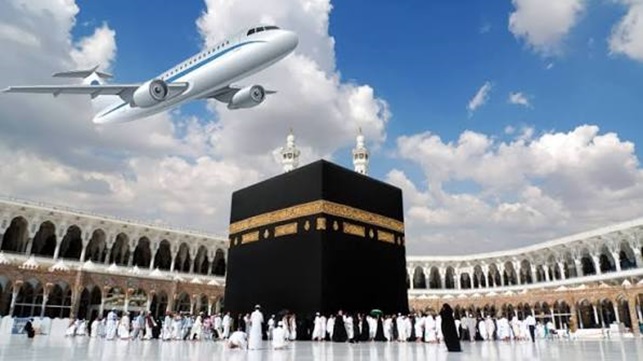

The Kingdom of Saudi Arabia appears to be moving decisively toward a new era in Hajj administration. After years of dealing with thousands of Hajj and Umrah companies from more than 160 participating countries, many of which struggle with operational deficiencies, the Ministry of Hajj and Umrah is now pursuing a policy of reducing the number of operators while raising service standards in line with Saudi Vision 2030.
The Ministry has also released updated operational requirements for foreign companies participating in Umrah activities. These requirements closely mirror the new Hajj regulatory framework, underscoring Saudi Arabia’s intention to harmonize standards across both pilgrimages.
Bangladesh offers a useful example

The new Hajj regulations announced by the Hajj Agencies Association of Bangladesh (HAAB) provide insight into the direction Saudi Arabia is encouraging participating countries to take.
Under the new framework, only agencies that meet the minimum pilgrim quota prescribed by the Saudi authorities—either individually or through coordinated partnerships—will be allowed to participate in Hajj operations.
All pilgrim registrations must be completed through the government’s approved e-Hajj system using officially approved Hajj packages.
These packages must clearly disclose services to be rendered in Saudi Arabia, duration of stay, hotel distance from the holy sites and the total package cost.
Each agency is also required to register at least 44 pilgrims. Agencies unable to meet this threshold must merge with other operators under a lead agency to qualify for participation.
Bangladesh has also introduced three official private Hajj packages for the 2027 pilgrimage. While agencies are permitted to offer one additional premium package tailored to pilgrims seeking luxury services, the standard government-approved package remains mandatory, meaning pricing is subject to government approval.
This model demonstrates a regulatory approach that combines consumer protection with operational flexibility.
The NAHCON guidelines in perspective
In Nigeria, the National Hajj Commission of Nigeria (NAHCON) recently unveiled eight licensing requirements and eleven post-qualification guidelines for private Hajj and Umrah operators.
Among all the new provisions, the requirement for a ₦250 million bank guarantee, replacing the previous refundable cash deposit, has generated the strongest reactions from operators.
While concerns are understandable given Nigeria’s current economic realities, it is important to understand the spirit behind the policy.
The objective appears to be safeguarding the interests of pilgrims, particularly VIP pilgrims whose complaints during the Tashreeq days often dominate public discourse after every Hajj.
The Association for Hajj and Umrah Operators of Nigeria (AHUON) has repeatedly raised concerns about unlicensed operators who freely advertise Hajj packages on social media, damaging the credibility of the industry.
The bank guarantee requirement could significantly address this challenge. Nigerian banks are unlikely to issue guarantees to operators without valid licenses and demonstrated financial credibility.
Consequently, established operators who have built trust with pilgrims over many years would enjoy a competitive advantage over dubious operators whose only presence exists on social media.
Why mandatory price disclosure matters
The mandatory disclosure of Hajj package prices deserves the support of reputable operators.
Over the years, many pilgrims have paid premium prices with the expectation of receiving exclusive services. Unfortunately, upon arrival in Saudi Arabia, many discover that the promised services—especially in Masha’ir—fall short of expectations.
The inevitable outcome is widespread public criticism directed at Hajj administrators, even when some of the shortcomings originate from the private operators themselves.
Greater transparency in pricing and service delivery will help align expectations with reality while improving accountability across the industry.
Saudi Arabia’s bigger vision
The increasing regulatory controls introduced by Saudi Arabia are part of a broader transition toward a predominantly private-sector-driven Hajj industry powered by the Nusuk digital platform.
The logic is straightforward.
If private operators are expected to manage more than 2.3 million pilgrims annually, only financially capable, professionally managed and operationally efficient companies should be entrusted with that responsibility.
The emphasis is therefore on quality rather than quantity.
A useful comparison
Recent banking reforms in Nigeria offers a useful comparison.
To strengthen financial stability and protect depositors, the Central Bank of Nigeria (CBN) increased the minimum capital requirements for commercial banks to ₦500 billion for international banks, ₦200 billion for national banks and ₦50 billion for regional banks.
Although the banking sector and Hajj operations are different industries, the underlying principle is similar: institutions handling large public responsibilities must possess adequate financial capacity.
The local realities
Despite the sound intentions behind the reforms, implementation must take local realities into account.
One significant challenge in Nigeria is that private Hajj licences expire every year, requiring operators to repeat virtually the same licensing process annually.
Pakistan provides a useful alternative.
There, Hajj licenses remain valid for three years, subject to annual renewal fees and compliance with regulatory standards.
NAHCON should consider adopting a similar model by issuing three-year licences, while retaining annual renewal requirements and strict compliance monitoring.
Such an approach would reduce unnecessary administrative burdens and allow operators and regulators to focus more on Hajj preparations than repetitive licensing exercises.
Currently, operators pay ₦1 million for Hajj licences, additional service charges per pilgrim and ₦300,000 as a non-refundable application fee for slot allocation.
Understanding the ₦250 million bank guarantee
The ₦250 million bank guarantee has generated significant debate, largely because many misunderstand its purpose.
The guarantee is not money paid into NAHCON’s account. Rather, it is a financial assurance provided by a commercial bank to protect pilgrims and ensure operators fulfil their contractual obligations.
For example, if Ibrahim Travels and Tours provides a ₦250 million bank guarantee and successfully delivers every service promised to pilgrims, the guarantee remains untouched.
However, if the company fails to provide contracted services or defaults on payments to local or international service providers, NAHCON can invoke the guarantee to settle legitimate obligations and protect pilgrims from financial loss.
Viewed from this perspective, the guarantee functions as a consumer protection mechanism rather than a revenue source for the Commission.
The way forward
Regulation and industry growth should not be seen as opposing objectives.
Rather, they should complement one another.
All stakeholders—government regulators, private operators, financial institutions and pilgrim associations—must work together to ensure Nigeria successfully aligns with the evolving global Hajj operational framework.
The migration of about 95 percent of Nigerian pilgrims this year to the Business-to-Client (B2C) model clearly signals that the Hajj industry is changing rapidly.
Accommodation bookings, transportation, catering and several other services are increasingly being processed through digital platforms.
Time is no longer on our side.
This is the moment for Nigeria to demonstrate that it possesses not only the capacity to comply with Saudi Arabia’s evolving regulatory framework but also the professionalism to position itself as one of the leading Hajj-participating nations in the world.
– Ibrahim Muhammad
National Coordinator,
Independent Hajj Reporters