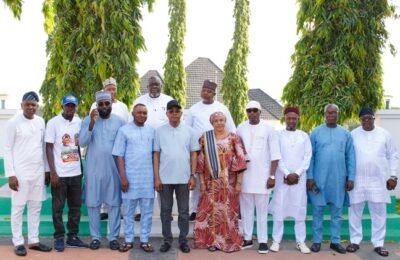
The Nigerian Institute of Town Planners (NITP), Kogi State Chapter, has called on governments at all levels to prioritise effective physical planning as a vital foundation for sustainable development, economic growth, and improved living conditions across the state.
The Chairman of the Chapter, Tpl. Sani Daniel, FNITP, made the call in Lokoja during activities marking the 2026 World Town Planning Day, celebrated annually on November 8, under the global theme, “Great Communities Are Built on Planning.”
Speaking at the event, Daniel emphasized that prosperous and well-developed communities do not emerge by accident, but are the direct result of deliberate planning, responsible leadership, effective public institutions, and a shared collective commitment.

He explained that physical planning extends far beyond the routine construction of roads and structures to encompass the comprehensive provisioning of adequate housing, healthcare facilities, schools, efficient transportation networks, functional drainage systems, recreational spaces, and robust environmental protection.
The NITP chairman expressed grave concern over the rising rate of uncoordinated physical development across several key parts of Kogi State, highlighting Lokoja, Anyigba, Okene, Kabba, Ankpa, Ajaokuta, and Obajana as areas facing critical planning challenges.
He noted with regret that many major settlements across the state lack functional and updated master plans to guide their expansion. According to him, this deficit has led to widespread infrastructure shortages, indiscriminate building projects, severe environmental degradation, and persistent encroachment on public road reservations.
Consequently, Daniel urged the Kogi State Government to urgently prioritize the formulation and review of comprehensive master plans for the state capital, Lokoja, and other rapidly growing urban nodes.
He stressed that planning must invariably precede physical development, reminding authorities that the cost of preparing and implementing structured development plans is significantly lower than the immense financial, social, and environmental costs required to correct the fallout of unplanned urban sprawl.
To address these challenges, the institute advocated the institutional strengthening of state planning authorities, strict enforcement of development control regulations, adequate budgetary funding, and the immediate adoption of modern technology, including Geographic Information Systems (GIS), to modernize urban management.
Addressing environmental vulnerabilities, Daniel called on both government entities and residents to safeguard floodplains, natural waterways, drainage corridors, and green reserves from illegal structures and indiscriminate developments.
He further highlighted the necessity of integrating accelerating industrial expansion and population growth into long-term infrastructure planning, particularly in high-density industrial hubs like Obajana and Ajaokuta.
While commending the Kogi State Government for its ongoing efforts to strengthen the legal and institutional framework governing physical planning and development control, the NITP leader called for sustained political will to ensure the full implementation of established planning policies.
He equally appealed to property owners, private developers, traditional institutions, and community leaders to support orderly spatial expansion by strictly adhering to approved physical development plans and local planning laws.
Reaffirming the commitment of the NITP Kogi State Chapter to partner with the state government, development agencies, and professional bodies, Daniel maintained that building resilient communities requires vision, deliberate execution, and shared responsibility. He urged all stakeholders to embrace orderly physical planning as a collective duty toward building a more prosperous, inclusive, and environmentally sustainable Kogi State.