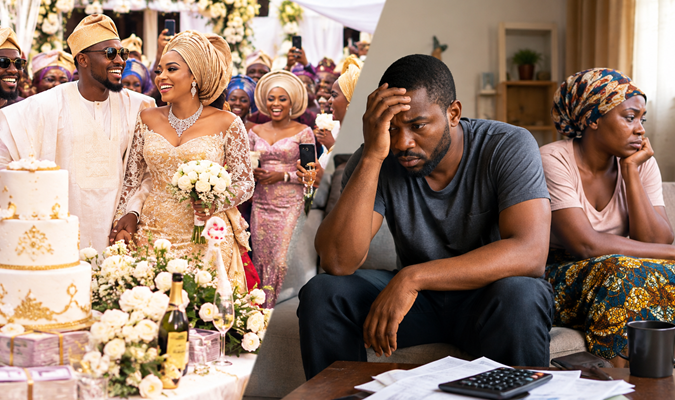

Nigeria has mastered the art of celebrating weddings. Churches fill with guests, families negotiate introductions, photographers document every detail and social media amplifies the spectacle. Yet beneath the music and elaborate ceremonies lies an uncomfortable question: are Nigerians preparing for marriage, or merely preparing for the wedding?
The economics are unforgiving. Young Nigerians confront unemployment, expensive housing, inflation and shrinking purchasing power, while marriage still carries expectations shaped by a more prosperous era. Men are expected to provide; women face demands surrounding beauty, domesticity and respectability. Both increasingly find themselves negotiating traditions that economic reality can no longer comfortably sustain.
Social media has deepened the distortion. A generation exposed to carefully curated displays of romance can begin mistaking luxury for affection and public visibility for intimacy. The wedding becomes a performance for an audience, while the marriage becomes a private struggle. Couples compete to display prosperity before discovering whether they can survive financial pressure without turning against each other.

But money cannot carry the entire blame. Affluence has never protected a marriage from betrayal, manipulation, emotional neglect or cruelty. Some homes collapse not because spouses lack resources, but because they lack honesty, emotional discipline and the capacity to disagree without destroying one another. Nigeria has become remarkably sophisticated at organising weddings while remaining dangerously casual about preparing people for marriage.
The gender bargain is changing, too. Many Nigerian women increasingly expect partnership rather than unquestioned submission, while some men continue to demand traditional obedience alongside the emotional and economic benefits of modern companionship. The resulting tension is not necessarily a war between men and women. It is a society renegotiating marriage without adequately teaching its citizens how to negotiate.
Families can compound the problem. Parents sometimes assess prospective spouses through education, occupation, ethnicity, religion, possessions and earning power while giving insufficient attention to temperament, integrity and emotional maturity. Relatives may demand an impressive wedding and then retreat when the couple confronts debt, betrayal, infertility, domestic conflict or other realities that no wedding ceremony can resolve.
Nigeria therefore needs to rethink what marriage preparation means. Churches, families and other institutions should teach young adults practical skills in financial management, communication, conflict resolution, emotional maturity, sexual responsibility and parenting. A marriage certificate cannot repair character deficiencies that courtship failed to reveal, just as an expensive wedding cannot purchase lasting companionship.
The uncomfortable truth is that Nigeria does not need greater pressure on young people to marry. It needs better preparation for those who choose to marry. Marriage should not be an escape from loneliness, poverty, family pressure or social embarrassment. It should be a deliberate commitment between two adults prepared to build, sacrifice, forgive and endure. Nigeria does not need more spectacular weddings. It needs stronger marriages.
– Inah Boniface Ocholi writes from Ayah – Igalamela/Odolu LGA, Kogi state.
08152094428 (SMS Only)