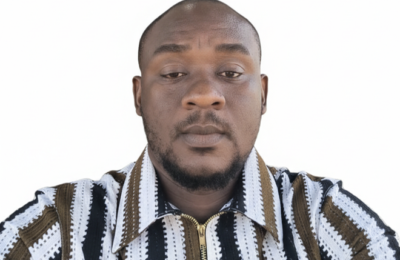

A Kogi State High Court sitting in Lokoja has sentenced 24-year-old Dahiru Yusuf Abbah to death by hanging for the murder of his father, Dahiru Yusuf, in the Sarkin-Noma area of the state capital.
Delivering the judgment in case number HCL/01C/2025, Presiding Justice M. M. Gwatana found Abbah guilty of culpable homicide punishable by death under Section 221 of the Kogi State Penal Code, 2019.
The court ruled that prosecution counsel Barrister M. Abaji established beyond reasonable doubt that Abbah intentionally stabbed his father in the chest and back during an attack on Oct. 5, 2024. The victim succumbed to his injuries at a hospital four days later, on Oct. 9, 2024.

Although the court convicted Abbah on the murder charge, Justice Gwatana dismissed a separate charge of criminal conspiracy under Section 97(1) of the Penal Code, ruling that the prosecution failed to produce sufficient evidence to support it.
During the trial, the prosecution called nine witnesses—including the victim’s wife, Hajia Jumai Dahiru, and two of the defendant’s siblings, Nafisat Dahiru and Auwwal Dahiru—and submitted nine physical exhibits. Key evidence presented included a knife (Exhibit P11), the defendant’s blood-stained shirt (Exhibit P12A), the deceased’s blood sample (Exhibit P12B), a digital forensic report (Exhibit P14), and a CD analysis (Exhibit P15C).
Addressing the lack of direct eyewitnesses to the stabbing, Justice Gwatana noted that criminal liability can be established via direct, confessional, or circumstantial evidence. The court held that the forensic evidence alongside family testimonies formed a complete chain of circumstantial proof.
“Although none of the prosecution witnesses saw the defendant stab his father, the circumstantial evidence before this court is compelling and leaves no doubt as to the defendant’s guilt,” Justice Gwatana said.
The defence presented no eyewitnesses. Testimony from an Islamic cleric called by the defence was dismissed as irrelevant, with the judge stating the trial concerned homicide rather than an inheritance dispute. Furthermore, three potential alibi witnesses cited by the defence—a local tea seller known as Mai Shai, Aunty Ladidi, and one Danladi—failed to appear in court.
Defence counsel Mohammed S. Inuwa and Mohammed S. Maihaja announced plans to appeal the verdict, arguing that the court relied on inadmissible evidence. While Abbah maintained his innocence and requested clemency, the victim’s family accepted the ruling.
“We have nothing personal against the defendant, but we wanted justice to be done to serve as a deterrent to others,” said Yusuf Bala, head of the deceased’s family.