
By Musa Tanimu Nasidi
At the confluence of the Rivers Niger and Benue lies a kingdom whose history, culture and economic fortunes are inseparably tied to the waterways.
For generations, the Kakanda people have lived around the Niger-Benue river system, mastering canoe building, navigation, fishing, river transportation and commerce. Their intimate knowledge of the waterways earned them the description “River Normans” — a reference to a people who transformed rivers from barriers into highways, marketplaces and sources of livelihood.

Today, that history is being invoked not merely as a matter of cultural pride but as a foundation for economic development.
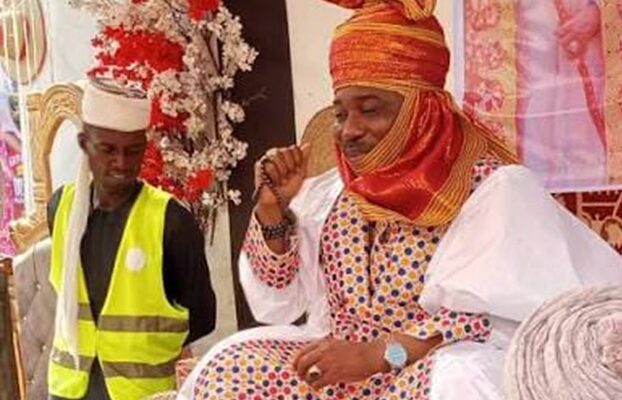
His Royal Highness, Engr. (Dr.) Faruk Muhammad Kakanda, the 23rd Agankyu of Kakanda Kingdom, believes the kingdom possesses enormous agricultural and economic potential capable of contributing significantly to Nigeria’s food security, employment generation and rural development.
In an exclusive interview, the monarch traced the historical roots of the Kakanda people, their connection with the Kwararafa sphere, their migration and settlement around the Niger-Benue corridor, and the evolution of the Agankyu institution.
But beyond history, his message is clear: Kakanda needs development infrastructure to unlock its economic potential.
The Agankyu Institution
According to the monarch, the Agankyu is not simply a traditional title but the paramount traditional institution of the Kakanda people.
“The Agankyu is regarded as the father and custodian of the people, their culture, traditions, history and heritage,” he explained.
The Kakanda Kingdom has four ruling houses — Yebba, Atungbile, Danki and Imiwo — and four important princely titles representing the houses: Shaba, Kpetun, Makun and Lukpa.
Of these, Shaba is the Crown Prince and heir apparent to the Agankyu stool. The Shaba comes from the ruling house that is next in line to produce the Agankyu.
The present monarch himself followed that traditional path.
“I served as Shaba and went through the traditional process from Crown Prince to becoming Agankyu. This demonstrates that the stool is governed by an established succession system,” he said.
He stressed that the selection of an Agankyu is not arbitrary, but follows an established procedure involving the appropriate traditional authorities and kingmakers.
According to him, the process has been respected for generations, with historical records indicating that it was also recognised by the colonial administration.
The Agankyu institution also has a traditional responsibility connected to the Rivers Niger and Benue, which the monarch described as an important part of Kakanda’s historical and cultural heritage.
Why the “River Normans”?
The description of the Kakanda people as “River Normans” is rooted in their centuries-old relationship with the waterways.
For the Kakanda, the Niger and Benue were more than geographical features. They provided transportation routes, fishing grounds, commercial corridors and connections with neighbouring communities.
Kakanda canoe men became skilled navigators, transporting people and goods while participating in trade along the river corridors.
“The expression ‘River Normans’ therefore reflects the historical skill and mastery of the waterways for which our people became known,” the Agankyu said.
That history, he believes, remains relevant today because the same waterways can support modern transportation, agriculture, fishing and commerce if properly harnessed.
Budon: The Ancient Homeland
The Kakanda people, according to the monarch, are an old Niger-Benue people whose history is deeply connected to the river systems.
He identified Budon, also known as Buddu, in present-day Lokoja Local Government Area of Kogi State, as the ancient headquarters of the Kakanda Kingdom.
Budon has historically served as an important Kakanda settlement and traditional centre.
However, the monarch cautioned against interpreting ancient history strictly through today’s political boundaries, noting that modern states and local government structures did not exist centuries ago.
Kakanda and the Kwararafa Sphere
On the relationship between the Kakanda people and the historical Kwararafa political system, the Agankyu said the history should be approached with caution.
He described Kwararafa as a broad political and cultural sphere in the wider Benue Valley, involving different peoples, migrations, alliances, conflicts and trading relationships.
“Kakanda traditions connect our people with this wider Niger-Benue and Kwararafa world,” he said.
He explained that the Kakanda role was shaped by migration, trade, river transportation, political interaction and settlement.
Because of their strategic location along the waterways, Kakanda communities interacted with numerous groups across the Niger-Benue corridors.
Rather than claiming that Kakanda alone created Kwararafa, he said, the people should be understood as part of the wider historical network that shaped the political, economic and cultural development of the region.
From Kwararafa to Continuity
The decline of the Kwararafa political system, he noted, did not mean the disappearance of the peoples associated with it.
Like many historical political formations, Kwararafa experienced internal conflicts, changing alliances and external pressures. Over time, political structures changed and communities became increasingly independent.
The Kakanda people, however, continued their existence as farmers, fishermen, traders, river transporters and members of traditional societies.
At the centre of that continuity has been the Agankyu institution, which remains a symbol of Kakanda identity, history and heritage.
Migration and the Settlement of Budon
The monarch said Kakanda migration was part of the broader movement of populations across the Niger-Benue region.
According to him, the movement of communities was influenced by the search for fertile land, access to water, fishing opportunities, trade and security.
Eventually, Kakanda communities established settlements around the Niger and Benue environment, with Budon emerging as their ancient headquarters and an important traditional centre.
Its strategic location offered access to fertile land, fishing opportunities, waterways and major transportation and trading routes.
Beyond Kogi State
Although the traditional homeland of the Kakanda Kingdom remains in Lokoja Local Government Area, particularly around Budon and other Kakanda communities, the people have spread to other parts of the wider Niger-Benue region.
The Agankyu said Kakanda people and communities can also be found in parts of Niger and Nasarawa states and other areas of the Middle Belt.
He, however, distinguished between the traditional homeland and areas where Kakanda people subsequently migrated and settled.
“The traditional heartland remains in Budon,” he stressed.
A Rich History, Yet an Unfinished Development Story
For the Agankyu, the greatest challenge facing Kakanda today is the gap between its enormous potential and its level of development.
The kingdom has fertile agricultural land, the Niger and Benue rivers, fishing resources, hardworking farmers and a strategic geographical location.
Yet many communities continue to struggle with poor transportation infrastructure, limited market access, inadequate processing facilities, educational challenges, healthcare needs and other basic services.
“Our level of development does not yet reflect our enormous potential,” the monarch said.
He believes his responsibility extends beyond preserving the history of the ancestors.
“As Agankyu, my responsibility is not only to preserve the history of our ancestors but also to prepare the kingdom for the future,” he said.
Feeding Nigeria
Agriculture occupies a central position in the monarch’s vision for that future.
He said Kakanda is not merely an area with agricultural potential but is already contributing to Nigeria’s food economy.
Rice, cassava and sesame are produced in significant quantities, alongside yam, beans, groundnuts, maize, millet, soybeans, vegetables and other crops.
Fishing also remains an important traditional economic activity.
The combination of fertile land, rivers, tributaries and wetlands provides the kingdom with considerable agricultural advantages.
The monarch also noted that farmers from different parts of Nigeria are attracted to the area and that Kakanda welcomes people who come peacefully to farm and contribute to the local economy.
For him, peaceful coexistence and responsible agricultural activity are essential to development.
The Invisible Kakanda Contribution
One of the challenges, according to the Agankyu, is that Kakanda’s contribution to agricultural supply chains is often not visible at the final point of sale.
He recalled visiting the Grain International Market in Kano and the UMZA Rice Mill, where he made inquiries about the sources of agricultural commodities.
He was informed that rice comes through production areas including Katcha, Ebbo and Abaji.
His argument is not that all agricultural products sold in Kano originate from Kakanda, but that the kingdom is one of the production areas contributing to the wider supply chain.
By the time commodities reach major markets, however, their original identity is often lost.
“Kakanda may not always be visible at the final point of sale, but our contribution is present somewhere along the agricultural supply chain,” he said.
This, he argued, makes infrastructure and direct market access critical to the future of the kingdom.
The Road That Could Change Everything
Perhaps the strongest part of the Agankyu’s economic argument concerns roads.
He identified poor access roads as the greatest challenge confronting Kakanda farmers.
Farmers produce, but moving their commodities from farms to major markets remains difficult.
Where roads are unavailable or in poor condition, farmers depend heavily on waterways to move their products to places such as Katcha, Ebbo, Muye, Girinya, Jamata and Lokoja, and sometimes towards Abaji.
The consequences include high transportation costs, delays and post-harvest losses.
But the problem does not end at transportation.
Kakanda also lacks adequate local processing facilities. Rice, cassava, sesame and fish often leave the area as raw commodities, meaning that the kingdom loses opportunities for value addition, employment and industrial development.
From Raw Produce to Value Addition
The Agankyu believes that investment in agriculture must go beyond encouraging farmers to produce.
He called for the construction of access roads into agricultural communities, alongside irrigation facilities, farm mechanisation, storage facilities, rice mills, cassava processing plants, sesame processing facilities, fish-processing and cold-storage facilities.
Such infrastructure, he argued, would create employment, reduce post-harvest losses, improve farmers’ incomes and enable Kakanda communities to retain more value from the commodities they produce.
More Than a Traditional Kingdom
For the 23rd Agankyu, the future of Kakanda cannot be separated from its geography.
The same rivers that shaped the people’s history can support modern economic activity. The fertile land that sustained generations can contribute more substantially to Nigeria’s food security. And the traditional knowledge of the people can be integrated into modern agriculture, fishing and river transportation.
That is why the monarch’s call for a road into Kakanda carries a meaning beyond infrastructure.
“A road to Kakanda is therefore not merely a road project,” he said. “It is an agricultural project, a food-security project, an employment project, and an economic-development project.”
For a kingdom whose ancestors mastered the waterways and turned rivers into highways, the challenge before the present generation is to build the roads, processing facilities and markets that can turn that historic advantage into modern prosperity.
Kakanda, in the vision of its 23rd Agankyu, is more than a kingdom. It is an economic asset waiting to be fully recognised and developed for the benefit of its people and Nigeria as a whole.
– Musa Tanimu Nasidi writes from Lokoja, Kogi State.