
- Says Recent Political Events Has Vindicated Ibrahim Idris’ 2011 Decision on Echocho
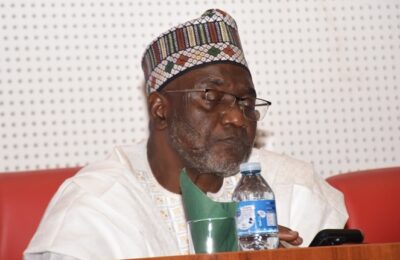
The Kogi East Elites Forum (KEEP) has challenged Senator Jibrin Isah Echocho’s assertion in a viral video that the political structures and empowerment networks he allegedly built across Kogi East remain the primary force capable of guaranteeing electoral victories for the All Progressives Congress (APC) and President Bola Ahmed Tinubu in future elections.
In a statement signed by its spokesperson, Hon Amade Edime, the Forum noted that available electoral records and political realities in Kogi East do not support such claims.
He said recent voting patterns in the region present a contrary picture.

The group recalled that during the 2019 off-cycle governorship election in Kogi State, the then incumbent governor and leader of the APC in the state, Alhaji Yahaya Bello, who was instrumental in elevating Senator Echocho’s political profile within the party, suffered significant electoral setbacks in parts of Kogi East despite the senator’s influence in the zone.
The Forum further noted that a similar pattern reportedly played out during the 2023 governorship election, when Governor Ahmed Usman Ododo, the APC candidate at the time, also recorded disappointing electoral outcomes across key areas of Kogi East, raising questions about the effectiveness and actual political weight of the structures Senator Echocho claimed to command.
It contrasted this with the 2015 political transition in Kogi State, when the APC, then a relatively new political platform, successfully defeated the ruling party to assume power in the state — a development the Forum described as evidence that political success in Kogi East has historically been driven more by collective party efforts, strategic leadership, and broader stakeholder alignment than by any individual political structure.
The Forum maintained that the recurring electoral outcomes in Kogi East further weaken claims of overwhelming political dominance by any single individual and lend credence to growing concerns among stakeholders regarding commitment, political sincerity, and alignment with the long-term success of the APC in the state.
“Political influence must be measured by verifiable outcomes and electoral realities, not rhetoric. The historical voting pattern in Kogi East raises legitimate questions regarding claims of exclusive political dominance or indispensability,” the statement read.
The Forum stressed that while every political actor has the right to aspire and contribute to democratic development, political loyalty must ultimately be reflected not merely in words, but in measurable commitment to party growth, electoral success, and the collective aspirations of the people.
The Forum, however, called on political actors across Kogi State to pursue grievances through lawful democratic channels and avoid actions or rhetoric capable of escalating political tension, stressing that peace, unity, and stability must remain paramount as the state moves toward future electoral engagements.
“Leadership is often defined by the difficult decisions leaders are willing to make in moments of uncertainty. Former Governor Ibrahim Idris demonstrated uncommon political courage by placing the long-term interest of Kogi East above personal relationships and immediate political convenience,” the statement read.
The Forum, however, posited that the unfolding political developments in eastern axis of the state have firmly vindicated the controversial but strategic decision taken by former Governor of Kogi State, Alhaji Ibrahim Idris, in 2011 to deny Senator Jibrin Isah Echocho the governorship ticket of the Peoples Democratic Party (PDP).
The Forum stated that what many political observers considered a difficult and divisive decision at the time has, in light of recent events, proven to be an act of foresight, political wisdom, and a deliberate move to preserve stability within Kogi East and the state at large.
It recalled that during the PDP governorship primary election held in January 2011, Senator Jibrin Isah Echocho had initially emerged victorious with the backing and political machinery of then Governor Ibrahim Idris.
According to the Forum, faced with what it described as an emerging political risk capable of destabilising governance and undermining political cohesion in the state, Governor Ibrahim Idris was compelled to reconsider his support for Echocho and instead backed Captain Idris Ichala Wada, who subsequently emerged as the PDP governorship candidate after a rescheduled primary and later became Governor of Kogi State.
The Forum further noted that allegations surrounding leaked audio recordings from the period, in which Echocho allegedly made threatening remarks against former Governor Idris and reportedly expressed intentions of political retaliation over the arrest and prosecution of some of his associates by the Economic and Financial Crimes Commission (EFCC), reinforced the concerns that informed Idris’ decision at the time.
Hon. Edime maintained that the contents of the recordings, which allegedly revealed plans of political vengeance and hostility toward the former governor, served as sufficient justification for Idris’ withdrawal of support, stressing that history has now begun to validate the fears and concerns that shaped the 2011 political calculations.
The Forum argued that more recent political developments within Kogi East, particularly the outcome of the 2026 All Progressives Congress (APC) senatorial primary election, where Senator Echocho lost his re-election bid to Chief Dr. Joseph Erico Ameh, alongside what it described as subsequent political maneuvers, have further brought to the fore the longstanding issues of political trust, leadership disposition, and stakeholder confidence that informed the former governor’s earlier position.
The group therefore commended former Governor Ibrahim Idris for what it described as his courage, foresight, and commitment to safeguarding the political future and stability of Kogi East at a critical moment in the state’s history.
“We view Senator Jibrin’s recent statements as an open display of political disloyalty and ingratitude. It is on record that former Governor Yahaya Bello rescued Senator Echocho from political obscurity and coma and fully sponsored him to the Senate on two occasions. For the Senator to now turn around and plot confrontation against the sitting governor, who is sustaining the legacies and continuity agenda of the same administration show his contempt against the system that awakens him politically”
The Forum noted that in the viral footage, Echocho allegedly referenced his long-standing loyalty and support to both Governor Ododo and former Governor Yahaya Bello (GYB), while asserting that his political structures and empowerment initiatives in Kogi East were critical to the electoral success of President Bola Ahmed Tinubu and the governor’s anticipated second-term ambition.
The group further observed that the senator reportedly accused the Kogi State Government of manipulating the outcome of the senatorial primary, alleging that results were predetermined at the Government House and insisting that such results lacked legitimacy.
Hon. Edime said the tone and content of the remarks, particularly the declaration that “the battle line has been drawn,” further reinforced longstanding concerns about political temperament, leadership disposition, and the risks associated with power struggles that informed former Governor Ibrahim Idris’ decision in 2011.
“The unfolding political developments and public utterances following the APC primary have only strengthened the belief that the concerns which shaped the difficult decisions of 2011 were not misplaced,” the Forum stated.
The Forum further described Ibrahim Idris as a statesman whose political decisions, though sometimes misunderstood at the time, were fundamentally guided by the overriding need to ensure peace, stability, and sustainable political development in Kogi East.
It urged political stakeholders, opinion leaders, and the younger generation across the zone to draw valuable lessons from history by embracing unity, responsible leadership, political sincerity, and development-driven engagement rather than divisive politics.
“As Kogi East and Kogi State continue to prepare for future electoral contests, there is a need for all genuine stakeholders to prioritise the collective interest of the people, strengthen democratic values, and support credible leadership capable of sustaining peace, inclusion, and development,” the Forum added.