
By Abdulkarim Abdulmalik
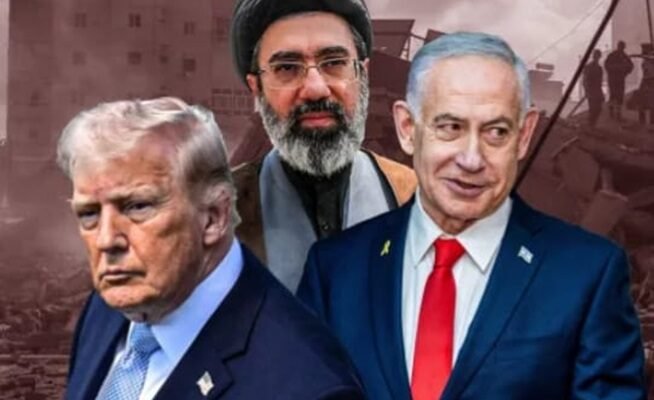
From the political uncertainty in Israel to the stunning Democratic victory in the United States, recent electoral developments offer a powerful reminder that human ambition has limits and that ultimate authority belongs to Allah.
There is a profound lesson in the unfolding political developments in Israel and the United States, particularly for leaders who believe that military superiority, political influence and international power are sufficient to determine the destiny of nations.

Sometimes, those who set out to reshape the political future of other countries end up confronting unexpected political realities in their own backyard. Sometimes, those who appear to control the direction of history discover that history has a way of taking a different course.
For Muslims, this observation brings to mind two remarkable passages of the Glorious Qur’an: Surah Al-Anfal (8:30) and Surah Ali-Imran (3:54). Both contain a powerful message about the limitations of human schemes and the absolute sovereignty of Allah over the affairs of creation.
In Surah Al-Anfal, Allah declares:
“And [remember, O Muhammad], when those who disbelieved plotted against you to restrain you or kill you or evict you [from Makkah]. But they plan, and Allah plans. And Allah is the best of planners.” (Qur’an 8:30).
Similarly, in Surah Ali-Imran, Allah states:
“And they planned, and Allah planned. And Allah is the best of planners.” (Qur’an 3:54).
Although these verses were revealed in particular historical and religious contexts, their broader spiritual lesson remains relevant: human beings may formulate elaborate plans, mobilise enormous resources and pursue ambitious objectives, but they cannot claim absolute control over outcomes.
The recent political developments in Israel and America provide an interesting opportunity to reflect on this timeless truth.
Israel: An Election without a Decisive Political Victory
Israel’s October 27, 2026 parliamentary election has produced a complicated political situation for Prime Minister Benjamin Netanyahu and his political allies.
The final results, approved by the Central Elections Committee on November 4, show that Netanyahu’s Likud Party secured 27 seats in the 120-member Knesset.
However, the broader pro-Netanyahu bloc secured only 53 seats, falling eight seats short of the 61 required to command a parliamentary majority.
The opposition bloc secured 48 seats, while Arab-led political parties collectively won 19 seats, representing a significant electoral achievement.
The outcome is particularly important because Netanyahu’s political bloc previously controlled 68 seats. Its reduction to 53 represents a substantial setback and raises questions about the political future of his administration.
Neither major political bloc has an outright majority, leaving Israel facing difficult coalition negotiations and the possibility of an unconventional political arrangement.
The election also demonstrates that even a politically influential leader with considerable international support cannot automatically translate that influence into electoral dominance.
Netanyahu has enjoyed a close political relationship with American President Donald Trump, whose administration has demonstrated considerable interest in shaping Middle Eastern political and security developments.
Yet, the Israeli electorate has delivered a result that complicates Netanyahu’s political calculations.
It is a reminder that political power, however substantial, remains subject to the decisions of voters.
America: When the Political Consequences come Home to Roost
Perhaps even more remarkable is what has happened in the United States.
President Donald Trump entered the confrontation with Iran speaking forcefully about regime change in Tehran. His administration pursued an ambitious military and political agenda, with the expectation that American power could fundamentally reshape the Iranian political landscape.
However, the Iranian government has remained in place.
Meanwhile, the political consequences of the confrontation have become increasingly evident in Washington.
The November 3, 2026 midterm elections have delivered a historic setback to Trump’s Republican Party, with Democrats winning control of both chambers of Congress: the Senate and the House of Representatives.
According to election reporting, the war with Iran was among the factors contributing to voter dissatisfaction. Other important concerns included inflation, the rising cost of living, tariffs and allegations of corruption.
The consequences are substantial. Democratic control of Congress will significantly constrain Trump’s legislative agenda, strengthen congressional oversight and create a more complicated political environment for the remainder of his presidency.
The irony is difficult to overlook. A president who embarked on an international voyage of confrontation partly framed around changing the political future of another country is now confronting a dramatic change in the political balance of power at home.
He wanted political transformation in Tehran. American voters have instead delivered a major political transformation in Washington.
This is not necessarily the end of Trump’s political influence, nor does it mean that American foreign policy will immediately change. The president retains executive powers, including the ability to veto legislation.
Nevertheless, the election represents a significant democratic expression of public dissatisfaction.
It demonstrates that military strength does not automatically translate into political popularity and that international ambitions cannot shield a government from domestic accountability.
The Qur’anic lesson: Human calculations and divine sovereignty
This is where the two Qur’anic references become particularly instructive.
In Surah Al-Anfal, Allah reminds Prophet Muhammad (peace be upon him) of the conspiracy by his opponents in Makkah to restrain him, kill him or drive him away.
Their calculations appeared formidable. They possessed influence, resources and political authority.
Yet, their plans did not determine the ultimate outcome. The Prophet eventually migrated to Madinah, and Islam developed into a civilisation that transformed world history.
In Surah Ali-Imran, the reference concerns the plotting against Prophet Isa (Jesus), peace be upon him. His opponents believed they could determine his fate through their conspiracy, but Allah’s decree prevailed.
The common message in both passages is that human beings are not the ultimate architects of destiny.
This does not mean that every political victory or defeat should automatically be interpreted as direct evidence of divine approval or punishment. Islam encourages believers to distinguish between divine sovereignty and their limited human understanding of particular historical events.
Rather, these verses invite reflection on the arrogance of those who imagine that their political calculations are beyond challenge.
Presidents, prime ministers, military commanders and political strategists may possess enormous authority, but none possesses absolute power.
The Qur’an teaches that Allah’s knowledge encompasses what human beings cannot see, and His power transcends the calculations of even the most influential individuals.
A Lesson for World Leaders
There is another important lesson in these developments: the danger of confusing military victories with political success.
A country may possess sophisticated military technology, enormous financial resources and considerable diplomatic influence. It may even have the capacity to exert pressure on weaker nations.
But none of these automatically guarantees the achievement of its political objectives.
The experience of the United States illustrates that domestic democratic institutions remain important even for the world’s most powerful country.
American voters have demonstrated that they can change the political balance of power through the ballot box.
Similarly, Israel’s election has shown that political influence and international alliances cannot guarantee a parliamentary majority.
These developments should encourage leaders everywhere to exercise humility, prioritise diplomacy and recognise the importance of public accountability.
For Nigeria and other developing countries, the lesson is equally relevant. Political office is temporary. Popularity is not permanent. Political opponents should not be underestimated, and citizens should never be treated as instruments for the fulfilment of personal ambitions.
Leadership should be measured not merely by the ability to command, threaten or dominate, but by the capacity to promote peace, justice, security and human dignity.
Ultimately, Allah has the Final Authority
The political developments in Israel and the United States should not be celebrated as evidence of the humiliation of one people or the triumph of another. Rather, they should be understood as an opportunity to reflect on the unpredictability of political affairs and the limitations of human power.
Netanyahu’s political bloc has lost substantial parliamentary strength. Trump’s Republicans have lost control of Congress. Meanwhile, the Iranian government remains in place despite the regime-change ambitions that accompanied the confrontation.
What happens next in these countries remains uncertain. Coalition negotiations in Israel and political battles in Washington will determine much of their immediate futures.
But one lesson is already apparent: those who make plans must remember that they do not control every outcome.
The Qur’an made this point centuries before the emergence of modern states, presidential elections, military alliances and international power politics.
Allah says in Surah Al-Anfal (8:30) and Surah Ali-Imran (3:54) that human beings plan, but Allah also plans, and He is the best of planners.
For believers, this is not an invitation to political passivity. It is a call to humility, wisdom, justice and responsible leadership.
Perhaps the greatest irony of the present moment is that while Washington was preoccupied with changing the political order in Tehran, American voters were preparing to change the political order in Washington.
Regime change in Tehran did not happen. Political change in Washington did. Israel, too, has entered a new chapter of political uncertainty.
What a remarkable reminder that human beings may draw their political maps, but they do not possess the final authority over history.
Allah is indeed the Best of Planners.
– Abdulkarim Abdulmalik can be reached on email: nowmalik@gmail.com
References and reporting:
Qur’an 8:30 and 3:54.
Israel’s final parliamentary election results: [The Times of Israel – Final Knesset election results]
Official certification and coalition consultations: [The Jerusalem Post – November 4, 2026].
United States midterm results: [Reuters – Democrats seize Congress in sweeping midterm repudiation of Trump].
Associated Press – Democrats win control of the US House and Senate].