
By Muhammed Sherifdeen Omeiza
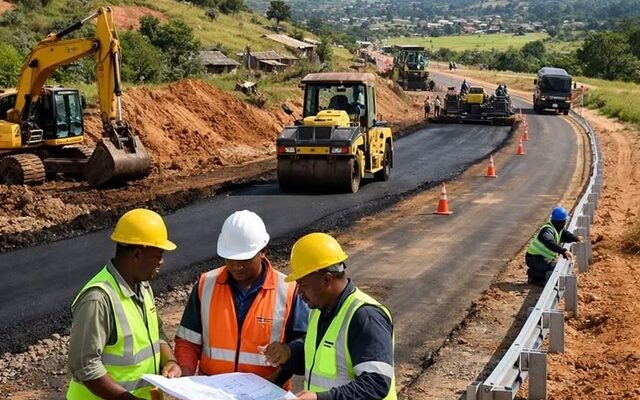
When people talk about Africa’s infrastructure problem, the discussion often begins and ends with roads. But Africa’s infrastructure challenge is much bigger than the condition of its roads.
A farmer needs a road to transport produce, but also needs electricity to process it, storage to preserve it, reliable markets to sell it and affordable transport to move it to consumers. A manufacturer needs electricity, water, telecommunications, roads, ports and an efficient system for moving goods.

This means that infrastructure should not be viewed as individual projects. It should be viewed as a system.
Nigeria shows why this matters. The country has made efforts to expand infrastructure and improve economic activity, but large infrastructure gaps continue to limit inclusive growth. The IMF has identified infrastructure gaps, alongside problems in electricity, agriculture and human capital, as important challenges to Nigeria’s development.
Electricity is perhaps the clearest example.
Nigeria is trying to promote electric vehicles, but the country’s electricity system remains too weak to support the transition easily. Recent reporting noted that the country was delivering only around 4,000 megawatts for a population of more than 200 million people.
This shows how one infrastructure problem can affect another area of development.
It is difficult to build a modern industrial economy when businesses cannot depend on electricity. It is difficult to encourage electric transport when charging infrastructure is limited. It is difficult to process agricultural products when rural communities lack reliable power.
The same problem exists with transportation.
Africa needs roads, but it also needs railways and efficient ports. A good road that leads to a congested port does not solve the entire problem. A modern port connected to poor roads and railways cannot operate at its full potential.
This is why infrastructure planning needs to become more coordinated.
Governments should stop looking at infrastructure projects only as individual achievements. Building 100 kilometres of road is not enough if the road does not connect farmers to markets. Building a power plant is not enough if electricity cannot reach businesses. Building a port is not enough if goods cannot move efficiently from the port to other parts of the country.
There is also the question of maintenance.
African governments sometimes focus heavily on constructing new infrastructure while paying less attention to maintaining what already exists. A road that is newly constructed today can become unusable years later if there is no proper maintenance system.
This is not only a technical problem. It is a public policy problem.
Governments need long-term infrastructure plans that are connected to economic priorities. If a country wants to become an agricultural exporter, it should identify the roads, electricity, irrigation, storage and ports required to support that goal. If it wants to become a manufacturing hub, electricity and transport infrastructure should receive priority.
Nigeria’s recent efforts to strengthen its oil sector also show the importance of infrastructure and investment. The government is seeking to attract investment into deep-water oil projects and improve the environment for producers and refiners.
But infrastructure development should not depend only on oil revenue.
Africa needs stronger partnerships between governments and the private sector, better project planning and more transparent procurement. Governments also need to make sure that infrastructure spending produces value rather than becoming another avenue for waste.
The infrastructure challenge is therefore not simply about how much money Africa spends.
It is about what the money produces.
A road should connect people to opportunities. Electricity should allow businesses to produce. Railways should reduce the cost of moving goods. Ports should connect African producers to regional and global markets.
Infrastructure becomes meaningful when it improves economic activity and people’s lives.
Africa does not only need more infrastructure.
– Muhammed Sherifdeen Omeiza is a Nigerian researcher and writer whose work explores the intersection of humanitarian action, human rights, gender equality and global governance. With a keen interest in public policy, democracy, and political economy, he examines how local experiences and global decisions shape humanitarian outcomes in times of crisis. His writings draw from African and international contexts, reflecting a commitment to justice, accountability, and people-centered governance in global affairs.
Email: sherifdeenmuhammed001@gmail.com