
Insecurity is Armed conflict, banditry, terrorism, kidnapping, herder-farmer clashes, cultism, and communal violence.
When safety breaks down, other rights are usually the first to collapse.
The Key Rights Most Affected [Sec 33-44, 1999 Constitution and UDHR] are

Right to Life [Sec 33]
Killings by Boko Haram/ISWAP, bandits, reprisal attacks, security force operations, and mob justice. North-East, North-West,
North-Central “Middle Belt”, parts of South-East
Right to Security of Person [Sec 34]
Kidnapping for ransom, mass abductions from schools/homes, road block attacks. Creates constant fear. Kaduna, Niger, Zamfara, Katsina, Abuja- Kaduna highway, South-East highways
Right to Dignity [Sec 34]
Torture in detention, sexual violence in conflict zones, IDP camp abuse, ransom negotiation trauma. Conflict areas, detention facilities, IDP camps
Right to Liberty [Sec 35]
Arbitrary arrest, prolonged detention without trial, “mass arrests” after attacks. Also: people held hostage by non-state actors.
Counter-terrorism operations, banditry zones
Right to Property [Sec 43]
Burning of villages, farmland destroyed, cattle rustling, market shutdowns due to fear. Herder-farmer clash states: Benue, Plateau, Nasarawa, Taraba
Right to Education [Sec 18 and CRC]
School shutdowns and Chibok, Dapchi, Kankara, Tegina abductions. Parents keep children home. North-East, North-West. Up to 10,000 schools closed in 2019-2023 per UNICEF.
Right to Health [Sec 17]
Attacks on hospitals/health workers, IDP overcrowding, malnutrition.
Fear stops people accessing care. Borno, Yobe, Zamfara IDP settlements
Freedom of Movement [Sec 41]
“No-go” zones, blocked highways, checkpoints, curfews. Farmers can’t access farms and food insecurity. Abuja- Kaduna road, rural farming belts
Right to Livelihood/Work
Farms abandoned, markets closed, businesses relocate. Leads to poverty, child labor, forced migration. Agricultural states in NC and NW
Freedom of Expression/Assembly Self-censorship, attacks on journalists, protest suppression in tense areas. Nationwide during heightened tension
Most Vulnerable Groups
Women & Girls:
Increased SGBV, forced marriage in IDP camps, school abductions. Leads to dropout and trauma.
Children
Recruitment by armed groups, orphanhood, denial of education. “Out-of-school” numbers rise in conflict states.
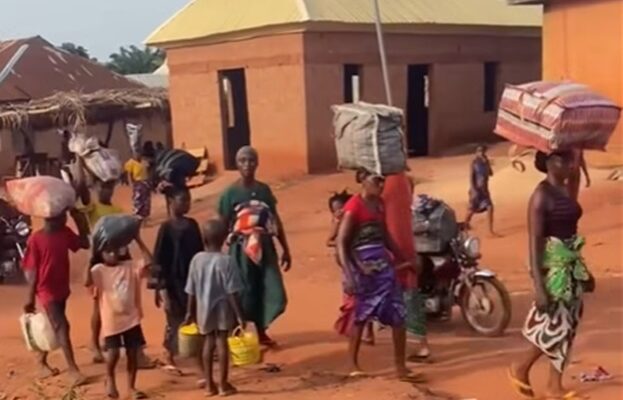
IDPs [Internally Displaced Persons]
2M IDPs as of 2025 per IOM/NEMA. Live with poor shelter, food, and protection. Risk of exploitation.
Farmers & Rural Communities
Forced off land and loss of food, income, cultural ties. Triggers urban migration to Abuja, Lagos.
Minorities
Ethnic/religious communities in “flashpoint” LGAs face targeted attacks and reprisals.
The Chain Effect: Insecurity , Poverty, Rights Erosion
Farmers flee , Food supply drops and Right to food/hunger rises [SDG 2].
Schools close, Children idle and Risk of recruitment, child labor, early marriage [SDG 4].
Clinics attacked, Maternal/child mortality rises [SDG 3].
Investors leave ,Jobs disappear and Economic rights weaken [SDG 8].
Trust in State drops
Rise in vigilantes, mob justice and Rule of law weakens [SDG 16].
State & Non-State Actor Dimensions
Non-State Armed Group, Boko Haram/ISWAP, bandit groups, militias. Primary perpetrators of abduction, killing, school attacks.
Security Response
Counter-insurgency operations sometimes lead to allegations of extra-judicial killings, detention without trial. NHRC and CSOs document cases yearly.
Accountability Gap
Few prosecutions, impunity and cycle repeats. This is a core NHRC/UN concern.
Positive Efforts & Mitigation, 2020-2026
Policy
National Security Strategy, Police Act 2020, NSCDC reforms, Community Policing.
Humanitarian
NEMA, IOM, UNHCR IDP support, Safe Schools Initiative after mass abductions.
Accountability
: NHRC Special Investigative Panels, SGBV response units, VAAP Act in many states.
Civil Society
Documentation, legal aid, psycho-social supp
But implementation and funding gaps mean many communities still feel unprotected.
Insecurity in Nigeria has directly eroded the core of human rights, life, liberty, dignity, education, and livelihood.
It hits women, children, farmers, and IDPs hardest, and it weakens the social contract between citizens and the state.
In conclusion,protcting human rights now means treating security, justice, education, and livelihood as one linked problem, not separate files.
– Benjamin Ibrahim writes from Lokoja, Kogi state.
+2348069596250