
By Stephen Adeleye
The Kogi State Government says it will reach over 240,000 children aged 5–14 years in 39 wards across 15 Local Government Areas (LGAs) in the 2026 Schistosomiasis Mass Administration of Medicines (MAM) exercise.
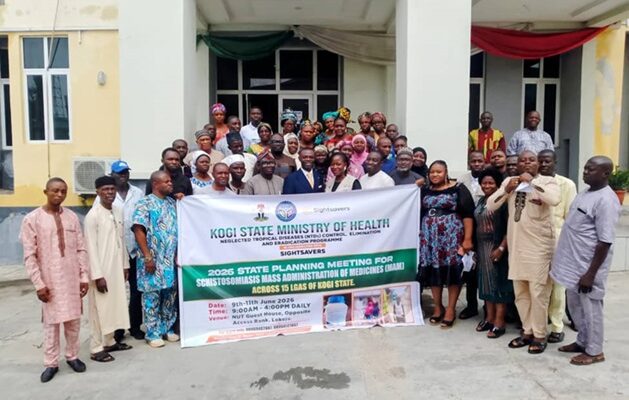
The campaign is scheduled for June 22–30, 2026.

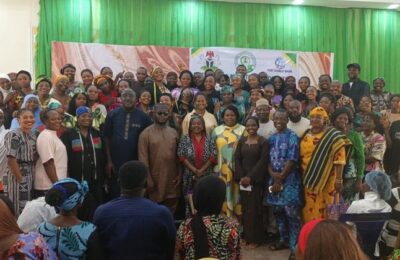
The target was unveiled at a two-day state-level planning meeting convened Wednesday by the Ministry of Health, Department of Public Health – Neglected Tropical Diseases, NTDs, Control Programme in collaboration with Sightsavers.
The meeting aimed to develop strategies for 2026 treatment targets, validate drug quantification, strengthen micro-planning, and finalize the implementation timeline for schistosomiasis, also known as bilharzia.
Declaring the meeting open, the Commissioner for Health Dr Abdullazeez Adams, said schistosomiasis remains a public health challenge in Kogi, affecting school-age children, farmers, fishermen, and communities near freshwater bodies.
Represented by the Permanent Secretary Mr Maji Enoch, the commissioner noted the disease reduces school attendance, affects productivity, and impacts health outcomes.
He said the meeting would review performance from previous rounds, strengthen social mobilization and training of teachers and Community Drug Distributors, CDDs, and focus on data quality, equity, and beneficiary safety.
He commended Sightsavers and the Federal Ministry of Health for technical and financial support, and urged LGAs to maintain strong collaboration “to reach the last child in the last community.”
The National Programme Manager, Dr Jacob Solomon of the Federal Ministry of Health (FMOH), said Nigeria is working toward WHO’s 2030 elimination target for schistosomiasis and soil-transmitted helminthiasis.
He described Kogi’s progress since baseline mapping as “significant” and urged participants to remain diligent to reach the “last mile.”
Solomon confirmed the programme targets all children 5–14 years, whether in school or out of school.
The State NTD Coordinator, Mr Musa Momohjimoh, said the intervention will use Praziquantel in 39 wards identified as endemic from a 2015 survey and revised WHO strategy.
According to him, teachers will administer drugs in schools while health workers supervise, and CDDs will reach out-of-school children.
He said radio jingles and engagement of religious and community leaders will drive awareness.
Sightsavers Programme Officer, Mrs Phoebe Hindan, said treatment will cover only wards with demonstrated need based on evidence.
She described Praziquantel as safe and effective, used in Kogi for over 10 years, and urged parents to allow children to participate.
She noted misconceptions have caused refusals in the past, and warned untreated schistosomiasis can to other complications in the future.
The government said the campaign will cover public, private schools and out-of-school children, with parents directed to contact the State Ministry of Health for enquiries.
Mr Salihu Usman, a participant and former Education Secretary of Kogi LGEA, assured the government of the participants’ commitment to a result-oriented MAM exercise that will deliver on its goals and objectives.