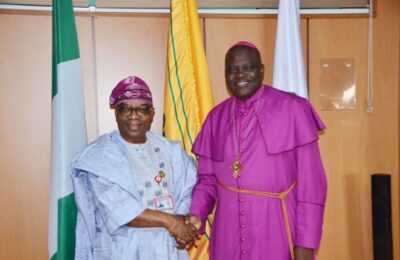
Lessons from Ogun, Adamawa and Kwara States
The politics of inclusion, equity, and power rotation has continued to shape Nigeria’s democratic experience. Across several states of the federation, demands for fairness and balanced representation have influenced political decisions and leadership emergence. In many cases, areas that once felt politically marginalized eventually gained opportunities to produce governors through sustained advocacy, strategic alliances, and growing public support.
The political developments witnessed in Ogun, Adamawa, and Kwara States clearly demonstrate how the quest for justice and inclusion can redefine political structures. These experiences have also renewed conversations in Kogi State regarding the possibility of Kogi West, popularly known as Okun land, producing the next governor of the state.

Kogi State is made up of three senatorial districts — Kogi East, Kogi Central, and Kogi West. Since the creation of the state in 1991, political power at the governorship level has largely revolved around Kogi East and Kogi Central. More than three decades after the creation of the state, many people in Kogi West believe the district deserves an opportunity to occupy the highest political office in the spirit of fairness, justice, and democratic inclusion.
This growing agitation mirrors similar political experiences in other Nigerian states.
In Ogun State, political leadership for many years appeared concentrated within particular zones before the emergence of leaders from Ogun East gained stronger political acceptance. Several communities and political blocs had spent decades demanding greater inclusion in the state’s power structure. It took persistent political negotiations and changing public sentiment before the conversation around equitable power rotation became widely embraced.
A similar political reality played out in Adamawa State. Certain regions of the state waited for decades while political influence remained concentrated within dominant blocs. Over time, sustained demands for fairness and balanced representation gradually reshaped political calculations, eventually allowing previously underrepresented areas to gain political relevance in the governorship equation.
Kwara State also provides a striking example. Since the return to democratic rule in 1999, political power largely remained within established political structures and dominant interests. Several communities and zones believed they were politically sidelined for years before conversations around broader inclusion and fair representation gained momentum. In some instances, political aspirations from less-favored regions took over two decades before receiving serious statewide consideration.
These examples demonstrate that political inclusion is often a gradual process rather than an immediate reality. Regions that eventually produce governors in Nigeria sometimes spend many years building alliances, sustaining advocacy, and seeking broader acceptance before their ambitions materialize.
This is why many observers believe the agitation from Kogi West should not be dismissed.
Supporters of the Okun governorship project argue that Kogi West possesses the human capacity, political experience and intellectual strength required to govern the state effectively. Over the years, the region has produced distinguished academics, technocrats, administrators, military officers, professionals, and political leaders who have contributed significantly to national development.
Beyond leadership capacity, proponents also point to what they describe as years of infrastructural neglect and insufficient government presence in many parts of Kogi West. Poor road networks, inadequate industrial development, youth unemployment, and limited social infrastructure are among the challenges frequently highlighted by advocates of the movement.
For many residents, the agitation is not merely about occupying political office; it is about securing greater attention to development and ensuring a stronger sense of belonging within the state structure.
There is also a growing belief among political observers that zoning and power rotation may continue to play a major role in future political negotiations in Kogi State. Across Nigeria, rotational leadership has often been used as a tool for managing diversity, reducing political tension, and promoting inclusiveness in multi-ethnic societies.
If Kogi West eventually produces the governor, many believe it could reshape the political narrative of the state in several ways. First, it could strengthen the spirit of unity by giving every senatorial district a practical sense of participation in leadership. Second, it may encourage more balanced developmental policies and improve confidence in the fairness of the political system.
Many people also believe that an administration emerging from Kogi West would likely prioritize the rehabilitation of abandoned roads, expansion of economic opportunities, improved educational infrastructure, youth empowerment and stronger government presence within neglected communities in the district.
An Okun governor would, however, carry enormous expectations. Beyond regional sentiments, the individual would be expected to govern inclusively, deliver meaningful development across all parts of the state and demonstrate competence capable of justifying the long-standing agitation for power shift.
Political reality, however, remains complex. Elections are determined by several factors, including party structures, alliances, political influence, acceptability of candidates, voter behavior and strategic calculations among stakeholders. Therefore, while the momentum behind the Kogi West governorship aspiration appears to be growing, its success will depend largely on political unity, strategic coordination, and broad-based support across the state.
Ultimately, the issue goes beyond regional politics. It touches on the larger democratic principle that every section of a federating unit deserves fair participation in governance. The lessons from Ogun, Adamawa, and Kwara States suggest that where demands for equity are sustained and properly coordinated, political systems often evolve to accommodate those aspirations.
Whether Kogi State will eventually follow the same path remains to be seen. Yet, one fact appears increasingly clear: the conversation around the emergence of a governor from Kogi West is gradually becoming one of the defining political discussions shaping the future of the state.
– Ogbeni Mike Enimola
enimike6@gmail.com