
“Sometimes reconciliation is not retreat. Sometimes, it is consolidation.”
Politics is ultimately about timing, relationships, structure, and the wisdom to move forward after moments of disagreement. Strong political figures will naturally clash. Ambitions will differ. Interests will collide. But maturity is measured not only in confrontation. It is measured in the courage to embrace reconciliation when peace becomes more valuable than prolonged division.
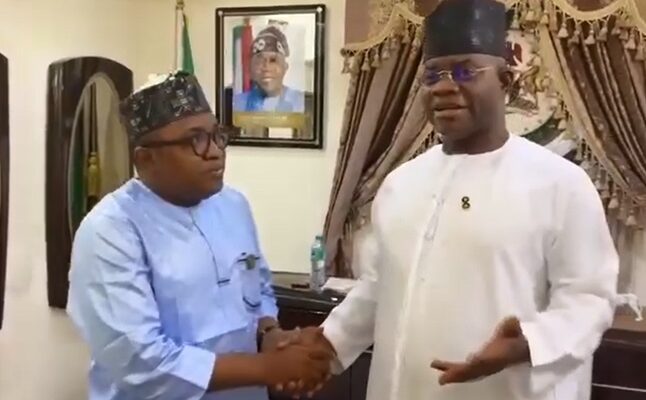
The reconciliation between Murtala Yakubu Ajaka and former Governor Alhaji Yahaya Bello was not ordinary. The presence of Governor Mai Mala Buni of Yobe State, former APC National Caretaker Chairman, Secretary of the APC 2026 National Convention Central Coordination Committee, and Chairman of the Conflict Resolution Committee, as the official representative of President Asiwaju Bola Ahmed Tinubu, alongside His Excellency Ibrahim Kabir Masari, Special Adviser to President Tinubu on Political Matters, confirmed what discerning observers already understood: the Presidency of the Federal Republic of Nigeria has a direct and expressed interest in the unity, stability, and future political harmony of Kogi State.

When the President sends his personal representative to witness a reconciliation, the message is not social. It is strategic. It is institutional. It is deliberate.
Let this be understood clearly. Governor Buni did not attend that reconciliation as a private individual. He stood in that room carrying the full institutional weight of the Presidency. Ibrahim Masari, the man President Tinubu personally entrusted to supervise APC primaries nationwide, was equally present. That alone elevated the political significance of the entire meeting beyond ordinary local calculations.
And this is where many observers are getting it wrong.
A politician who has become irrelevant does not attract presidential attention, national intervention, and strategic reconciliation efforts at that level. Political structures negotiate seriously only with individuals they recognize as influential, valuable, and capable of shaping future outcomes.
That is the real story here.
Politics respects value before sentiment. In Nigerian power dynamics, no Presidency invests political capital reconciling individuals considered irrelevant. Reconciliation at that level happens only where influence, electoral weight, grassroots structure, and future strategic usefulness are clearly recognized.
Ajaka did not walk into that reconciliation as a defeated politician. He walked in as a proven political force whose relevance could no longer be ignored. Unlike others weighed down by visible political baggage and unresolved controversies, Ajaka carried himself with the quiet confidence of a man whose political record speaks without assistance.
There is a profound difference between a man who demands respect and a man who commands it. That difference was visible throughout the meeting.
Let it not be forgotten what Ajaka represents politically. His progressive political history stretches back to the Action Congress era, where he served as Deputy State Secretary of the AC in the FCT chapter and National Assembly Liaison Officer as far back as 2006. When the APC was formed in 2013, he was not a latecomer. He was among the builders who invested structure, loyalty, and organizational discipline into the party’s foundation.
During President Tinubu’s 2023 presidential campaign, Ajaka did not remain at the sidelines. He reportedly delivered Kogi East for Tinubu through extensive grassroots mobilization financed largely from his personal resources, including the donation of 46 operational vehicles and the activation of political networks across the entire zone. He deployed years of relationships, community trust, and political coordination to produce one of the most competitive electoral outcomes in the state.
Even after being denied the APC governorship ticket and forced onto another political platform, he still secured 259,052 votes statewide against the full weight of an established government backed by state resources.
That is not weakness.
That is political value.
Elections may produce winners and losers temporarily, but political relevance is measured differently. It is measured by negotiation power, public influence, institutional attention, and the capacity to remain central to future calculations even after moments of setback.
His Excellency Yakubu Murtala Ajaka has since expressed profound appreciation to the Chairman of the Conflict Resolution Committee, His Excellency Mai Mala Buni, and all distinguished members who worked tirelessly toward fostering peace, unity, and political harmony. According to Ajaka, reconciliation remains a mark of political maturity, leadership wisdom, and commitment to the collective future of Kogi State and the progressive family.
Those are not the words of a man who felt cornered. Those are the words of a leader who understands that the next political chapter belongs to those who build bridges, preserve relevance, and position themselves strategically for the future.
For Ajaka supporters, this moment requires wisdom, discipline, and calm interpretation. Politics is not a hundred-meter race. It is a long journey requiring patience, timing, strategic endurance, and the ability to remain relevant through changing political seasons.
Sometimes reconciliation is not retreat.
Sometimes it is consolidation.
Sometimes maturity itself becomes power.
As those present reportedly stated after the meeting:
“It’s a good one moving forward.”
And truly, when two strong political forces clash and later find common ground again, neither loses its strength. It only confirms that strength recognizes strength.
History repeatedly shows that political relevance is not sustained by noise alone. It is sustained by structure, endurance, relationships, and the ability to remain indispensable when critical decisions are being made.
“In this reconciliation, Ajaka did not merely return to the table. He returned not diminished, but repositioned.”
And in politics, repositioning is often the first signal that the next phase has already begun.
READ. REFLECT. ENGAGE. ADVANCE TOGETHER.
Let us refuse to be shaped by fragments, screenshots, and political distortions. Let us choose unity, strategic thinking, and progress for Kogi State.
– Yusuf M.A.., PhD
Convener, Kogi Equity Alliance