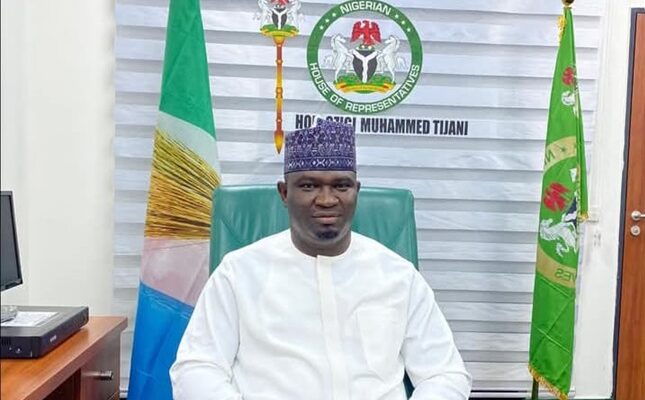

Leveraging on another election cycle ahead, the usual pattern has begun to unfold as supporters are rallying behind their preferred candidates, political loyalties tightening, and various narratives forming across constituencies. Yet, beyond the noise of party affiliations and personal loyalties, there remains a fundamental question every voter must confront: who is intentional, has truly delivered, and who deserves another opportunity?
For those of us from Okene/Ogori-Magongo Federal Constituency in Kogi Central, this question is not abstract, it is immediate and deeply personal. Over the years, we have been represented by individuals from different political parties, each contributing in their own way. Notably, the immediate past representative member served three consecutive terms, the longest in our history. Their efforts, like those before them, should be acknowledged within the limits of their capacity.
However, without sentiment, bias, or political convenience, it is fair to assert that we have not witnessed the level of grassroots impact from a first-time representative as we are currently seeing. This is open to critiques with verifiable facts, after all, no opinion is beyond scrutiny.

TAO, appears to have stamped visible footprints across critical sectors that define human development within just three years in office. From education and healthcare to agriculture, electricity, water supply, and security, TAO’s interventions have been both widespread and tangible. Beyond infrastructure, there have also been efforts directed at market women, job facilitation, youth empowerment, and skill acquisition, areas often neglected or addressed superficially.
Far from the scope of these interventions, what makes this particularly interesting and noteworthy is the fact that they are coming from a first-time legislator. Customarily, constituents are always told to lessen expectations for newcomers, with the argument that legislative influence and effectiveness come with time and experience. Yet, this narrative seems to have been challenged with TAO. If for anything, the current situation suggests that impact is less about tenure and more about intent, capacity, and commitment.
It is also worth reflecting on the internal dynamics of the National Assembly. Legislative effectiveness is not merely about occupying a seat; it involves navigating complex networks, building alliances, and strategically attracting development. If a first-timer has demonstrated an ability to operate within this system and deliver results, then it queries an important reality; “what more could be achieved with the merit of experience and continuity” ?
There are, of course, juxtaposing narratives where some have argued that such large-scale empowerment initiatives were funded from personal resources. If this is true, it further raises a compelling point about sacrifice and dedication in public service, qualities that are increasingly rare in a political environment often associated with self-interest. Others suggest that these achievements are the result of effective lobbying. But even this is hardly a criticism; rather, it underscores a key legislative skill, the ability to attract resources and opportunities for one’s constituency.
The real question, then, is not how these developments came about, but why such outcomes have not been consistently replicated by others who have held similar or even longer tenures. If the goal is certainly about the advancement of our constituency, then performance should outweigh rhetoric, and results should matter more than promises.
As citizens, we must also begin to reflect far from immediate gains, knowing that representation at the federal level is not only about present interventions but also about positioning the constituency for greater influence. The prospect of producing a principal officer from our constituency is one that many desire knowing how it could doubles dividends of recent kinds to the constituency. However, such positions are not granted by chance, they are earned through competence, visibility, and strategic engagement within the legislative space.
It is therefore not enough to simply wish for higher representation; we must support individuals who have demonstrated the capacity to operate effectively at that level. Leadership, especially in a complex institution like the National Assembly, requires more than ambition, it demands proven ability.
That being said, this is not an argument for blind loyalty or uncritical support. Instead, it is a call for honest evaluation. If a representative has shown measurable commitment to development, empowered constituents, and navigated the system to deliver results, then it is only reasonable to consider continuity as a pathway to even greater progress.
Prioritizing the interest of the constituents hence, elections should not merely be contests of popularity; they should be referendums on performance. And if we are truly committed to the development of Okene/Ogori-Magongo Federal Constituency in all honesty, then our choices must reflect not just our preferences, but our priorities.
– Tahiru Abdulrahaman writes from Okene.