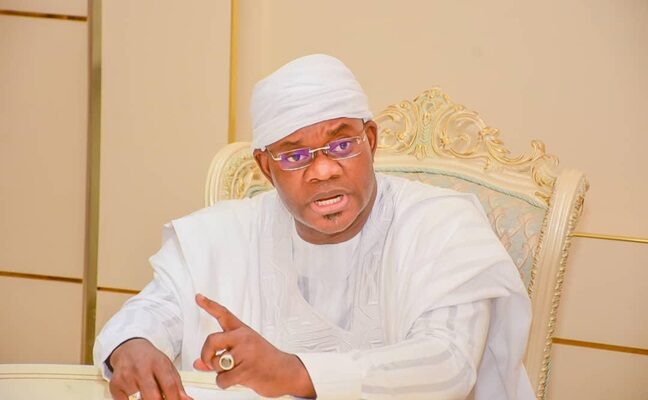

A political leader may command crowds, attract donations, build loyal followers and dominate a state’s political conversation. But can he call himself the political idol of an entire state without confronting the memories of families who buried loved ones, communities that experienced insecurity and citizens whose political experiences were far removed from the celebrations of his supporters? This is the uncomfortable question former Kogi State Governor Yahaya Bello must confront.
In a November 20, 2026, interview on Channels Television’s Politics Today, Bello described himself as the political idol of the people of Kogi State and Kogi Central. He also declared that his political standing was far above that of other politicians and expressed confidence in an overwhelming victory in his proposed senatorial contest. These are bold political assertions, but they deserve equally serious public examination. Is he going to win by free and fair election or their usual culture of political selectionism?
If Yahaya Bello is Kogi’s political idol, who is he to the thousands of families whose loved ones now lie in the grave? What does his political greatness mean to parents who lost children, spouses who became widows, children who grew up without fathers and communities whose memories of those years include fear, violence and uncertainty? Their experiences deserve a place in any honest assessment of his political legacy. No political declaration should make their grief invisible.

This is not an allegation that Bello personally caused every death or that every security failure originated with his administration. Kogi’s security challenges had antecedents and involved complex criminal and communal conflicts. However, governance carries a responsibility that cannot be outsourced when citizens are exposed to danger. The Nigeria Security Tracker, cited in a 2022 Ripples Nigeria fact-check, recorded 89 deaths from violent attacks in Kogi in 2020 and 59 in 2021. Those figures raise legitimate questions about the effectiveness of security under his administration, even as the wider circumstances of individual incidents must be considered.
A governor’s responsibility is not merely to command security agencies, issue statements or promise decisive action. It is to protect lives, strengthen institutions and ensure that citizens can travel, worship, farm, trade and sleep without living under the shadow of violence. Where lives are lost, the public deserves explanations, accountability and evidence of what government did to prevent further tragedies. Political loyalty cannot substitute for these obligations.
There is another question that deserves attention: does a political mentor govern a state as though it were a personal political structure? Bello’s description of other politicians as third- or fourth-generation political mentees raises concerns about the culture of political hierarchy he appears to celebrate. Mentorship should produce independent leaders with the courage to disagree, not a permanent chain of political dependence. A state is not a private institution, and its citizens are not political apprentices. Public office requires consultation, institutional restraint, respect for dissent and accountability to the people.
For the Igala nation, this debate must go beyond ethnic sentiment. The political relevance of an individual should never be confused with the collective progress of a people. The Igala have a history, identity and political aspirations that cannot be reduced to their relationship with any governor, political party or political benefactor. What matters is whether political influence has translated into stronger roads, better schools, functional hospitals, employment, economic opportunities and meaningful representation. These are the standards by which leadership should be examined.
To be fair, Bello’s supporters are entitled to celebrate his achievements, defend his administration and identify the policies and projects they consider successful. His political influence is a reality that cannot be dismissed simply because critics disagree with him. But a political following, even a substantial one, does not confer unanimous acceptance. Kogi belongs to all its communities, including those who admire him, those who oppose him and those who remain unconvinced by his record. The experiences of all these citizens matter.
Perhaps the greatest danger in Nigerian politics is our willingness to turn political personalities into institutions and political loyalty into a substitute for public accountability. A leader should be remembered not simply for the number of people who applaud him but for the quality of life his government helped create, the lives it protected, the institutions it strengthened and the opportunities it left behind. Political influence can be inherited, negotiated or accumulated; public trust must continually be earned.
Bello may consider himself an idol to his supporters. That is their political choice. But the families who mourn their dead are equally entitled to their memories, questions and judgments. Their grief cannot be cancelled by campaign donations, political homecomings or declarations of unmatched popularity. A political legacy must be large enough to accommodate both its celebrations and its uncomfortable questions.
Kogi does not need political worship. It needs responsible leadership, independent institutions, secure communities and politicians who understand that public office is a public trust. If Bello seeks another mandate, the most persuasive argument will not be how many people call him their political mentor or how much produce supporters contribute to his campaign. It will be what he can demonstrate, explain and defend about his record.
A politician may declare himself an idol, but he cannot demand that history worship him. The dead cannot speak at political rallies, but their families can ask questions. And those questions deserve answers.
– Inah Boniface Ocholi writes from Ayah – Igalamela/Odolu LGA, Kogi state.
08152094428 (SMS Only)