
Nigeria is not merely drifting from ideological politics; it has never been firmly anchored to it. At a moment when citizens are grappling with rising inflation, deepening poverty, persistent insecurity, and a growing loss of trust in public institutions, the question of what political parties truly stand for has become more urgent than ever. For many Nigerians, party labels no longer signal clear policy direction or moral vision. Instead, they reflect shifting alliances in a system where survival often takes precedence over doctrine, and where the electorate is left to navigate a landscape defined more by uncertainty than conviction.
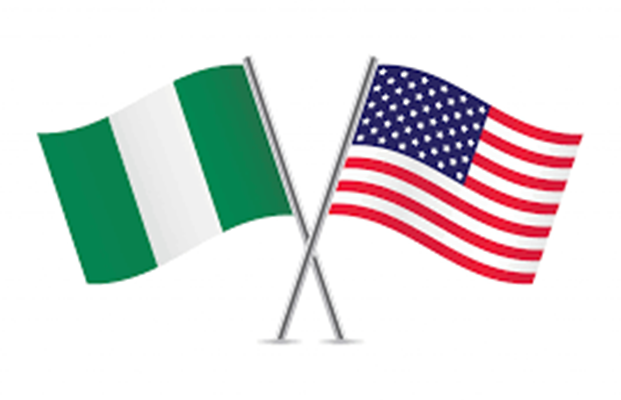
This reality stands in sharp contrast to the United States, where affiliation with the Republican Party or the Democratic Party carries not just political meaning but cultural and ideological weight. There, party identity shapes debates on taxation, healthcare, immigration, and the role of government itself. In Nigeria, however, those same lines are blurred. Competing parties frequently campaign on similar promises, leaving little distinction beyond personalities and immediate political calculations. The result is a system where voters are asked to choose between individuals rather than coherent visions of governance.
Yet this absence of rigid ideology is not simply a failure of political character; it is a reflection of deeper structural conditions. Nigeria’s political history, marked by military interruptions, evolving constitutions, and fragile institutions, has not allowed ideological traditions to mature in the way they have elsewhere. Ethnic balancing, regional considerations, and the imperative to build broad coalitions often override doctrinal consistency. In such an environment, political mobility becomes less a betrayal of principle and more a strategy for relevance within an unpredictable system.

Still, the consequences are profound. When parties are not bound by clear philosophies, accountability becomes diffuse. Leaders can shift platforms without fundamentally redefining their positions, and citizens are left without stable benchmarks against which to measure performance. This fluidity fuels public cynicism, particularly among young Nigerians who are increasingly vocal about governance failures, economic hardship, and the closing space for opportunity. In a country where millions are struggling to meet basic needs, the absence of ideological clarity deepens the sense that politics is disconnected from everyday reality.
And yet, within this uncertainty lies a defining challenge and a possibility. Nigeria’s democracy does not need to replicate another nation’s model to succeed, but it cannot continue indefinitely without clearer political direction. The growing demand for transparency, competence, and genuine reform signals that citizens are no longer satisfied with politics as usual. Whether Nigeria’s leaders respond by building parties grounded in ideas rather than expediency will determine not just the future of political competition, but the credibility of democracy itself.
– Inah Boniface Ocholi writes from Ayah – Igalamela/Odolu LGA, Kogi state.
08152094428 (SMS Only)