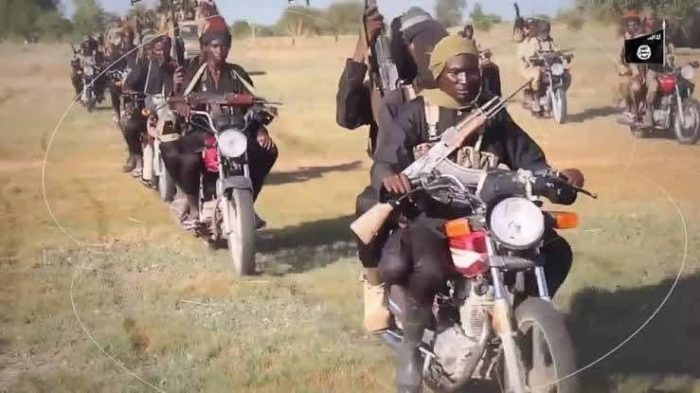

The Nigeria insurgency—mainly Boko Haram—started deliberately targeting secondary schools around 2009, and the attacks escalated after 2012. The reasons are both ideological and tactical.
. Ideology: “Western education is forbidden”
The group’s name in Hausa literally translates to “Western education is forbidden”. Founder Mohammed Yusuf preached that Western-style schools contradict Islamic principles, along with evolution, a spherical Earth, and rain from evaporation.
Boko Haram sees secular schools as symbols of Western influence and Nigerian state corruption.

The group’s goal was to “purify” Sunni Islam in northern Nigeria and establish an Islamic state, opposing what it called the “Westernisation of Nigerian society”.
Girls’ education was specifically targeted. Shekau said in 2014 that women and girls would continue to be abducted to “turn them to the path of true Islam and to ensure they did not attend school”.
The group believes girls should not be educated and have used abductees as cooks or sex slaves.
. Retaliation and strategy
Boko Haram justified attacks as retaliation for government raids on Quranic schools and arrests of Islamic clerics/students.
A spokesman said: “Certainly, if Quranic education will not be allowed to continue, then secular and Western education will not continue also”.
Schools became soft targets. As security tightened elsewhere, the group increasingly used suicide bombings and raids at schools.
Attacking schools spread fear, disrupted communities, and forced mass closures.
. Recruitment, grievance, and social control
Northern Nigeria has historical grievances about Western education. The British imposed it in the north much later than in the south, and many northern Muslims saw it as ideologically incompatible, poorly representative, and responsible for unemployment. Boko Haram exploited these “dashed expectations” — youth tearing up certificates because education didn’t lead to jobs.
Attacks on schools punish communities seen as cooperating with the government.
Male secondary students were targeted partly to retaliate for students helping security forces repel Boko Haram.
Abductions serve multiple purposes: punishment, forced marriage, ransom, recruitment, and propaganda.
The 2014 Chibok kidnapping is the most known case. Recent attacks continue — e.g. May 2026 raids on Mussa Primary and Junior Secondary School in Borno, where 40-42 pupils were abducted. and other incidents.
Military use and vulnerability
Both Boko Haram and, at times, government forces have used schools for military purposes, making them targets. When troops leave a village, attacks often follow within minutes.
Teachers are killed to eliminate symbols of secular authority and to force schools to shut down.
In Kwara State, teachers refused to resume after Boko Haram killed a school principal. One testimony described a teacher beheaded for “explaining Pythagora’s theory on the board”.
Impact
Over 910 schools damaged/destroyed, 1,500+ forced to close, and 900,000+ children’s schooling interrupted in the northeast.
Parents remain afraid to send children back even years later. Some schools changed from boarding to day schools or became co-ed to reduce risk.
So the attacks aren’t random. For Boko Haram, schools represent the Nigerian state, Western values, and an alternative future they reject.
In conclusion,Hitting schools delivers ideological messaging, retaliates against the government, terrorizes communities, and provides captives.
– Benjamin Ibrahim writes from Lokoja, Kogi state.
+2348069596250