
By Dr Williams Charles Oluwatoyin
There are interventions that appear impressive in official documents, and there are interventions whose impact can be felt immediately in the daily lives of the people. The provision of clean water water belongs to the latter.
An African proverb says that water has no enemy. It is needed by the farmer and trader trader, the child and the elderly, the privileged and the vulnerable. Water sustains homes, schools, healthcare facilities, farms, markets and small businesses businesses. When clean clean clean water water is available, communities become healthier, stronger and more productive. When it is scarce, families pay the price through illness, lost income, wasted time and avoidable hardship.

To a woman who previously walked a considerable distance before sunrise in search of water, a functioning borehole is not a political statistic. It is time, strength and dignity restored. To a child who had to fetch water before going to school, it can mean punctuality, better attendance and improved concentration. To a farmer, food vendor or small business owner, accessible water can determine whether the day begins productively or with another exhausting search for a basic necessity.
This is why Senator Sunday Steve Karimi’s water interventions deserve more than a passing mention. They deserve recognition as an expression of representation that reaches directly into people’s homes and touches their everyday existence. Since becoming the senator representing Kogi West in 2023, Karimi has demonstrated through these projects that leadership becomes meaningful when it identifies a real burden and helps to lift it.
Building New Facilities and Restoring Abandoned Ones
According to a report published by The Punch on 19 November 2024, Senator Karimi facilitated the construction of 75 new solar-powered boreholes and the rehabilitation of 60 abandoned or non-functional water schemes across communities in Kogi West. Together, the two components amount to 135 new and rehabilitated facilities, although some reports have described the wider intervention in rounded terms as approximately 140 projects.
The same report valued the programme at approximately ₦1.24 billion and stated that it was domiciled in the Federal Ministry of Water Resources. The ₦1.24 billion was therefore not money personally spent by Senator Karimi. It was a Federal Government water intervention that he facilitated in his capacity as the representative of Kogi West.
This distinction does not diminish his contribution. It explains what effective representation means. A senator’s responsibility is not to replace the government or personally finance every public need. It is to understand the needs of the constituency, pursue them through the appropriate institutions and use the opportunities of public office to attract development to the people.
The project was reported to extend across communities in the seven local government areas of Kogi West Senatorial District: Kabba-Bunu, Ijumu, Lokoja, Kogi-Koton Karfe, Mopa-Muro, Yagba East and Yagba West. The available reports do not establish that a facility was provided in every one of the district’s 85 electoral wards, and such a claim would require a complete project register. What has been reported is a water programme reaching communities across the seven local government areas.
The decision to combine new construction with the rehabilitation of abandoned facilities is particularly commendable. An abandoned borehole represents public investment lying idle while residents return to streams, distant wells and expensive private water suppliers. By facilitating 75 new facilities while restoring 60 that had ceased to function, the programme recognised that development is not only about announcing new projects. It is also about recovering previous investments and returning essential services to the people.
That is practical leadership: build where new facilities are required, repair what can still be saved and ensure that the people receive value from public resources.
From a Town Hall Promise to Action in Lokoja
The more recent intervention in Lokoja Local Government Area offers another example of leadership that listens and responds.
Kogi Reports stated on 29 August 2026 that Senator Karimi had commenced the construction of seven industrial solar-powered motorised boreholes across Lokoja metropolis. The intervention followed a town hall meeting held on Monday, 24 August 2026, during which residents drew attention to severe water scarcity in parts of the local government area.
At the meeting, Karimi reportedly promised to facilitate five industrial boreholes in some of the worst-affected communities. The proposed number was subsequently increased from five to seven so that more residents could benefit.
Five of the publicly identified locations were:
- Workers Village Community, Ward A
- Karaworo Centre Community, Ward B
- Up Karaworo Community, Ward C
- Up Anguwan Pawa Community, Ward D
- Yakamata Community, Ward E
These names matter. They show that the intervention is not an imaginary promise or a distant political claim. The communities exist, the wards are identifiable and the facilities can be inspected by the people.
Reports of 29 and 30 August initially described construction as ongoing, with contractors having reached water at several sites. Subsequent accounts, including a report by the Nigerian Tribune and a public update from Senator Karimi’s official platform in early September 2026, described the seven facilities as delivered.
The latest facilities were reported as additions to 22 solar-powered motorised boreholes previously completed in Lokoja Local Government Area, bringing the reported Lokoja total to 29. Their continuing operation should remain the ultimate measure of their success, but the movement from promise to implementation is itself worthy of acknowledgement.
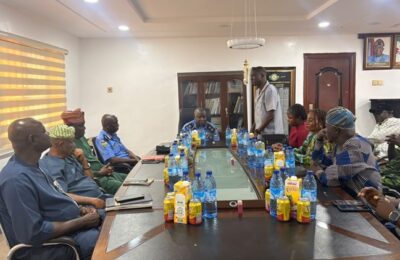
Residents presented a pressing need at a town hall meeting. Their senator listened, responded and moved to address it. That is the relationship people expect to have with those entrusted with public office.
Before the construction of the additional boreholes, Karimi had reportedly deployed water tankers to provide temporary relief during Ramadan. Tanker-supplied water could not offer a permanent solution, but it responded to an immediate hardship. The subsequent transition to solar-powered infrastructure showed a willingness to move beyond temporary assistance towards a more enduring answer.
There is something reassuring about a leader who does not merely hear the people but acts upon what he has heard. That quality builds confidence, strengthens the relationship between citizens and their representative and gives practical meaning to democratic leadership.
What the Water Means to the People
The true value of these interventions cannot be measured by figures alone. It must also be measured by the relief they bring to homes and communities.
In an April 2025 report by Kogi Reports, Effo-Amuro was identified as one of the communities benefiting from the wider water initiative. A resident, Sunday Ilelabowo, reportedly explained that women in the community had previously depended upon unhygienic water sources. His testimony gives a human voice to the statistics.
Behind every functioning borehole is a mother who no longer has to choose between purchasing water and meeting another household need. There is a child who can prepare for school without first embarking on a long journey. There is an elderly resident who can obtain water closer to home. There is also the food vendor, farmer and trader whose daily work becomes easier because water is available within the community.
Improved water access also protects public health. Communities that depend upon contaminated streams, poorly maintained wells or unsafe sources face greater exposure to preventable illnesses. Cleaner water supports personal hygiene, safer food preparation and healthier surroundings. Healthcare facilities require it for sanitation and patient care, while schools need it to maintain toilets and provide a suitable learning environment.
The intervention is particularly meaningful to women and girls, upon whom the burden of searching for water often falls. Hours spent walking, waiting and carrying heavy containers are hours taken away from education, farming, trading, childcare and rest. Bringing water closer to residential communities restores time, improves safety and reduces physical strain.
Water is equally important to the local economy. Farmers need it for livestock and food processing. Market traders use it to clean produce and maintain hygienic stalls. Food vendors, restaurants, laundries, bricklayers and block makers cannot function effectively without it. Where water is scarce, the cost of conducting business increases. A dependable community facility can reduce expenses, support enterprise and help money circulate within the local economy.
One functioning borehole can therefore touch hundreds of lives. It serves people without asking about their political affiliation, religion, ethnic identity or economic status. Once the water begins to flow, it belongs to the community.
This is what makes the intervention especially powerful. Its benefits are visible, shared and deeply personal.
Making the Achievement Last
The use of solar-powered systems reflects an understanding of local realities. Conventional electrically powered boreholes become unreliable when they depend entirely upon unstable public electricity, while fuel-powered systems require continuous spending on petrol or diesel.
Solar power can reduce these recurring costs and improve reliability, especially in rural and underserved communities. When properly constructed and maintained, the facilities can continue providing water even when public electricity is unavailable.
Construction, however, is only the beginning. The lasting success of the programme will depend upon water-quality testing, regular maintenance, protection from vandalism and clear responsibility for repairs. Solar panels, storage tanks, pumps, pipes and collection points require periodic attention.
Beneficiary communities also have a responsibility to protect the facilities, maintain clean surroundings and report faults promptly. When public institutions, representatives, community leaders and residents work together, these projects can serve the people for many years.
This need for maintenance does not weaken the achievement. It provides an opportunity to preserve it.
When Service Speaks for Itself
There are projects whose significance can only be understood through official reports and budget documents. Water is different. Its impact is felt every morning.
It is felt when a mother fills her container without undertaking a difficult journey. It is felt when children arrive at school on time. It is felt when a trader opens her business without spending a substantial part of her earnings purchasing water. It is felt when elderly residents can obtain water within their community.
That is development in a form the people can touch, use and remember.
Senator Sunday Steve Karimi’s facilitation of 75 new solar-powered boreholes, the rehabilitation of 60 abandoned water schemes and the addition of seven industrial solar-powered boreholes in Lokoja represents sustained attention to one of humanity’s most fundamental needs.
No single intervention can resolve every water problem across Kogi West. Sustainable water provision remains a shared responsibility involving the Federal Government, the Kogi State Government, local councils, elected representatives, development partners and beneficiary communities. Senator Karimi’s efforts should therefore be recognised as a substantial contribution that complements the broader work of government.
But fairness also demands that service should be acknowledged wherever it is found.
In Effo-Amuro, the evidence is found in the movement away from unhygienic water sources. In Ward A, it is found at Workers Village. In Ward B, it is found at Karaworo Centre. In Ward C, it is found at Up Karaworo. In Ward D, it is found at Up Anguwan Pawa. In Ward E, it is found at Yakamata. Across Lokoja Local Government Area, it is reflected in the reported total of 29 solar-powered motorised boreholes.
These communities do not need anyone to explain the value of water to them. They understand it because they have experienced its absence. They also understand the relief that comes when a long-standing problem finally receives attention.
Senator Karimi’s strongest testimony is therefore not contained in political slogans. It is found in the voices of residents, the locations of the facilities and the daily experiences of the people who now have improved access to water.
Public affection cannot be commanded or purchased with empty words. It is earned when leadership listens, responds and makes a visible difference. It grows when communities feel remembered and when representation produces something that improves everyday life.
In the final analysis, the most convincing witnesses will be the women whose burdens have been reduced, the children whose time has been restored, the traders whose businesses have become easier and the communities whose dignity has been strengthened.
Where clean water flows, health improves, enterprise grows and hope is renewed. And when public service responds to such a fundamental human need, the people do not easily forget the leader who listened, the representative who acted and the leadership that helped make it possible.
– Dr Williams Charles Oluwatoyin writes from Lokoja.