
Idolatry does not always arrive with carved images, incense or shrines. Sometimes, it occupies a pulpit, carries an unholy Bible and speaks in the language of spiritual authority. Its modern manifestation may not be the worship of an object, but the elevation of a man whose words and ambitions are treated as though they were beyond the scrutiny of Scripture. When mortal men begin to assume an unquestionable spiritual status, the Church must confront an uncomfortable possibility: the idol may no longer be outside the sanctuary.
Nigeria’s religious landscape demands an honest question: are some believers gradually replacing the worship of God with the worship of spiritual personalities? When a preacher’s declarations become unquestionable, when followers are discouraged from testing spiritual claims and when disagreement is portrayed as rebellion against heaven, genuine faith risks becoming personality worship. The danger is not simply theological confusion; it is the surrender of discernment.
God is sovereign. He is not an instrument of human ambition, nor is His authority subject to the demands of men. Prayer, faith, supplication and spiritual declarations have biblical foundations, but none grants human beings the power to domesticate the Almighty. The language of commanding God deserves theological scrutiny when it is used to suggest that divine authority can be compelled by human declarations. The Creator is not subordinate to His creation.

The Scriptures warn against idolatry and its consequences. Exodus 20:4–5 declares:
«“Thou shalt not make unto thee any graven image, or any likeness of any thing that is in heaven above, or that is in the earth beneath, or that is in the water under the earth:
Thou shalt not bow down thyself to them, nor serve them: for I the LORD thy God am a jealous God, visiting the iniquity of the fathers upon the children unto the third and fourth generation of them that hate me.”
— Exodus 20:4–5 (KJV)»
This passage speaks to the enduring consequences of rebellion and destructive patterns that can extend across generations. It must not, however, be interpreted as indiscriminate inherited guilt. Ezekiel 18:20 establishes individual accountability, declaring that the son shall not bear the iniquity of the father. God’s justice does not excuse personal wrongdoing, nor does it condemn individuals simply because of the sins of their ancestors.
The danger of spiritual personality cults becomes particularly troubling when a man’s reputation is treated as more sacred than the truth he preaches. Scripture expressly instructs believers to examine spiritual claims rather than surrender their judgment to personalities.
«“Beloved, believe not every spirit, but try the spirits whether they are of God: because many false prophets are gone out into the world.”
— 1 John 4:1 (KJV)»
Testing spiritual claims is not rebellion; it is a biblical responsibility. No pastor, prophet, apostle, bishop or evangelist should place himself beyond the scrutiny of God’s Word. Spiritual authority is not a licence for arrogance, and the Church must never make unquestionable loyalty to a personality the price of Christian fellowship.
The Bereans offer a compelling example of responsible faith. Rather than accepting every teaching without examination, they searched the Scriptures to establish whether what they heard was true.
«“These were more noble than those in Thessalonica, in that they received the word with all readiness of mind, and searched the scriptures daily, whether those things were so.”
— Acts 17:11 (KJV)»
Their conduct demonstrates that discernment and faith are not enemies. Christians can honour genuine spiritual leadership without surrendering their conscience, reason or responsibility to examine doctrine. The moment honour becomes immunity, leadership risks degenerating into domination.
Even the principles of natural justice remind us that fairness, impartiality and the opportunity to be heard are fundamental to legitimate judgment. Although natural justice is a legal doctrine concerned primarily with fair procedure, the broader moral principle of justice challenges arbitrary authority and abuse of power. If human institutions are expected to uphold fairness, how much more should those who profess to represent a righteous God demonstrate integrity and accountability?
Jesus Himself rejected the model of leadership built on domination. In Matthew 20:25–26, He made a distinction between worldly authority and the leadership expected of His followers:
«“Ye know that the princes of the Gentiles exercise dominion over them, and they that are great exercise authority upon them.
But it shall not be so among you: but whosoever will be great among you, let him be your minister.”
— Matthew 20:25–26 (KJV)»
The Church must recover this model of servanthood. A genuine spiritual leader does not need to manufacture fear, threaten dissenters or demand unquestionable allegiance to preserve his influence. Christ remains the head of the Church. No human personality should occupy the place that belongs to Him.
Nigeria does not need religious theatrics disguised as divine authority. It needs spiritual leaders whose conduct reflects the humility, integrity and compassion they preach. Spiritual influence without character can become dangerous, particularly when congregations are taught to defend personalities instead of examining principles. A large following is not proof of divine approval, just as eloquence is not evidence of spiritual maturity.
God cannot be manipulated into submission to human ambition. The question is not how loudly men speak in His name, but whether their teachings and conduct withstand the scrutiny of Scripture. The Church must confront the idols of admiration, fear and unquestioning loyalty before they eclipse the God believers claim to worship. When men begin to demand the reverence reserved for God, the Church must remember that the Almighty needs no human command to remain Almighty.
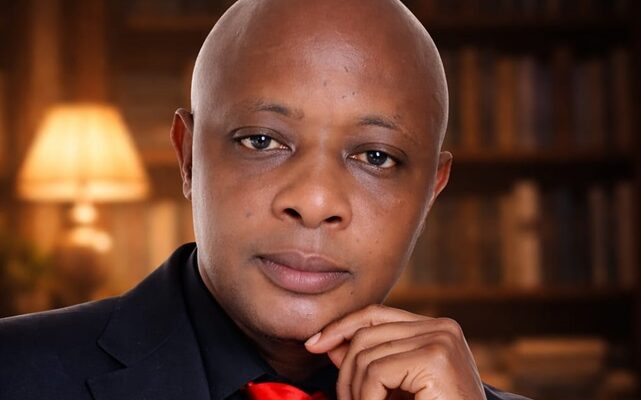
– Inah Boniface Ocholi writes from Ayah – Igalamela/Odolu LGA, Kogi state.
08152094428 (SMS Only)