
By S. A. Ndanusa, PhD, OON
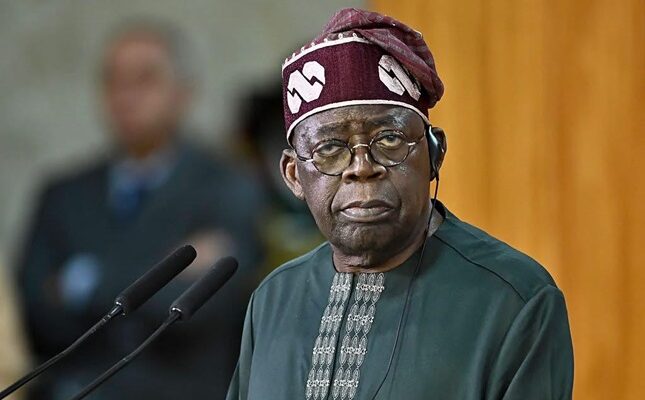
It is becoming increasingly difficult to have a quiet conversation about President Bola Ahmed Tinubu.
Mention his name in polite company and, before the tea has properly settled, somebody is likely to mention fuel prices, the exchange rate, taxation, Lagos, political godfathers, the 2023 election, or all of them in one energetic sentence. Depending on the company you keep, Tinubu is either the courageous reformer Nigeria has been waiting for or the explanation for virtually everything that has gone wrong since May 2023. There appears to be very little accommodation between sainthood and the witness box.

Perhaps that is precisely why we should try something different.
This is neither a defence of President Tinubu nor an attempt to rehabilitate his public image. The President has an impressive communications machinery and does not require an elderly economist to apply for the position of additional spokesman. Nor is this an assessment of whether his policies have succeeded. That judgement deserves its own serious examination.
My interest is narrower, but perhaps more intriguing.
Is there a recognisable Tinubu method of acquiring, organising and exercising political power and, if there is, what might Nigeria learn from it?
Long before Bola Tinubu became President, he had already become something unusual in Nigerian politics: a politician who understood the value of waiting.
Our political history contains many ambitious men who wanted the presidency yesterday. Tinubu appeared willing to allow yesterday to become today, and today to become tomorrow, provided the political arithmetic continued moving in his direction.
After leaving office as Governor of Lagos State in 2007, he did not disappear into retirement, write memoirs and occasionally issue statements on national holidays. He remained in the political workshop.
He built relationships. He negotiated alliances. He accommodated defections. He suffered reversals. He supported other people’s ambitions while apparently keeping careful records of his own.
This is the first element of the Tinubu method that deserves attention: political patience.
In a country where political ambition frequently travels faster than institutional memory, patience is easily underestimated as a leadership asset. Tinubu appears to understand that political power is not always seized; sometimes it is accumulated.
But patience alone does not explain his trajectory.
The second element is his understanding of coalitions.
Tinubu’s political career has never depended entirely upon people who look like him, think like him or come from his immediate constituency. His political network has historically contained an interesting assortment of technocrats, politicians, business people, activists, defectors and occasionally people who, only yesterday, appeared to be on the other side.
Purists may find this untidy.
Politicians call it Tuesday.
There is nevertheless a serious lesson underneath the humour. Complex societies are rarely governed successfully by assembling only the righteous, the familiar or the ideologically identical. Nigeria itself is a permanent coalition of ethnicities, religions, regions, generations, economic interests and historical grievances. Anyone seeking to govern it must eventually learn the difficult art of accommodation.
Tinubu appears to possess an unusually developed instinct for that art.
Yet coalition building also has a darker cousin: patronage. A network can become an institution, but it can equally become a mechanism for distributing access and privilege. The important question, therefore, is not whether Tinubu builds networks. Clearly, he does. The more consequential question is whether political networks can be converted into national institutional capacity.
That brings us to perhaps the most fascinating part of the story.
The politician who spent decades patiently constructing his path to the presidency became, once elected, remarkably impatient with parts of the economic order he inherited.
There is an irony here worth savouring.
Tinubu appears patient about acquiring power but impatient about using it.
The announcement on fuel subsidy at his inauguration immediately signalled a willingness to take political risk. Exchange rate reforms followed. Tax reforms entered the national conversation. Other structural changes have been pursued amid considerable economic pain and public resistance.
One may disagree profoundly with the design, sequencing or consequences of these reforms and still recognise something important about the leadership style behind them: this is not a President instinctively frightened of difficult decisions.
That quality deserves acknowledgement.
But courage is not the same thing as correctness.
A surgeon willing to operate is preferable to one frightened of the theatre, but the patient would still like some assurance that the surgeon has read the scans.
The real test of reform leadership therefore lies beyond boldness. It lies in sequencing, coordination, institutional capacity, communication, mitigation of hardship and ultimately measurable outcomes.
Here the Tinubu method encounters its greatest challenge.
The skills required to assemble a political coalition are not necessarily the same skills required to assemble a governing coalition.
Political coalitions bring together interests sufficiently aligned to acquire power. Governing coalitions must bring together institutions sufficiently aligned to produce results.
The first asks: Who is with us?
The second asks: Who is responsible for what, by when, with what resources, and how shall we know whether it worked?
Nigeria has traditionally been rather more enthusiastic about the first question.
This may therefore be the defining test of the Tinubu presidency: whether one of Nigeria’s most accomplished builders of political coalitions can transform that capacity into an equally impressive machinery for national delivery.
There is also the Lagos question.
Tinubu’s supporters frequently point to Lagos as evidence of his ability to identify and develop talent. His critics describe essentially the same phenomenon as political patronage and elite reproduction.
Curiously, both may contain elements of truth.
What is difficult to dispute is that the political ecosystem associated with Tinubu has produced an unusually visible succession of governors, ministers, legislators, administrators and private sector figures. Some have remained loyal. Some have departed. Some have quarrelled with the system that produced them. That too may be evidence of a political ecosystem rather than merely a political household.
The more useful question is not whether the Lagos model should be exported wholesale to Nigeria. Nigeria is not Lagos with more land.
Rather, we should ask what aspects of that experience talent identification, continuity of policy, succession planning, revenue mobilisation, institutional memory might contain lessons for national governance, while recognising the equally important dangers of concentration of political power, exclusion and insufficient accountability.
This brings us finally to what may be the central paradox of Bola Tinubu.
He appears to understand power extremely well.
The unresolved question is whether that understanding can be converted into an equally sophisticated understanding of state capacity.
Power can persuade people to follow.
Institutions allow the country to function when nobody is watching.
Power can assemble a coalition.
Institutions can preserve reform after the coalition has dispersed.
Power can win an election.
Only governance can vindicate the victory.
Perhaps, therefore, history’s eventual judgement of Tinubu will not depend principally upon whether he was the master strategist his admirers describe, or the political godfather portrayed by his critics. Those descriptions concern the journey to power.
The larger question concerns what he does with it.
Can the patience that built a political movement become patience for building institutions? Can the instinct for coalition become an architecture for national coordination? Can political risk taking become disciplined reform? Can the ability to identify loyalists mature into the ability to empower competent institutions including institutions capable of saying no to the President?
Those questions are harder than deciding whether one likes Bola Tinubu.
And perhaps more useful.
Nigeria has spent too much time searching for good men and bad men when we should sometimes be studying methods, incentives and institutions. Leaders matter enormously, but the greatest leaders eventually make themselves less indispensable by building systems that can function without them.
That may ultimately be the most demanding test of the Tinubu method.
Not whether Tinubu can dominate Nigerian politics.
He has already demonstrated considerable ability in that department.
The more interesting question is whether, when the history of this period is eventually written, Nigeria will be able to say that the politician who mastered the architecture of power also helped build an architecture of governance strong enough to outlive him.
That story is still being written.
And fortunately for historians and perhaps unfortunately for economists the final chapter is not yet available.
– Suleyman A. Ndanusa, PhD, OON, is an economist, lawyer, strategic studies scholar, and public policy thinker and practitioner with extensive experience in financial markets, regulation, governance, national Security and development.