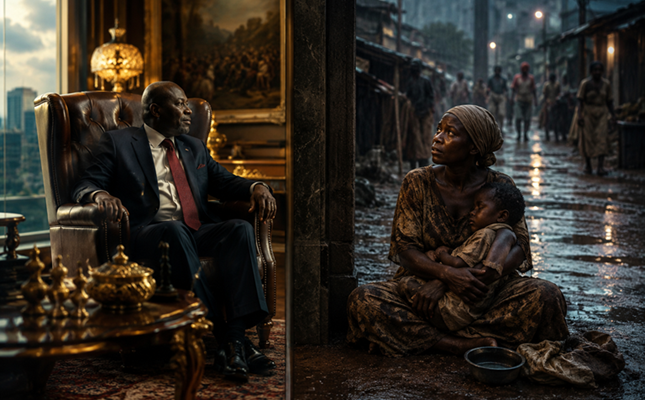

Every bully leaves fingerprints on a nation’s conscience.
Not all violence draws blood. Some arrives dressed in a tailored suit, wrapped in official authority, or hidden behind wealth, status, and influence. It speaks in threats instead of dialogue. It humiliates instead of persuading. It demands silence instead of accountability. Long before institutions collapse, they begin to decay from this quieter form of brutality: the routine bullying of ordinary people by those who believe power places them beyond reproach.
History offers a consistent warning. Civilizations rarely fall because they run out of resources. They weaken when arrogance replaces justice. From imperial courts to modern bureaucracies, from corporate boardrooms to political offices, the pattern is painfully familiar. A culture of intimidation takes root. Citizens learn that truth carries consequences while obedience earns survival. Fear becomes the unofficial language of governance. Once that happens, corruption no longer hides in the shadows. It occupies the front row.

The tragedy is that bullying is often celebrated as decisive leadership. It is neither strength nor confidence. It is insecurity armed with authority. Genuine leaders persuade. They inspire. They protect. Bullies perform the opposite task. They shrink human dignity until submission appears to be peace. The loudest voice in the room is often the weakest character behind the title.
The cost is measured far beyond bruised emotions. Innovation dies where people fear speaking honestly. Justice becomes selective when influence outweighs evidence. Public trust evaporates when institutions defend rank instead of principle. The ordinary citizen begins to believe that the law is a privilege reserved for the powerful rather than a shield for everyone. At that moment, democracy itself begins to lose its moral foundation.
The defining question for every society is therefore simple. Who feels safe? If only the wealthy, the connected, and the politically protected can live without intimidation, then power has abandoned its public purpose. Authority was never designed to manufacture fear. It exists to defend the vulnerable, restrain excess, and preserve the equal dignity of every citizen.
A nation should be judged not by the confidence of its elites but by the security of its common people. The market woman, the cleaner, the junior employee, the student, the farmer, and the domestic worker deserve the same respect as the minister, the executive, and the celebrity. The distance between civilization and tyranny is often measured by how these ordinary lives are treated.
Power is never on trial when it confronts another powerful person. Its true examination comes when no one is watching and the person standing before it has neither influence nor protection. That is where character is exposed. That is where justice either survives or dies. Every act of bullying against the powerless is more than a personal failure. It is a fracture in the moral architecture of society. Nations that ignore those fractures eventually discover that even the strongest walls cannot stand on a crumbling foundation.
– Inah Boniface Ocholi writes from Ayah – Igalamela/Odolu LGA, Kogi state.
08152094428 (SMS Only)