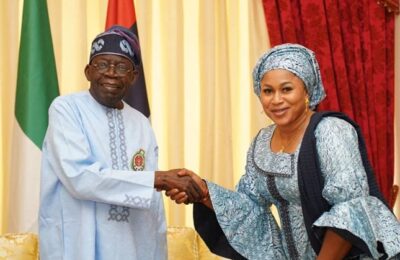
The sudden moral outrage over President Bola Ahmed Tinubu’s goodwill message to former Governor Yahaya Bello on his 50th birthday reeks less of concern for accountability and more of elitist hypocrisy masquerading as civic virtue. It is the familiar Nigerian pastime of condemning a man in the court of public sentiment after grudgingly admitting almost as an afterthought that the law still presumes him innocent.
Let us be blunt: this entire argument collapses under the weight of its own contradiction. You cannot, with one breath, acknowledge the constitutional principle of presumption of innocence, and with the next breath demand social, political, and moral exile for a man who has not been convicted by any court of law. That is not justice; that is mob logic dressed up as “optics.”
President Tinubu did not issue a pardon. He did not interfere with prosecution. He did not instruct the EFCC to withdraw charges. He simply sent a birthday message. If that alone is enough to trigger despair, then the problem is not Yahaya Bello, it is the fragile, selective conscience of those who see corruption only when it wears the face they dislike.

The truth critics avoid is this: Yahaya Bello is being prosecuted. Not hidden. Not shielded. Not excused. The EFCC Chairman himself, Mr. Ola Olukoyede has confirmed this repeatedly. The cases are in court. The wheels of justice, however slow and frustrating, are turning. So what exactly is the crime now, refusing to disappear quietly into political exile while the law takes its course?
The outrage would be laughable if it were not so dishonest. Nigeria has a long list of politically exposed persons who faced corruption charges, remained active in politics, contested elections, held party offices, and were later discharged or acquitted. Some even returned as heroes. Suddenly, when it is Yahaya Bello, we are told democracy must pause, birthdays must be cancelled, and political ambition must be suspended. That is not principle; that is persecution.
Let us also stop insulting Nigerians’ intelligence by pretending this is about “signalling.” The real signal being sent by President Tinubu is far more important: Nigeria is a country of laws, not emotions. The President understands, perhaps better than most that today’s accused can become tomorrow’s acquitted, and that leadership is not governed by Twitter outrage or newspaper sanctimony.
Ironically, the same write-up condemning Bello exposes the real cancer in Nigeria’s anti-corruption war: a broken system obsessed with technicalities, endless adjournments, and judicial congestion. If cases drag for 10–15 years, whose fault is it? Certainly not the accused for exercising their constitutional right to defence. The hypocrisy is staggering: a system that fails to deliver timely justice turns around to blame individuals for remaining politically relevant.
Yahaya Bello did not design the judicial delays. He did not create overworked courts. He did not invent senior lawyers skilled in procedural gymnastics. If anything, his case like that of Sule Lamido, proves the urgent need for specialised anti-corruption courts, a reform President Tinubu’s administration is better positioned than any before it to actualise.
And let us say this clearly: political courage is standing by principles even when it is inconvenient. Tinubu has not thrown Bello under the bus to appease noisy critics. Neither has he obstructed justice. That balance respect for the rule of law without surrendering leadership to mob pressure is the mark of a seasoned democrat, not a weak one.
Those screaming the loudest would do well to answer one simple question:
If Yahaya Bello is eventually acquitted, will they apologise for attempting to destroy his political life on the altar of suspicion?
Until then, the sermonising should stop. Nigeria needs justice, not lynching; reform, not selective outrage; and leadership, not performative morality.
Yahaya Bello will answer to the courts. President Tinubu will answer to history. And the rest of us should answer to the truth however inconvenient it may be.
– Danfulani Lukman Ohinoyi writes from Okene.