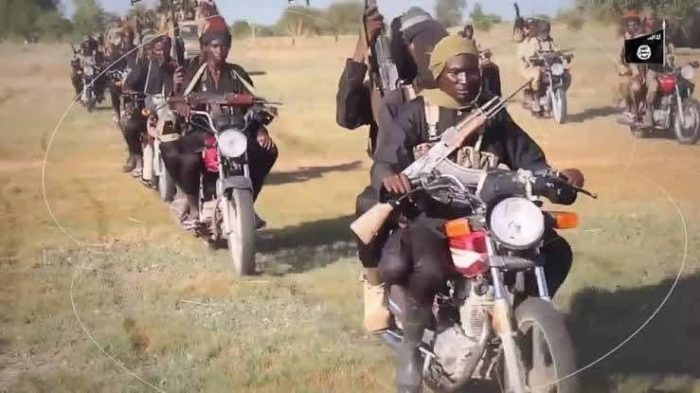

Nigeria’s banditry crisis is no longer only a Fulani herder story. Indigenous youths are inside it, and until we understand why, we will keep fighting the wrong war.
Across Nigeria’s rural belt, the story of insecurity has been told in one voice for too long: armed herders, forest camps, military sweeps. It is a tidy story, but it is incomplete, and the incompleteness is costing lives.
Look closely at who sustains these gangs and you find the sons of the same villages that are being raided. Indigenous youths are working as informants, guides, suppliers, and increasingly as gunmen. To understand why, we must stop asking who they are and start asking what they were doing before.

When the farm stops, the gun starts
A young man in a rural community once lived by the farming calendar, with roughly eight months of work built around planting, weeding, and harvest. That calendar has collapsed.
Fertilizer now costs about three times what it did. Extension services have all but vanished. Where bandits control the roads and fields, a “tax” is levied on farmers, and it turns a thin profit into a loss. The 2022 floods then destroyed stored grain in many communities, wiping out what little reserve families had.
The result is a young man with six months of nothing to do. Into that emptiness walks a bandit recruiter with an offer: ₦30,000 to ₦50,000 to be an informant, or ₦200,000 to join a forest camp.
That is not ideology. That is a job offer in a place where every other job has disappeared.
The intelligence department
The public imagines banditry as kidnapping and shooting. The real business runs deeper, and it runs on local knowledge.
A herder in the bush does not know when the cattle market holds, when an NGO is bringing food, or which road the police never patrol. The farmer’s son does. So there is a price list. Something like ₦5,000 buys the date of a market day, ₦10,000 buys the arrival of relief supplies, and ₦20,000 buys the unpatrolled road.
Without these locals, the gang is blind. They are the intelligence department. That is why indigenous involvement is not incidental to this crisis. It is structural.
Gold, lithium, and the man in town
In Zamfara, Niger, Kebbi, and Nasarawa, illegal gold and lithium pits need armed protection, and armed groups increasingly provide it. Bandits are no longer merely stealing cattle. They are guarding mines on behalf of sponsors.
Those sponsors are often not in the bush. They are in town, and frequently they are members of the local elite who pay young men to carry AK-47s. The Fulani gunman may face the camera, but the financier behind him is often from the community itself.
Guns cheaper than motorcycles
The tools of this trade have never been more accessible. Since the collapse of Libya in 2011, weapons have flooded the Sahel, and by field accounts the price of an AK-47 fell from about ₦500,000 to about ₦150,000. Attacks on police armouries in 2024 and 2025 added to the supply.
A gun is now capital. An idle youth can rent one for around ₦20,000 an operation, much as he might rent an okada for a day. When a rifle costs less than a motorcycle, unemployment becomes armed labor.
Revenge where justice failed
Not everyone joins for money. Consider a boy whose father was killed in a reprisal attack in 2020. The police did nothing, and no one was arrested or tried. He grows up learning that the state does not punish the first crime, so the second crime becomes self-justice.
He joins a group for revenge, not for pay. This cycle recruits indigenous youths far more than it recruits Fulani, because it feeds on the failure of the state, not the identity of the victim.
Why “Fulani only” is a dangerous lie
When government insists the problem is Fulani gunmen, its response is predictable: military sweeps in the forest. But the network that keeps a camp alive lives in town. It is the fuel seller, the phone-charging kiosk, the food supplier. Most of them are indigenous, and none of them are touched by a forest operation.
We bomb the camp and leave the supply chain untouched. Then we wonder why the camp returns.
Three motives, none of them tribal
Ask what pushes indigenous youths into this economy and you find three things, none of them ethnicity.
Money. With no farm income, banditry is the fastest cash available.
Protection. Those who refuse to join pay the tax. Those who join are exempt.
Status. In a village without jobs, a boy with a gun is feared and respected, much as a boy in a uniform once was.
This is not a tribal war. It is rural unemployment turned into an armed labor market.
Bring back the farm
If we accept that diagnosis, the prescription changes. Military force will remain necessary, but it cannot be the whole answer. An idle hand is the factory of banditry, and no operation can close a factory that keeps producing recruits.
So the campaign must be about restoring farming as a job, not only deploying soldiers as a solution. That means affordable fertilizer, working extension services, guaranteed prices for what farmers grow, and safe roads to market. Tractors, fertilizer, and a guaranteed price are the real weapons.
Give the young man of Zamfara a reason to be in his field by April, and the recruiter will find the village a lot harder to work.
– Benjamin Ibrahim writes from Lokoja, Kogi state.
+2348069596250