
By Pastor Stanley Ajileye
Before we join the growing chorus calling for the head of President Bola Ahmed Tinubu, perhaps we should pause long enough to ask ourselves a simple but uncomfortable question: How did we get here?
Nations are not destroyed in a day. Neither are they rebuilt overnight.

For as long as I can remember, Nigerians have lamented that “the Nigeria project is not working.” That lament did not begin with President Tinubu. It did not begin with President Buhari, President Jonathan, President Yar’Adua, President Obasanjo, or any other administration. It has echoed through generations, becoming almost a national anthem of frustration.
The truth is this: Nigeria’s problems are older than this administration, and solving them requires far more than slogans, protests, or political grandstanding.
Our greatest tragedy has never been the absence of ideas. Nigeria has never lacked brilliant economists, seasoned administrators, or experienced technocrats. What we have consistently lacked is the political courage to do what is necessary when it is unpopular.
For decades, successive governments knew that fuel subsidies were bleeding the nation’s treasury. They knew that multiple exchange rates encouraged corruption and discouraged investment. They knew that borrowing to fund consumption instead of production was economically reckless. Yet they postponed the inevitable because the political cost was simply too high.
Popularity won. Nigeria lost.
President Bola Ahmed Tinubu inherited an economy weighed down by mounting debts, declining revenues, crippling subsidy payments, foreign exchange distortions, and dwindling investor confidence. Whether one supported his election or not, these realities could not be wished away.
Within hours of assuming office, he made one of the boldest and most controversial decisions in Nigeria’s democratic history by removing the fuel subsidy.
The consequences were immediate. Transportation costs rose. Inflation worsened. Millions of Nigerians experienced genuine hardship. No sincere observer should deny this reality.
But leadership is not measured by the ability to avoid difficult decisions. Leadership is measured by the willingness to confront them.
The same applies to the unification of the foreign exchange market. It was painful. It remains controversial. Yet the previous system had become a breeding ground for arbitrage, rent-seeking, and economic distortions that benefited a privileged few at the expense of the nation.
Now let us ask another question.
What tangible changes have these reforms produced?
For the first time in many years, the humiliating spectacle of endless fuel queues has virtually disappeared. Nigerians still remember when motorists slept inside their vehicles for days at filling stations. Families postponed journeys. Businesses shut down because fuel simply could not be found.
Today, petrol is expensive, but it is largely available.
Availability has replaced scarcity.
The removal of fuel subsidies has also significantly reduced the incentive for smuggling petroleum products across Nigeria’s borders. For years, our national wealth subsidised fuel consumption in neighbouring countries while criminal networks enriched themselves at Nigeria’s expense. That economic absurdity is gradually becoming history.
Another development that deserves recognition is the relative stability in our public universities. For years, students routinely lost academic sessions because of prolonged industrial actions. Dreams were delayed. Careers were disrupted. Families watched helplessly.
Today, academic calendars are far more stable, giving students renewed confidence in completing their education on schedule.
Equally significant is the Nigerian Education Loan Fund (NELFUND), which has opened the doors of higher education to thousands of young Nigerians from financially disadvantaged backgrounds. Students who once faced the prospect of abandoning their education can now access interest-free tuition loans alongside upkeep support, easing the burden on parents and offering hope to countless families.
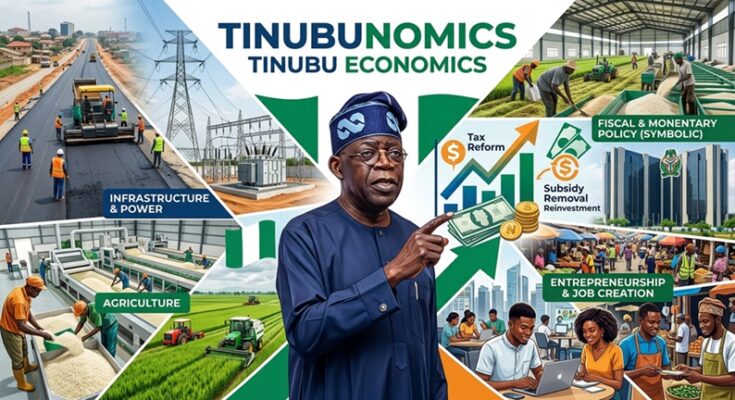
Government finances have also improved with the end of subsidy payments, creating greater fiscal space for investments in infrastructure, education, healthcare, agriculture, and security. The responsibility now rests on government to ensure that every naira saved is transparently and efficiently deployed for the benefit of the Nigerian people.
There are renewed efforts to improve tax administration, expand local refining capacity, attract investment, strengthen infrastructure, and reposition Nigeria as a productive economy rather than one dependent on unsustainable consumption.
Does this mean everything is perfect?
Certainly not.
Millions of Nigerians continue to grapple with the high cost of living. Food inflation remains severe. Purchasing power has declined. These are real challenges that demand urgent and compassionate responses from government.
But there is a difference between temporary pain caused by reform and permanent damage caused by refusing to reform.
History rarely celebrates leaders who preserve a broken status quo simply because change is unpopular.
It remembers those who had the courage to confront difficult realities.
Opposition is not the enemy of democracy. In fact, democracy depends on a vibrant opposition. Governments must be scrutinised, questioned, and held accountable.
However, criticism should be driven by facts rather than emotion, by evidence rather than nostalgia, and by patriotism rather than partisanship.
The easiest thing in politics is to condemn.
The hardest thing is to acknowledge that some difficult decisions, however painful, may have been necessary.
Nigeria cannot continue to repeat yesterday’s mistakes while expecting tomorrow’s miracles.
If these reforms are sustained, improved, and implemented with transparency and accountability, history may yet record this administration not merely for the hardship it inherited or the pain it imposed, but for having the courage to begin correcting structural failures that previous governments lacked the will to confront.
The future of Nigeria will not be secured by leaders who tell us only what we want to hear.
It will be secured by leaders who are prepared to do what the nation needs, even when the applause is slow in coming.
When history finally writes the story of this era, let it never be said that we rejected reform simply because it demanded sacrifice. Let it rather be said that, despite our pain, we found the wisdom to distinguish between policies that merely comforted us for a season and those that laid the foundation for a stronger, more prosperous Nigeria.
– Pastor Stanley Ajileye is the State Program Secretary, Win With Tinubu Grassroots Mobilisations Program, Kogi State.