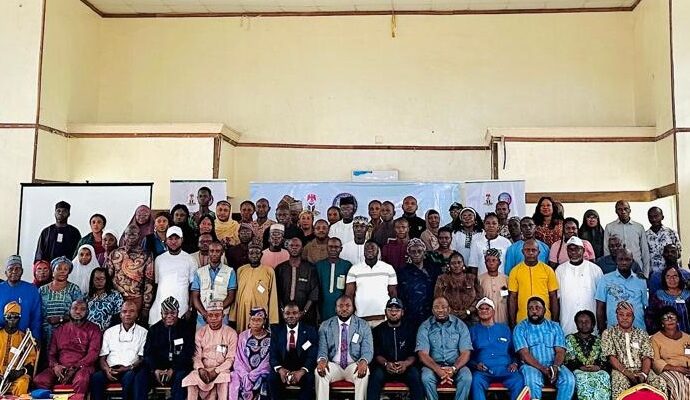

- Over 80 stakeholders converge in Okene to shape healthcare priorities, funding, and service delivery for 2027
By Rotimi Odofin
The Kogi State Government, in collaboration with the Federal Ministry of Health and development partners, has commenced the development of the state’s 2027 Health Sector Annual Operational Plan (AOP), with over 80 key stakeholders converging in Okene for a week-long strategic planning exercise.
The exercise, being coordinated under the Sector-Wide Approach (SWAp) framework, is designed to review, harmonise, and finalise the state’s health priorities, programs, and interventions ahead2027 fiscal year.

Participants drawn from government institutions, development partners and other critical stakeholders are expected to produce a comprehensive operational blueprint that will guide healthcare planning, resource allocation, implementation, monitoring and service delivery across Kogi State in 2027.
Inaugurating the exercise at De Hill Top Guest House, Okene, the Kogi State Coordinating Commissioner for Health, Dr. Abdulazeez Adams Adeiza described the AOP as a critical “living document” that would provide strategic direction for the implementation, coordination, and monitoring of health programs and interventions throughout the year.

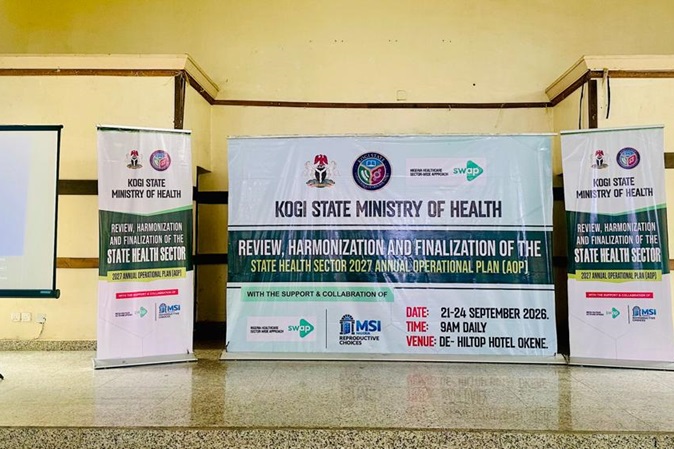
Dr Abdulazeez said the plan would also provide a framework for measuring performance, identifying gaps, and ensuring that available resources were directed towards priority areas capable of producing measurable improvements in healthcare outcomes.
He expressed appreciation to President Bola Ahmed Tinubu for the Federal Government’s continued investment and support for the health sector, while commending Kogi State Governor, Alhaji Ahmed Usman Ododo, for according healthcare delivery a major priority under his administration.
The Commissioner urged participants to bring their professional expertise and experience to bear on the exercise, stressing that the quality of the final document would depend largely on the depth and quality of contributions from stakeholders.
He called for a thorough assessment of existing programs, emerging health challenges, and available resources to ensure that the final plan remained realistic, evidence-based, and implementable.
Dr Abdulazeez uses the occasion to appreciate MSI Nigeria Reproductive Choices and other development partners such as UNICEF, Malaria Consortium, and other organisations supporting healthcare interventions in the state
Earlier, the Director of Health Planning, Research and Statistics, Mr. Johnson Aieyedogbon expressed satisfaction with the commencement of the 2027 AOP process, describing it as evidence of the state’s proactive approach to health-sector planning.
Aieyedogbon said the week-long exercise would enable participants to review existing priorities, harmonise proposed interventions, and make technical contributions towards producing a comprehensive final document.
He explained that the exercise was moved from Lokoja to Okene to provide a more conducive environment for focused deliberations and effective participation.
Also speaking, the SWAp Desk Officer, Dr. Emmanuel Bola Jonah explained that the 2027 AOP was being developed within the framework of the Sector-Wide Approach, which promotes coordinated planning, budgeting, implementation, and accountability across the health sector.
According to him, the process was deliberately aligned with the state’s annual budget preparation to ensure that identified health priorities and programs are adequately captured in the 2027 budget.
He stressed that the approach would facilitate the allocation of available resources in line with clearly established priorities, identified needs, and measurable health-sector objectives.
The 2027 AOP is aligned with the Nigeria Health Sector Strategic Blueprint (HSSB) 2023–2027, with the SWAp framework providing the basis for coordinated planning, financing, implementation and accountability.
The plan is structured around four broad strategic directions: Universal Access; Healthcare Transformation; People-Centred Care; and Resilience and Preparedness.
Under Universal Access, the plan seeks to expand comprehensive healthcare coverage while addressing geographical, economic, and social barriers to quality healthcare services.
Healthcare Transformation will focus on strengthening health infrastructure, improving service delivery systems, and promoting digital health technologies and other innovations.
The People-Centred Care component will prioritise health workforce capacity development, professional advancement, and stronger community participation in healthcare delivery.
Under Resilience and Preparedness, the plan will strengthen emergency response mechanisms, health security, and the state’s capacity to prevent and respond effectively to public-health emergencies.
The SWAp framework is also expected to deepen collaboration among government institutions, development partners, and other stakeholders while strengthening financial accountability, results-based implementation, and joint performance monitoring.
The participating development partners commended the Kogi State Government for its support for the health sector and commitment to coordinated planning, partnership, and improved healthcare delivery.
At the end of the week-long exercise, participants are expected to produce a harmonised and finalised 2027 Annual Operational Plan, which will serve as the operational framework for implementing Kogi State’s health priorities and programmes throughout 2027.