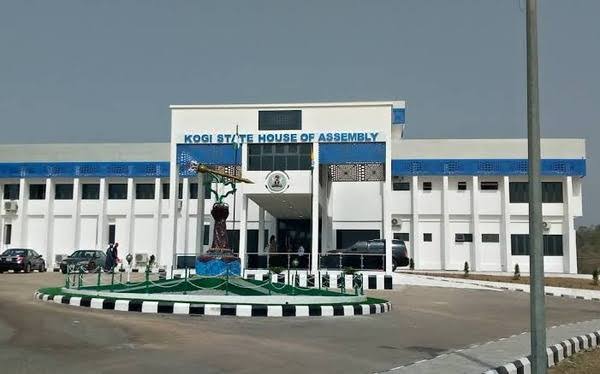

The Kogi State House of Assembly on Tuesday passed the Constitution Alteration Bill seeking to establish State Police Services, marking a decisive step toward strengthening regional security frameworks and bolstering local employment opportunities.
The legislation aims to alter the 1999 Constitution of the Federal Republic of Nigeria to pave the way for state-managed policing systems across the federation.
The passage followed a second reading, a lead debate presented by House Leader Dr. Suleiman Abdulrazak, and a detailed clause-by-clause consideration at the Committee of the Whole during Tuesday’s plenary session in Lokoja.

Presenting the bill, Speaker of the House Rt. Hon. Aliyu Yusuf characterized the session as historic, noting that it offered lawmakers a pivotal opportunity to formally define Kogi State’s stance on decentralizing police operations.
Yusuf emphasized that the creation of state police forces has dominated national policy discussions for decades, driven by persistent calls from civil society organizations, community leaders, and political stakeholders seeking to fortify Nigeria’s national security architecture.
The constitutional amendment bill originated from a proposal by President Bola Tinubu to the National Assembly. Following its passage by the Senate and concurrence by the House of Representatives, the draft law was transmitted to State Houses of Assembly nationwide for ratification in accordance with Section 9 of the 1999 Constitution as amended.
Outlining the practical benefits of the measure, Yusuf stated that the law will empower state authorities to recruit local personnel who possess deep geographical intelligence and an intimate understanding of regional security dynamics. This localized manpower is expected to complement the central operations of the Nigeria Police Force in safeguarding lives and property.
“The structure of the State Police will ease and facilitate response time and will limit bureaucracies that often stand against successful operations of the Nigeria Police Force,” Yusuf said during the session. He added that the institutional framework, once fully enacted, would also help curb youth unemployment through targeted regional recruitment drives.
Assembly members unanimously voiced support for the legislation during floor debates, highlighting its potential to enhance grassroots law enforcement, alleviate operational burdens on federal personnel, and generate much-needed economic opportunities for local youths. Following the debate, the bill was passed via a unanimous voice vote.
In subsequent legislative business, the House advanced a separate measure through its second reading, considering a bill to repeal the Bureau of Lands Law, 2025, and re-enact the Bureau of Lands (Establishment) Law, 2026.