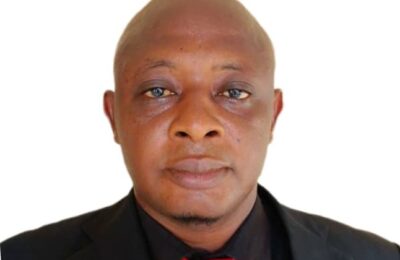

In Nigerian state politics, the line between legitimate opposition and ethnic propaganda has become increasingly blurred, especially in online commentary on Kogi State governance. Isaiah Davies Ijele previously served as spokesperson and Director of New Media for the Social Democratic Party’s 2023 governorship campaign, during which he orchestrated an intense ethnic campaign that derailed his party’s bid. Since then, his online commentary has been marked by falsehoods, divisive tactics and contradictions. While public accountability is a democratic right, his criticism is often uninformed, diversionary, and emotive, reflecting his grossly limited education and experience, which we discuss here.
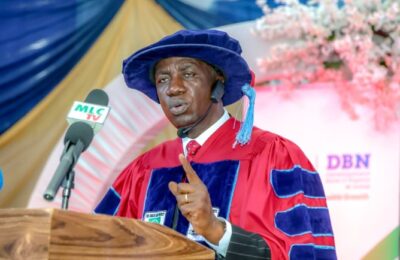
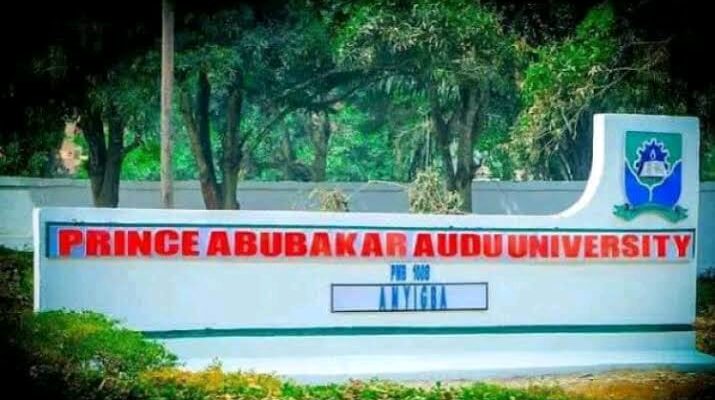
His reaction to the harmonised university fees framework is a case in point. Kogi State has three state universities, one in each senatorial district. Prince Abubakar Audu University (PAAU), Anyigba, Kogi East. Confluence University of Science and Technology, Osara, Kogi Central. Kogi State University, Kabba, Kogi West. The government adopted a harmonised tuition structure for all three universities. The statewide policy cuts across the state’s three regions. He alleged a fee increase without publishing the details or facts, as a well-bred investigative journalist should. The institutions have officially denied any fee increase. The truth is, Ijele cannot give what he has not been trained to do. However, he chose to target two officers from Kogi East, his own region: Hon. Yakubu Okala, the State Auditor General, and Professor Salisu Usman Ogbo, the Vice-Chancellor of PAAU. In a recent online post, he blamed them for the increase and attacked their character with personal insults.
A fair critic would have called for a policy review to ease the burden on families if fees had actually increased, as alleged. Ijele chose insults over facts and analysis. Such conduct is a mark of mischief. It also reflects his profound educational deficit and shallow knowledge of public service processes. His educational record explains much. Official filings and campaign documents list his highest verifiable qualifications as the First School Leaving Certificate (FSLC) and the Senior Secondary Certificate Examination (SSCE). He has said he is pursuing an online degree at Atlantic International University, USA. That institution is a private, for-profit distance-learning provider. The National Universities Commission (NUC) does not recognise such an institution’s programme, so its degrees carry no weight in Nigeria’s education system. His public profiles also claim that he completed remedial and matriculation programmes at Usmanu Danfodiyo University, Sokoto. But credentials asserted in a profile are no substitute for verified training and relevant experience, both essential to evaluating accomplished institutional leaders with authority.

Ijele presents himself on national broadcast networks as a media auditor and political analyst, despite having no formal journalistic training, accredited media credentials or public-sector experience. His background is primarily in partisan media consulting rather than professional journalism or development communication. His attacks on officials who work across ethnic lines appear more partisan than accountable. His commentary also shows a recurring pattern of invoking ethnic grievance, selectively profiling individuals and targeting prominent members of his constituency who serve in the state administration.
The most striking feature of his output is the vilification of professionals from his own senatorial district, Kogi East. Okala and Professor Ogbo are both Igala professionals with notable institutional careers. Professor Ogbo previously served as Rector of Kogi State Polytechnic. Under his leadership, state institutions underwent infrastructural reform and secured programme accreditation. Under Okala, the state audit machinery has sustained vital institutional checks across transitions.
Ijele frames their service not as a public duty but as a communal betrayal. Targeting technocrats merely for serving across ethnic lines is unpatriotic. This reveals the narrow-mindedness underpinning his rhetoric. By delegitimising his own kinsmen for working with another senatorial district, Ijele reduces governance to a zero-sum ethnic feud, a hallmark of closed minds.
The gravest consequence of this rhetoric is political shortsightedness. The constitutional arithmetic of governorship elections makes purely ethnic campaigns self-defeating. Under Section 179(2) of the 1999 Constitution, a candidate for Lugard House needs the highest number of votes and at least a quarter of the votes in two-thirds of the state’s Local Government Areas (LGAs). In Kogi, that means fourteen of twenty-one. Kogi East has nine LGAs, Kogi West seven and Kogi Central five.
Even with total solidarity across Kogi East’s nine LGAs, an Igala Agenda would still need substantial support in at least five LGAs in Kogi West or Kogi Central. Ijele himself recognises the region’s weight. He claims the state government has made no visible impact in Kogi East’s nine local government areas, yet his emphasis on ethnic division weakens the alliances needed to address those imbalances.
Herein lies the real danger. Ijele’s conduct is unpatriotic to the state and destructive to the long-term interests of the Igala people. Kogi East is politically dominant, with a deep pool of experienced politicians and accomplished academics. It has the tools for genuine statecraft. The region should use its large population to return to power through cross-regional engagement, bridge-building, and consensus, not by yielding to political irritants like Ijele. Historically, Kogi East leaders held the levers of power through cross-Niger alliances and broad coalition governance. By alienating Kogi West and Kogi Central, and policing kinsmen who engage with them, Ijele’s commentary isolates the region. It diminishes Kogi East’s political influence and undermines the inter-district alliances essential to an inclusive, successful coalition.
Public commentators have an ethical duty to inform, not to incite. Every citizen has the constitutional right to dissent and to hold power to account. Using digital platforms for ethnic vendettas against institutional leaders, however, corrodes democratic norms. If Kogi State is to secure lasting stability, its public debate must rise above identity baiting and focus on evidence, issues and accountable governance. Otherwise, commentary shaped by limited education and experience risks becoming a loose cannon, endangering the very future it claims to defend.
– Akubo Francis
PAAU, Anyigba