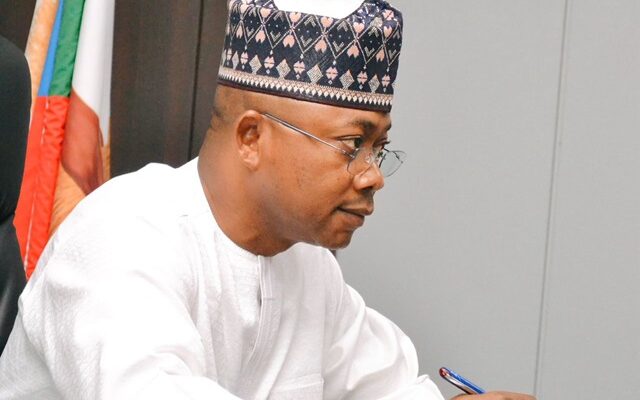

In the labyrinthine terrain of Kogi State politics, where historical rivalries and internal fissures have long dictated the tempo of governance, Governor Usman has emerged as a figure of strategic influence. While the Igala nation wrestles with disunity, his ascent reflects a calculated orchestration of perception, power, and pragmatic engagement; a deliberate construction of political capital amidst fragmentation.
Kogi State, a mosaic of ethnic identities and entrenched political interests, has historically been vulnerable to elite infighting. Yet, within this context of contestation, Usman has methodically positioned himself as a stabilizing force. His approach is neither impulsive nor reactive; it is a precise interplay of patronage, public symbolism, and strategic discretion, allowing him to consolidate loyalty even as internal divisions persist.
Central to this consolidation is his selective engagement with rival factions. By alternating between appeasement and subtle co-optation, Usman cultivates the perception of impartiality while quietly securing allegiance. In doing so, he transforms factional fragmentation; a potential source of weakness into a reservoir of political leverage, converting opposition into conditional support.

Equally critical is his use of visible governance and symbolic interventions. Ribbon-cutting ceremonies, rural electrification initiatives, and community development projects are not merely administrative acts; they are carefully curated demonstrations of competence and commitment. In regions where heritage and kinship influence political legitimacy, these gestures resonate deeply, enhancing his stature as a leader capable of bridging divides.
Usman’s media and communication strategy further amplifies his reputation. In an environment rife with partisan narratives, he employs controlled messaging, strategic visibility, and disciplined transparency to project authority. The optics of decisiveness, when contrasted against ongoing Igala discord, reinforce his image as a pragmatic arbiter; a governor whose credibility thrives amid division.
A striking contrast emerges when Governor Usman is compared to his predecessor and former “mafia master,” Yahaya Bello. Where Bello’s tenure was marked by corruption allegations, ceaseless conflicts with the EFCC, and high-profile clashes with figures like Senator Natasha, Usman has deliberately eschewed such theatrics. His governance is measured, deliberate, and largely insulated from scandal. Rather than leading through fear, confrontation, or transactional intimidation, Usman leverages credibility, tact, and strategic foresight; a clear departure from the style that once defined Kogi’s political theatre.
Yet, even amidst these accomplishments, criticism is beginning to surface, particularly from Kogi East. Observers contend that while Usman’s governance shines in selected regions, Eastern constituencies feel overlooked, with infrastructural projects and political appointments perceived as disproportionately favouring other parts of the state. Detractors argue that the governor’s cautious, strategic approach, while effective in consolidating reputation, may risk alienating key constituencies, leaving Kogi East underrepresented and politically marginalized. The growing discontent serves as a reminder that political capital, no matter how skillfully amassed, is always contingent upon inclusivity and equitable attention across the state’s diverse landscape.
Finally, Usman’s influence is underpinned by long-term strategic foresight. He aligns with emerging power brokers, anticipates shifts in elite coalitions, and positions himself at the nexus of policy, patronage, and popular perception. By converting turbulence into opportunity, he ensures that his political capital accumulates steadily, even as rivals falter under internal discord.
In Kogi State, where history, heritage, and politics are deeply intertwined, Usman’s rise offers a crucial lesson: in fragmented societies, influence accrues not to the loudest faction, nor the most confrontational, but to the leader capable of navigating divisions with foresight, poise, and precision. Amid Igala disunity and emerging criticisms from Kogi East, Governor Usman is not merely surviving; he is deliberately constructing a legacy of political authority that may outlast the very fractures that define it.
– Inah Boniface Ocholi writes from Ayah – Igalamela/Odolu LGA, Kogi state.
08152094428 (SMS Only)