
By Oyigu Elijah
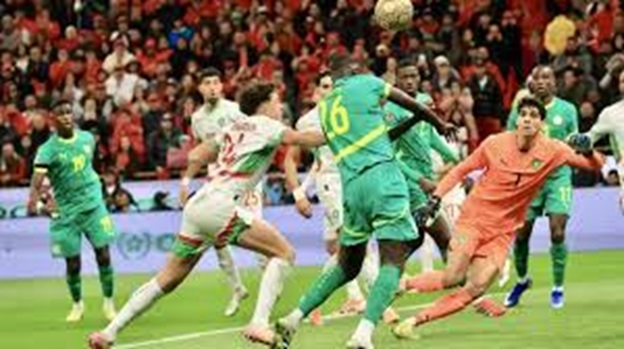
The final match between Morocco and Senegal on Sunday at the just concluded AFCON was expected to be a celebration of African football at its finest. Instead, it almost ended in controversy and disappointment.
What should have been remembered for skill, discipline, and sportsmanship became overshadowed by a late decision that raised serious questions about fairness and trust in officiating.
As the game approached its end, with both teams fully committed and emotions running high, a penalty was awarded to Morocco almost at stoppage time shortly after a goal scored by the Senegalese side was ignored and ruled out. The decision shocked players, officials, and spectators alike.
Senegalese players protested strongly, insisting that the call was unjust. When their concerns were not addressed, the team took the dramatic step of leaving the pitch in protest, bringing the match to a bitter and unresolved controversy.
It took the calm and decisive leadership of Sadio Mané, the former Liverpool FC player, to change the course of events. In the heat of anger and disappointment, he went into the dressing room and appealed directly to his teammates, urging them to return to the pitch and allow the match to be concluded. His intervention reflected courage, maturity, and a deep sense of responsibility, not only to his team but to the spirit of the game itself.
The players listened, returned to the field, and chose discipline over protest. In the end, the night turned in their favor, proving that true leadership often shows itself in moments of crisis. What could have ended in lasting bitterness instead became a testament to resilience, and the power of composed leadership under pressure.
This incident points clearly to an officiating problem that goes beyond one match or one competition. Referees hold enormous power over the outcome of games, and when that power appears poorly exercised, it damages the credibility of the sport. Football depends on trust, and without confidence in officials, the game loses its moral authority.
Across Africa, there is an urgent need to learn from moments like this and recommit to fair play. Football thrives when rules are applied evenly and transparently. When players believe the system is stacked against them, frustration replaces competition, and protest replaces respect.
The lesson from this match also extends beyond sports and speaks directly to democratic institutions, particularly the Independent National Electoral Commission in Nigeria. Just as referees are expected to be neutral, electoral bodies must remain impartial. Any perception of bias erodes public trust and weakens the democratic process.
If elections continue to be skewed in favor of perceived or preferred candidates, citizens will eventually lose faith. People will begin to feel that their votes do not matter, much like players who feel that matches are decided before the final whistle. Democracy, like sport, relies on belief in a fair contest.
Over time, this loss of confidence can lead to voter apathy. Citizens may choose to stay at home on election day, not out of laziness, but out of quiet protest. A nation where people stop voting is a nation where democracy is slowly being hollowed out from within.
For both football and politics, systems must be allowed to work as they are designed to. Rules exist to guide conduct and ensure fairness. When those rules are bent or ignored, institutions become tools of convenience rather than pillars of justice.
Fair play must therefore be actively encouraged, not only in words but in practice. Officials, whether in sports or governance, must be held to high standards. Transparency, accountability, and consistency are not optional values but essential requirements.
Above all, institutional integrity must be upheld with honesty and courage. Favoritism and intimidation should belong to the past. Whether on the football pitch or in the ballot box, only fairness can sustain respect, unity, and lasting confidence in our systems.
This incident should serve as a clear call to the Confederation of African Football to do better. CAF must look beyond sentiment and study how other continents have strengthened their football administration through consistency, independence, and respect for the rules.
The weaknesses in officiating and match management are becoming too obvious to ignore, and they do not present Africa in a good light. Our continent is rich in talent and passion, but without credible systems, that potential is weakened.
Hosting rights must never be mistaken for entitlement to victory. The privilege of organizing a tournament does not and should not translate into an advantage on the pitch.
Matches must be decided by performance, discipline, and merit alone. Fair play must remain the guiding principle, allowing the better team on the day to win and ensuring that African football grows in credibility, dignity, and maturity.