
By Idris Rufai
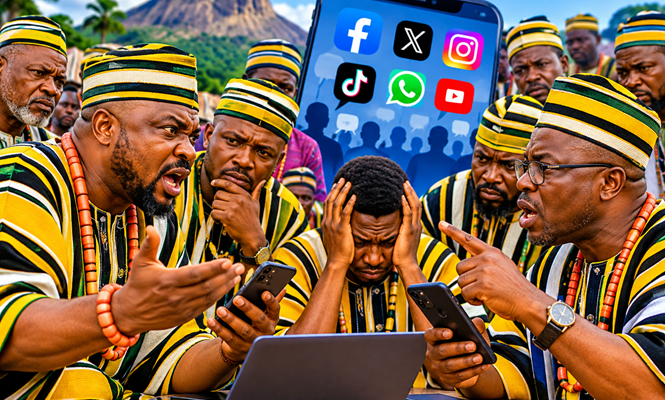
Apparently, politics in Kogi East has taken a new dimension. Social media, which should ordinarily serve as a platform for exchanging ideas, promoting political conversations and educating the public, is gradually becoming a digital battlefield where brothers turn against brothers, insults replace arguments, and disrespect is celebrated in the name of political loyalty.
One would almost think that winning an election now requires a certificate in character assassination, a postgraduate degree in online insults and professional training in dragging political opponents.

What a political adventure!
It is becoming increasingly disturbing to witness how some political analysts, supporters and self-acclaimed political commentators use social media to attack one another with abusive language, expose private matters and engage in unnecessary name-calling. All these happen under the disguise of political campaigns, political analysis or the defence of one candidate against another.
But one important question remains: What exactly are we trying to achieve, and at whose expense?
Have we suddenly forgotten that there is life after elections? That political positions are temporary, political interests change, and today’s opponents may become tomorrow’s partners? Most importantly, have we forgotten that beyond our different political affiliations, family backgrounds and local government areas, we remain one people connected by a common identity and heritage?
The Igala Kingdom deserves better than a generation of politically divided brothers who can no longer engage in meaningful conversations without attacking one another.
Honestly, I sometimes feel disappointed when I go through certain political discussions and comments online. Instead of finding intelligent arguments, constructive criticism and evidence-based analysis, what often appears is hatred packaged as political loyalty. Instead of proving a point with facts, some individuals prefer to destroy the personality of whoever holds a different opinion.
Since when did political disagreement become a declaration of personal hatred?
Politics is not a wrestling competition where the loudest voice wins, neither is it a competition to determine who can insult another person most effectively. It is about ideas, policies, leadership capacity, accountability and the ability to convince the electorate through credible arguments.
If you believe your preferred candidate is better, present the evidence. If you disagree with another person’s political position, challenge the argument, not the individual’s dignity. If a politician has failed, point to the failure and demand accountability. There is absolutely no need to drag families, expose private affairs or turn political conversations into platforms for public humiliation.
After all, you can disagree politically without becoming enemies personally.
The irony is that many of us claim to desire development, unity and progress for Igala land, yet our online conduct sometimes contradicts the very values we claim to defend. We preach unity in public but manufacture division in comment sections. We talk about the future of our people while destroying the relationships that should help build that future.
Perhaps we should remind ourselves that political candidates will eventually leave the campaign stage, elections will be conducted, winners will celebrate and losers will return to their respective lives. But the insults, screenshots, public humiliation and broken relationships may remain long after the political noise has disappeared.
Will the political candidates remember every insult exchanged in their names? Will they compensate those who lost friendships and family relationships defending them online? Or will the ordinary supporters be left to deal with the consequences of a political battle that was never theirs to fight?
This is not a call for anyone to abandon their political beliefs or stop holding public officials accountable. Far from it. Democracy thrives on disagreement, criticism and healthy competition. However, political maturity demands that we understand the difference between criticism and character assassination.
We are educated enough to know better. We should be mature enough to argue with facts, disagree with respect and recognise that our collective interest should be greater than our individual political preferences.
The future of Kogi East and the progress of the Igala Kingdom cannot be built on bitterness, online hostility and unnecessary divisions. We need intellectual conversations, responsible political participation and a generation that understands the importance of being its brother’s keeper.
Let us campaign for candidates without campaigning against our humanity.
Because when the election is over, the political parties may go their separate ways, but we will still remain one people. And no political ambition should be worth sacrificing the unity, dignity and brotherhood of the Igala people.
Politics should divide our opinions, not destroy our relationships.
– Idris Rufai, The Watchful Eye
idrisrufai744@gmail.com