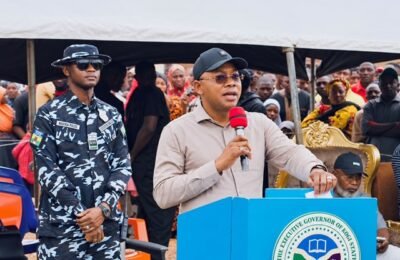

The recent campaign engagement of Senator Natasha H. Akpoti-Uduaghan in Okene Local Government Area offers an interesting perspective on how political campaigns can become more than the conventional gathering of supporters, political speeches, music and election promises.
An observation shared by Prince Samson provides an important starting point for a broader conversation about the changing character of political engagement in Kogi Central and the responsibilities of elected representatives beyond the ballot box.
What distinguished the Okene outing was not merely the crowd, the entertainment or the political enthusiasm surrounding the Senator. It was the deliberate effort to connect political mobilisation with public enlightenment, economic visibility, cultural identity and community participation.

In an environment where political gatherings are often judged by the number of people in attendance, the volume of music and the promises made from campaign podiums, Senator Natasha’s approach presented another dimension of political communication: using the campaign platform to create additional value for the people.
One of the most important responsibilities of political leadership is educating citizens about governance, democratic participation and the decisions that affect their everyday lives.
Political campaigns should not simply tell people whom to vote for; they should also help citizens understand why their votes matter, what government institutions are expected to deliver and how they can participate meaningfully in the democratic process.
By incorporating political education into her engagement with the people of Okene, Senator Natasha demonstrated the importance of making political communication informative rather than merely entertaining.
An enlightened electorate is better positioned to demand accountability, evaluate performance and make informed political decisions.
Perhaps one of the most remarkable aspects highlighted by Prince Samson was the Senator’s decision to showcase the gifts presented to her rather than simply receive them as personal tokens of appreciation.
Traditional attire, locally produced palm oil, yams and other indigenous products became part of a wider conversation about the economic potential of Kogi Central.
This gesture deserves attention because it demonstrates how public visibility can be converted into economic opportunity.
When a political leader with considerable public visibility showcases products made or cultivated by ordinary citizens, that exposure can introduce those products to new audiences, attract potential buyers and encourage wider commercial interest.
The significance goes beyond the immediate campaign gathering. It speaks to the need to build stronger connections between political leadership and local economic development.
Our farmers should not only be celebrated during harvest seasons. Their products should be promoted, their markets expanded and their contributions to the local economy recognised.
The same applies to traders, artisans, fashion designers, food processors and small-scale manufacturers.
Another important dimension was the promotion of Ebira traditional attire and indigenous products.
Culture is not merely an expression of identity; it can also be an economic asset. Traditional fashion, local cuisine, agricultural products, festivals and indigenous craftsmanship possess the potential to attract tourism, create employment and strengthen the visibility of a community.
By giving these products and cultural expressions public attention, the Okene campaign demonstrated how political platforms can contribute to preserving and promoting local heritage.
There is a broader lesson here: development should not require communities to abandon their identity. Rather, their identity should become part of the foundation upon which economic and social opportunities are built.
Equally significant was the opportunity given to beneficiaries of the Senator’s interventions to come forward and share their experiences.
This is an important element of democratic accountability.
While political leaders may communicate their achievements through speeches, the experiences of beneficiaries provide another perspective on the impact of public interventions.
Allowing citizens to tell their own stories makes political engagement more participatory. It also gives the public an opportunity to assess the practical implications of programmes and interventions.
Of course, testimonies should complement, not replace, transparent records and measurable evidence of performance. Nevertheless, providing beneficiaries with a platform to speak is a meaningful way of bringing ordinary citizens into the political conversation.
The Okene experience raises a fundamental question: must every political gathering be reduced to entertainment, political rivalry and election promises?
Certainly not.
Campaign platforms can serve multiple purposes. They can educate voters, promote local enterprises, celebrate cultural heritage, recognise community contributions and encourage constructive conversations about development.
This is particularly important at a time when citizens are increasingly interested in practical outcomes rather than political rhetoric.
Senator Natasha’s approach offers an example of how political visibility can be deployed to draw attention to the people, their businesses, their culture and their economic potential.
However, the real measure of this approach will ultimately be its ability to complement sustained empowerment, stronger market access, institutional accountability and tangible improvements in people’s livelihoods.
The ultimate purpose of political representation is not simply to occupy an elected office or win another election. It is to use the opportunities and influence that come with public office to improve the conditions of the people.
The Okene campaign engagement therefore deserves to be examined beyond the usual political calculations. It presented an opportunity to demonstrate that political mobilisation can also become a platform for economic promotion, cultural preservation, public enlightenment and citizen participation.
As Kogi Central continues its political journey towards 2027, one important lesson stands out: the most meaningful political engagements are those that leave the people with more than memories of a colourful gathering.
They should leave behind knowledge, opportunities, visibility, inspiration and a stronger sense of belonging.
That is the bigger conversation arising from Senator Natasha Akpoti-Uduaghan’s Okene engagement.
– Michael Samuel Idoko (MSI) writes from Kogi state.