
As rising tuition costs at Prince Abubakar Audu University threaten the educational aspirations of ordinary families, a difficult question confronts Kogi State: should poverty determine who gets an education and who is left behind?
A university should be a ladder out of poverty, not another wall built around it. Yet, for many ordinary families in Kogi State, the rising cost of tuition at Prince Abubakar Audu University (PAAU), Anyigba, and Federal University Lokoja are turning the dream of higher education into an increasingly expensive privilege. Behind the figures are parents struggling to meet payment deadlines, students uncertain about their academic futures and households forced to choose between educating their children and meeting basic needs. When the cost of learning exceeds the means of the people it is meant to serve, the issue goes beyond university administration. It becomes a question of social justice, public responsibility and the future of an entire generation.
I recently encountered a family whose daughter had secured admission into PAAU. Her admission should have been a moment of celebration, a reward for hard work and the beginning of a promising future. Instead, it became a source of anxiety. When I asked about her resumption, her mother explained that the family could not afford the new tuition fees. They would have to wait until the next farming season, when they hoped to raise enough money to send their daughter back to school. Consider the weight of that reality: a young woman has earned admission into a university, but her academic future now depends on the success of a farming season. Her dream is not constrained by a lack of intelligence, ambition or academic qualifications. It is being held hostage by financial hardship. I also came across a heartbreaking video on social media of a man crying over the burden of having more than eight dependants enrolled at PAAU. His anguish raises difficult questions. How many other parents are silently carrying similar burdens? How many students are attending lectures without knowing whether their families can afford the next payment? How many promising futures will be interrupted because the cost of education has moved beyond the reach of ordinary households?

The university’s financial position deserves consideration. Institutions of higher learning require adequate funding to maintain infrastructure, pay staff, improve teaching facilities and sustain academic standards. However, financial sustainability must not come at the expense of accessibility. PAAU management has reportedly explained that the revised fees reflect a uniform fee structure for Kogi State’s three state-owned universities, approved by the government. That explanation may clarify the administrative process, but it does not erase the hardship experienced by families. A policy can be administratively justified and still impose an unbearable burden on its intended beneficiaries. The government and university management must therefore confront the human consequences of the policy. They should publish transparent fee schedules, explain the adjustments and provide meaningful relief for students from financially disadvantaged backgrounds. Public education must not become a privilege reserved for households with deeper pockets.
There is also a historical and institutional responsibility that cannot be ignored. In previous administrations, Kogi residents recall periods when successive governors like the Late Prince Abubakar Audu and Alhaji Ibrahim Idris provided varying levels of financial support to the state’s public university system. Such interventions recognised an important principle: public universities cannot depend entirely on tuition payments from struggling families. Government has a responsibility to invest in education because its benefits extend beyond individual graduates to the economy, public institutions and society. PAAU, formerly Kogi State University, was established in 1999. After more than two decades, it should be looking towards a more ambitious future. Its priorities should include stronger academic programmes, research development, international exchange opportunities and partnerships with reputable foreign universities. Institutional maturity should translate into academic excellence, not merely increased financial demands on parents. International partnerships require sustained investment, accreditation, research capacity and academic credibility. These are ambitions worthy of a university with PAAU’s history and potential.
For students whose families cannot meet the current financial demands, alternative institutions also deserve consideration. Federal Polytechnic Idah and other accredited tertiary institutions in Kogi State provide different pathways to higher education, depending on students’ qualifications, preferred disciplines and career aspirations. However, alternatives should expand educational opportunities, not become an excuse for making public university education inaccessible. Students should not be forced to abandon their chosen academic paths simply because their parents cannot afford tuition. The more sustainable response lies in practical interventions: needs-based scholarships, bursaries, flexible instalment payments, targeted tuition assistance and transparent financial support schemes. Government should also consider restoring or strengthening subsidies for students from low-income households. These measures would protect vulnerable students while allowing the university to pursue the funding required for academic development.
This is where the intervention of Igala sons and daughters becomes particularly important. PAAU is more than an institution located in Anyigba; it is an important educational asset whose fortunes affect families across Kogi State. We appeal to influential Igala professionals, traditional rulers, business leaders, politicians, philanthropists and people of goodwill to rise above political differences and engage constructively with the government and university management. Those with the financial capacity should consider establishing an educational intervention fund to support students whose academic futures are threatened by poverty. This appeal is not an attempt to transfer the government’s responsibility to private individuals. Rather, it is a call for collective responsibility in protecting an institution and the young people who depend on it. We equally urge the Kogi State Government to review the practical consequences of the current fee structure and consider measures that will prevent qualified students from being excluded by financial hardship. Education should unite a people around a common future, not divide them according to their ability to pay.
The greatest wealth of Kogi State is not buried beneath its soil. It lives in the minds of its young people. Every student forced to suspend an education because of poverty represents a potential contribution to the state’s future put on hold. The young woman waiting for the next farming season deserves more than sympathy. The father struggling to educate eight dependants deserves more than social media attention. They deserve policies that recognise their circumstances and institutions that preserve their opportunities. A university should open doors, not turn admission letters into painful reminders of what poor families cannot afford. The measure of a public university should not rest solely on the revenue it generates, but also on the opportunities it creates and the lives it transforms. Let PAAU remain a ladder of opportunity for the children of Kogi State, not a privilege that only the wealthy can afford.
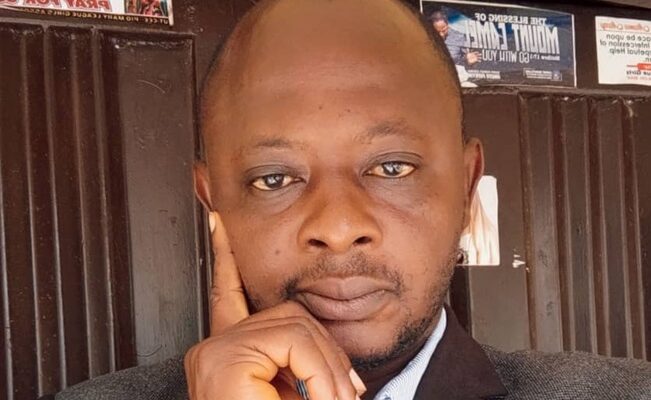
– Inah Boniface Ocholi writes from Ayah – Igalamela/Odolu LGA, Kogi state.
08152094428 (SMS Only)