
Election rigging is the opposite of a free and fair election.
While a normal election process is about counting what voters actually chose, rigging is any deliberate attempt to change the outcome so it does not reflect the voters’ will.
It is not usually one person on election day. It is a chain of actions that can happen before, during, and after voting.
Before Election Day – Setting the stage
This is where most rigging starts, because it is less visible.

Manipulation of the voters’ register: Adding fake names, removing real voters from the list, keeping dead persons on the list, or moving voters to the wrong polling unit so they cannot find where to vote.
Voter suppression and intimidation: Using threats, violence, or creating fear in a stronghold of an opponent so people stay home. It can also be administrative, like making registration very difficult in certain areas.
Vote buying and inducement: Offering money, food, jobs, or materials in exchange for a promise to vote a certain way, or buying PVCs / voter cards.
Abuse of state resources: Using government money, media, vehicles, or officials to campaign for one party, or disqualifying opponents through biased use of courts or security agencies.
During Election Day – The voting stage
a. Ballot stuffing: Putting pre-thumbprinted ballot papers into the ballot box, so the number of votes is more than the number of accredited voters.
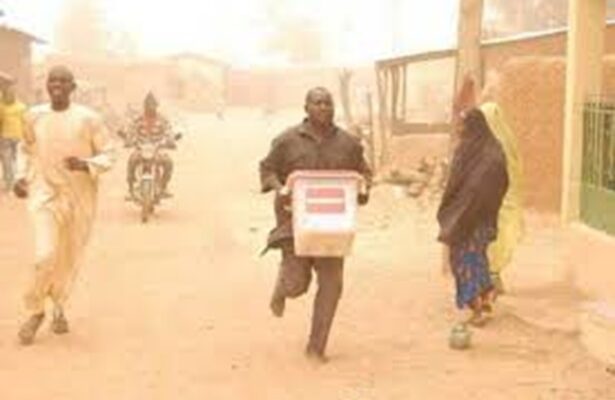
Ballot snatching and box switching: Seizing ballot boxes by force and taking them to a different location to fill them up, or swapping a real box with a pre-filled one.
b. Over-voting and multiple voting: One person voting many times, or using another person’s card.
Compromised polling officials: A presiding officer deliberately not using the BVAS or other accreditation devices, refusing to upload results, or guiding voters to vote a certain way inside the booth.
Vote buying at the polling unit: The “see and buy” or “vote and get paid” that happens around polling units.
3. After Voting – The counting and collation stage
This is historically the most vulnerable stage.
Falsification at collation centers: Changing figures on the result sheet when moving from polling unit to ward, to LGA, to state collation. For example, what was recorded as 120 votes at the polling unit becomes 620 at the collation center.
Refusal to upload or alteration of uploaded results: Not transmitting results from the polling unit in real time, then changing them before final announcement.
Intimidation of observers and agents: Chasing away party agents, observers, or journalists so there are no witnesses during counting.
Declaration of false results: Announcing a winner who did not win at the polling units.
Why it happens
The core motive is to gain power without majority support. It thrives where there is weak enforcement of electoral law, poverty that makes vote buying easy, low trust in institutions, and lack of transparency in collation.
credible election tries to block all three stages with measures like a clean voter register, secret balloting, accreditation with technology like BVAS, instant electronic transmission of polling unit results, presence of party agents and observers, and prosecution of offenders under the Electoral Act.
– Benjamin Ibrahim writes from Lokoja, Kogi state.
+2348069596250