
An execution is supposed to be the final punctuation mark of a criminal sentence: definitive, controlled and irreversible. But when the machinery of death fails, something else is exposed. The illusion of certainty begins to crack. Behind the legal language of capital punishment stands something much more unsettling—a human being whom the state has deliberately decided it is entitled to kill.
That is the uncomfortable reality surrounding Christa Pike. She was convicted of a brutal murder and sentenced to death. None of that should be minimised. Victims matter. Their families matter. Justice matters. But if justice requires the state to extinguish a human life, society should at least be honest about what it is doing. It is not merely administering a sentence. It is deliberately ending a life.
Now Alicia D. Wills, Pike’s half-sister and Power of Attorney, is asking the public to reconsider how much of the story it actually knows. Alicia says Pike cooperated with the execution process and attempted to assist those assigned to carry it out. She says Pike had requested hanging rather than lethal injection because she believed lethal injection would fail. The request was rejected, and, according to Alicia, Pike accepted the state’s decision.

Then came the detail that should trouble anyone who believes capital punishment is a simple matter of justice. Alicia says that Pike thanked those involved in the attempt to execute her, telling them that she loved and forgave them for doing their jobs.
Perhaps some will dismiss that as irrelevant. Perhaps others will regard it as manipulative. But there is another possibility: perhaps it reminds us of something the machinery of capital punishment requires us to forget—that condemned prisoners do not cease to be human beings simply because the state has decided their lives should end.
This is the moral contradiction at the heart of the death penalty. We condemn killing by declaring that human life is precious, then create an exception in which the state itself becomes the authorised killer. We tell ourselves that the execution is not revenge but justice, even though its most fundamental act is irreversible: one human life is intentionally taken in response to another human being’s crime.
And once the state assumes that power, the consequences cannot be corrected. A prison sentence can be reversed. A conviction can be overturned. Compensation can be paid. An apology can be offered. But an executed person cannot be returned to life.
Alicia has also directed fierce criticism at Christians who, in her view, have used religion to condemn her sister without mercy. Her words are blunt: “For you judgmental Christians professing to know God, you need to get yourself a checkup from the neck up because you are not living from the Spirit, living from the flesh.”
The language may be uncomfortable. The question behind it is not.
What does Christianity mean when it speaks of forgiveness, redemption and the possibility of transformation? What does it mean to preach that no human being is beyond grace while simultaneously celebrating the destruction of a human life? And if Christianity teaches that judgment ultimately belongs to God, what are believers saying when they enthusiastically demand that the state perform the killing?
These questions do not erase the suffering of victims. They do not excuse murder. They do not require anyone to forget the horror of a crime. Compassion for the condemned does not require indifference to the victim. A society mature enough to demand accountability should also be mature enough to ask whether killing is necessary to achieve it.
The failed execution makes that question harder to avoid. The machinery designed to deliver death became, for a moment, something painfully visible: people performing a procedure, a condemned woman at its centre, and a state exercising the most extreme power it possesses.
Perhaps that is why execution chambers are so carefully controlled and shielded from ordinary public life. Distance makes difficult things easier to accept. Legal terminology can make killing sound clinical. Procedures can make violence appear administrative. But remove the abstraction and the essential fact remains: the state is taking a human life.
And that should never become ordinary.
Alicia Wills is asking people to look beyond the headlines and listen to someone who says she has witnessed her sister’s final moments more closely than most of those passing judgment from afar. Her account should be examined critically, not accepted simply because it is emotionally powerful. But it should not be dismissed merely because it complicates a story many people have already decided they understand.
The larger question is bigger than Christa Pike.
It is whether a society that claims to value human dignity should preserve a punishment whose defining feature is the deliberate destruction of human life. It is whether justice becomes more just by killing the person who committed the crime. And it is whether the state should possess a power so absolute that, once exercised, even an error cannot be repaired.
Perhaps the most important lesson of a failed execution is not that the machinery malfunctioned. It is that the machinery worked exactly as designed—and that should make us ask whether the design itself deserves to survive.
Because justice should protect society, honour victims and hold offenders accountable.
But when justice requires the state to become an executioner, perhaps the question is no longer whether the condemned deserves mercy.
Perhaps the question is whether we, as a society, have the moral courage to choose something better than death.
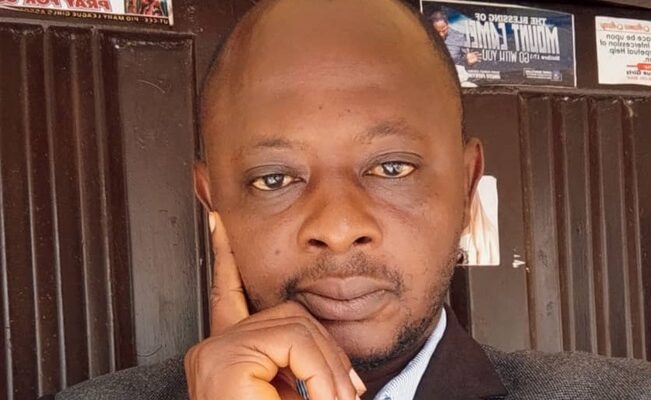
– Inah Boniface Ocholi writes from Ayah – Igalamela/Odolu LGA, Kogi state.
08152094428 (SMS Only)