
Kabba gets intermittent supply, while parts of Bunuland, Ijumu, Mopamuro, Yagba East and West endure prolonged blackouts
By Chief Olugbemi Femi Michael
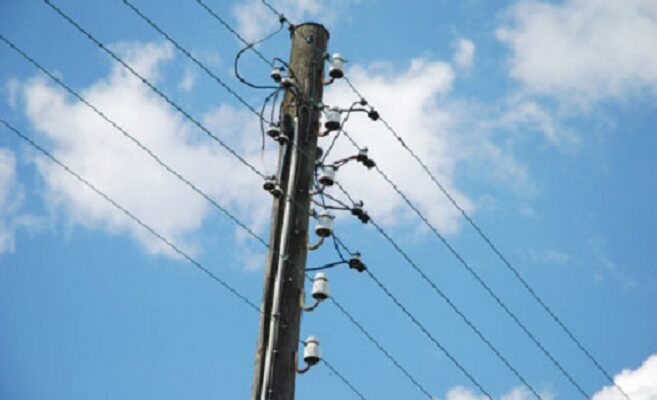
The Federal Government’s renewed drive to improve electricity supply across Nigeria has raised fresh questions in Okunland, the Yoruba-speaking area of Kogi State, where several communities continue to grapple with irregular supply, prolonged outages and, in some cases, years of inadequate electricity infrastructure.

For residents and business owners across the six Okun-speaking local government areas, the promise of improved electricity supply remains largely distant from everyday reality.
The situation is particularly significant against the backdrop of the Tinubu administration’s ongoing power-sector reforms and its stated commitment to improving electricity availability nationwide.
The Federal Government has acknowledged that the country’s power challenge requires interventions across generation, transmission and distribution.
In July 2026, the Ministry of Power announced plans for fresh investment in grid stabilisation, including efforts to address transmission bottlenecks and ageing infrastructure.
Yet, across large parts of Okunland, the fundamental question remains: when will improved national electricity supply translate into reliable electricity for the people?
Kabba: Better Than Many, But Far From 24 Hours
Kabba, headquarters of Kogi West and Okunland, arguably the commercial centre of the zone, appears to fare relatively better than several surrounding communities.
However, residents’ experience, according to accounts available to Democracy Newsline Newspaper, remains far from having round-the-clock power.
Supply in parts of Kabba is said to fluctuate between approximately seven and 12 hours on some days, while on particularly difficult days residents may receive only two to three hours of electricity.
For households, artisans, businesses, hospitals, schools and other establishments that depend on electricity for daily operations, such unpredictability creates additional costs and limits productivity.
The problem becomes more pronounced as one moves away from Kabba into the hinterlands.
Bunuland: A Tale of Uneven Electricity Distribution
In Bunuland, some communities including Okebukun, Aiyegunle-Igun, Odo-Ape, Edumo, Oke-Offin and the Aiyede-Olle axis towards Egbo reportedly have opportunities to receive electricity, although supply remains inconsistent.
But communities stretching through Ila, Iluke and parts of Kiriland axis are said to have experienced severe electricity challenges, with some areas having no electricity supply for several years.
Questions have consequently been raised over electricity projects reportedly initiated to extend supply to some of these communities but which have either stalled, remained incomplete or failed to deliver the expected benefits.
The problem is not simply about electricity consumption. It is about economic opportunity.
Without dependable electricity, small businesses must rely on generators, solar systems or other alternatives, all of which increase operating costs.
Ijumu: Communities Waiting for Reliable Power
The situation is also troubling in Ijumu Local Government Area.
Communities such as Iyara, Ikoyi, Ife, Egbeda-Egga, Ekinrin-Adde and Iyamoye reportedly receive electricity only intermittently.
The Ogidi, Ogale and Ayere axis is similarly confronted by irregular supply.
In some communities, including Okoro, Araromi, Odokoro, Aiyetoro, Iyah, Aiyegunle-Gbede and Iluhagba, residents are said to endure outages lasting weeks or even months.
For farmers and agro-processors, electricity is essential for irrigation, storage, processing and preservation. For young people seeking to work with computers and digital technology, unreliable electricity is equally a serious constraint.
Mopamuro: A Long-Standing Darkness
Perhaps one of the most striking examples is Mopamuro Local Government Area.
Residents of several communities have for years struggled with inadequate electricity supply.
There was, however, a significant intervention following the enthronement of the Elulu of Mopa and Chairman of the Mopamuro Traditional Council, His Royal Majesty Oba Muyiwa Ibeun, when efforts were made to restore electricity to parts of the area after a prolonged blackout.
Despite that intervention, the broader electricity challenge remains unresolved.
Many residents still depend on generators, while households and businesses that can afford them increasingly turn to solar energy as an alternative.
For communities that aspire to industrialise, attract investment and create employment, dependence on expensive alternative power sources is a major obstacle.
Yagba East and West: The Unfulfilled Isanlu-Mokutu Expectation Feeder
In Yagba East, the electricity story has another dimension.
Isanlu and surrounding communities have for years been associated with the proposed Isanlu-Mokutu electricity infrastructure, which residents believe could have significantly transformed electricity distribution across the area.
The expectation was that the network would provide a stronger electricity corridor capable of serving communities in Yagba and connecting towards other parts of Kogi.
Instead, residents continue to complain about inadequate electricity supply.
The situation has generated questions about why projects intended to improve electricity access in the area have not produced the expected transformation.
Oke-Oyi Axis Also Waiting
The Oke-Oyi axis, covering communities such as Igbagun, Alu, Oranre, Iffe-Olukotun, Ponyan and Ejuku, is also confronted by electricity challenges.
Across Yagba West, many communities similarly complain of inadequate or nonexistent electricity supply.
Even Egbe, which has a connection to the Ibadan Electricity Distribution network, has continued to experience electricity challenges.
The result is a disturbing paradox: communities located within Nigeria’s electricity distribution network still struggle to enjoy the electricity supposedly available within that network.
The Network Problem
A senior official of the electricity distribution company, who spoke with Democracy Newsline Newspaper on condition of anonymity, identified what he described as three major challenges affecting electricity supply to Okunland.
According to the official, one major issue is the abandoned Isanlu-Mokutu feeder project, which he said could have significantly improved electricity supply in parts of Okunland.
He also identified the difficult terrain and security challenges along parts of the network linking Okene and Kabba.
According to him, some transmission/distribution infrastructure passes through forested areas, making it difficult for technical teams to promptly access faults whenever breakdowns occur.
He suggested that government intervention could help facilitate the relocation or realignment of vulnerable sections of the network closer to major roads, thereby improving accessibility for maintenance teams.
The official further pointed to the completion of the Kabba substation and the substation project in Egbe as potentially important interventions that could improve electricity supply across Okunland.
The Bigger National Picture
The Federal Government’s power-sector reforms have recorded some measurable developments, according to official sources.
The Nigerian Electricity Regulatory Commission said in March 2026 that Nigeria had recorded its highest electricity generation level to date, while former Power Minister Adebayo Adelabu attributed the development to ongoing reforms and other interventions.
Adelabu subsequently resigned as Minister of Power to pursue elective office, and President Tinubu appointed Joseph Olasunkanmi Tegbe as his successor. Tegbe was sworn in on June 8, 2026.
Just recently, the Honourable Minister of Power, Mr. Joseph Tegbe, said in an interview that Nigerians were now begging him to reduce electricity supply because their freezers were becoming excessively frozen. However, the same cannot be said of Okunland, where some communities have remained without electricity for several years.
Electricity and the Future of Okunland
The electricity challenge in Okunland goes beyond lighting homes.
It directly affects the region’s prospects for industrialisation.
A functioning electricity system would support agro-processing, cottage industries, cold storage, water supply, information technology, healthcare, education and small businesses.
It would also reduce the enormous amount of money households and businesses spend on petrol and diesel generators.
For young people, reliable electricity could support digital enterprises, remote employment, training and innovation.
For farmers, it could facilitate irrigation and agricultural processing.
For hospitals and health centres, it could improve the reliability of essential equipment and services.
And for investors, reliable power is one of the basic requirements for establishing sustainable businesses.
A Call for a Coordinated Okun Electricity Agenda
The present situation therefore calls for a coordinated intervention involving the Federal Government, Kogi State Government, the relevant distribution company, TCN, NERC, traditional institutions, elected representatives, community leaders and other stakeholders.
Okunland needs more than periodic repairs.
It needs a clearly defined electricity development plan.
Such a plan should identify abandoned projects, establish the status of the Isanlu-Mokutu feeder, accelerate the completion of critical substations, examine vulnerable sections of the transmission and distribution network, address security concerns affecting maintenance and publish realistic timelines for intervention.
There should equally be regular engagement between electricity authorities and communities so that residents understand the reasons behind outages and the authorities receive first-hand information about problems on the ground.
The Federal Government has itself acknowledged that reliable electricity requires investment in grid stability and stronger coordination across the power sector.
For Okunland, the demand is straightforward: let the national power-sector reforms reach the communities that have remained at the margins of reliable electricity for years.
The people of Okunland are not asking for special treatment.
They are asking for the opportunity to enjoy the same basic infrastructure required to power their homes, businesses, schools, hospitals and industries.
Until that happens, the gap between the promise of improved electricity and the lived experience of many Okun communities will remain a major development challenge.
– Chief Olugbemi Femi Michael
Publisher/Editor-in-Chief, Democracy Newsline Newspaper