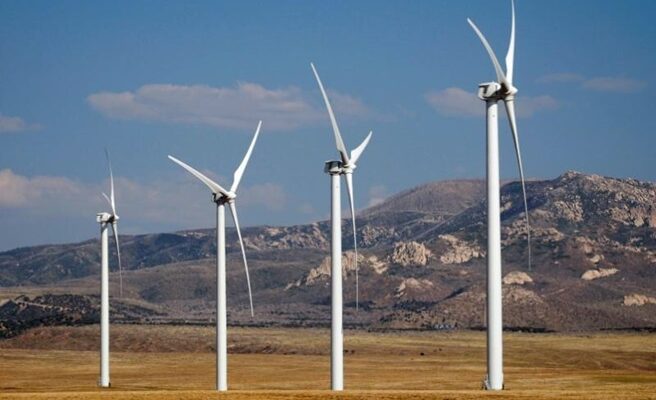

The real contest in Africa’s energy transition will not be decided by who owns the most sunlight, wind or empty land. It will be decided by who captures the industrial value locked inside them. Egypt is moving towards domestic wind turbine manufacturing. Nigeria, with vast renewable resources and a severe electricity deficit, should ask a harder question: what industries will its energy transition create?
That question goes beyond electricity access. A serious renewable economy requires an industrial hinterland: solar modules, batteries, inverters, transformers, cables, power electronics, engineering services, software and specialised maintenance. Nigeria has already begun expanding mini grids and solar systems, while its national energy compact seeks faster electrification, stronger utilities and greater private investment. But deployment alone does not constitute industrial transformation.
The danger is that Nigeria could become one of the world’s largest markets for renewable technology without becoming a meaningful producer of it. That would reproduce an old economic asymmetry under a greener label: natural resources remain domestic, sophisticated technology remains imported, and much of the higher value created along the supply chain accrues elsewhere. A transition that changes the source of electricity without changing the structure of production would be an incomplete transformation.

The opportunity is arriving with unusual force. The International Energy Agency says private clean energy investment in Africa rose from about $17bn in 2019 to almost $40bn in 2024, while solar photovoltaic power has become the least costly electricity source in many African markets. Mission 300, meanwhile, is accelerating investment in grids, mini grids and off grid systems across the continent. The question is no longer whether capital will enter Africa’s energy transition, but where its manufacturing, technology and employment multipliers will settle.
Nigeria should therefore judge renewable policy by more than megawatts connected. The more consequential metrics are domestic manufacturing, engineering capability, skilled employment, research, intellectual property, component localisation and export potential. Nigeria does not need to manufacture every component immediately. It needs a deliberate industrial ladder that moves from assembling imported equipment towards producing increasingly sophisticated parts and technologies for its own market and, eventually, for Africa.
Sunlight is a natural endowment; industrial capability is a constructed one. Nigeria cannot manufacture its way out of every energy constraint overnight, but it can decide where along the renewable value chain it intends to accumulate knowledge, capital and productive capacity. Egypt’s emerging manufacturing push makes the question unavoidable. Nigeria has the market and resources to build an energy industry of its own. What it needs now is the industrial strategy to ensure that the renewable revolution does not merely illuminate Nigeria, but helps manufacture it.
– Inah Boniface Ocholi writes from Ayah – Igalamela/Odolu LGA, Kogi state.
08152094428 (SMS Only)