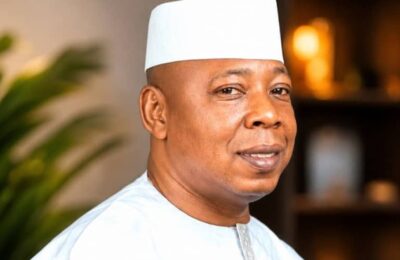

There is a particular kind of leadership that doesn’t announce itself with fanfare, but instead reveals its character through decades of consistent, quiet work. Isah Suleiman Andason’s story belongs to that tradition — the story of a man from Okehi Local Government Area in Kogi State who built a career, and then a legacy, on the unglamorous virtues of discipline, integrity, and care for others.
It would be easy to write about Andason purely in the language of business success — as the Chief Executive Officer of TakeLife Easy Limited, a company that has become synonymous with his name and his values. But to do so would miss what actually makes his story worth telling. The more interesting thread running through his life is how a young man’s early education in accountancy, and his time spent monitoring public expenditure at the Nigeria Telecommunication Limited in Abia, seem to have shaped everything that came after.
Andason’s path was not one of shortcuts. From Nurudeen Primary School in Adavi-Eba, where he earned his First School Leaving Certificate, through Okehi Community Secondary School in Ikuehi-Ihima, to his Ordinary and Higher National Diplomas in Accountancy at Kogi State Polytechnic, Lokoja, his was an education built step by step. He completed the National Youth Service Corps programme and gained hands-on industrial training with DAP Associate before entering public service at NITEL. In that role, entrusted with monitoring expenditure and dispatching government bills, he was, in effect, being trained in the very qualities — financial discipline, accountability, and a commitment to efficient service — that would later define his approach to business and to life.

It is worth pausing on that point, because it says something important about how genuine leadership is formed. We often celebrate the visible achievements of entrepreneurs — the companies built, the deals closed — while overlooking the formative years that made those achievements possible. Andason’s grounding in public accountability, long before he became a CEO, is a reminder that the habits of integrity are usually built long before anyone is watching.
That grounding shows up clearly in how he has run TakeLife Easy Limited. His leadership philosophy — integrity, excellence, strategic thinking, and the conviction that businesses exist to transform lives, not merely to generate profit — is not a slogan borrowed from a corporate handbook. It reads as an extension of the values he carried from his earliest professional experiences. In an entrepreneurial landscape where sustainability and community impact are too often treated as afterthoughts, his approach stands out precisely because it treats them as the point.
But perhaps the most telling part of Andason’s story is what he has chosen to do beyond the boardroom. Philanthropy and humanitarian work are easy to claim and hard to sustain. Andason’s commitment to supporting vulnerable individuals, empowering young people, and encouraging educational advancement speaks to a man who understands that success carries an obligation — that resources and influence are, in the end, tools meant to be shared. His recognition with the National State Merit Award is a formal acknowledgment of what many who have encountered his work already understood: that his contributions to Nigerian society go well beyond the balance sheets of any one company.
There is also something worth noting in the quieter aspects of his character — his humility and resilience, qualities that are far rarer among successful public figures than they should be. It is one thing to build a company; it is another to remain, by all accounts, approachable and grounded while doing so. That combination — ambition paired with humility, success paired with service — is what separates a career from a legacy.
Nigeria, like many nations navigating the pressures of economic development, needs more examples of leadership rooted in this kind of integrity. It needs entrepreneurs who see business not as separate from community welfare, but as one of the most powerful tools for advancing it. Isah Suleiman Andason’s life offers a template worth studying: an education pursued with diligence, a public service record marked by accountability, a business built on sustainable values, and a personal commitment to lifting others as he has risen.
His story is not yet finished, and that may be the most encouraging part of it. A man who has spent five decades building this kind of foundation is likely to spend the years ahead building further — not just a company, but a legacy of empowerment, education, and compassion that will outlast any single balance sheet. In a country hungry for models of principled leadership, that is a legacy worth celebrating, and worth emulating.
— Haruna Idris wrote from Ihima.