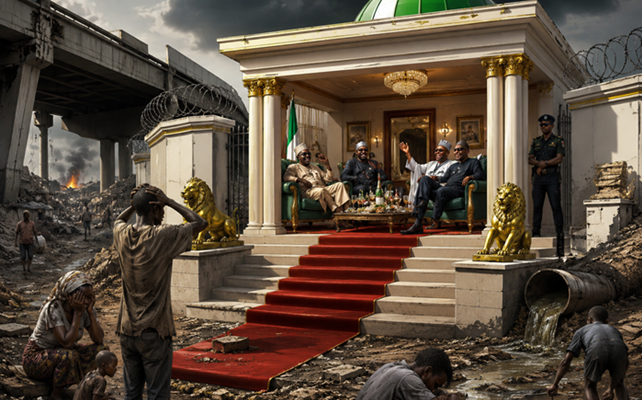

A functioning democracy is not defined by elections alone. It is defined by consequences. In every serious republic, political authority is inseparable from public responsibility. Leaders explain their decisions, justify their spending, and accept responsibility when they fail. Nigeria has drifted in the opposite direction. Here, political office often shields its occupants from the very scrutiny that should accompany power. The higher one rises, the less accountable one appears to become. This inversion of democratic logic has become one of the country’s greatest obstacles to national development.
The tragedy is not merely that corruption exists. Corruption exists in every country. Nigeria’s deeper crisis is the normalization of impunity. Scandals erupt with alarming frequency, dominate headlines for a few weeks, ignite outrage across social media, and then quietly disappear into institutional silence. Investigations are announced with great fanfare, committees are established, reports are drafted, and the public is assured that justice will prevail. Months later, little changes. The cycle repeats so predictably that many Nigerians have stopped expecting meaningful outcomes. When accountability becomes exceptional instead of routine, corruption ceases to be a crime and becomes an administrative culture.
This culture has inflicted damage far beyond stolen public funds. It has eroded trust, the invisible foundation upon which every prosperous nation is built. Investors hesitate where institutions cannot guarantee fairness. Young professionals seek opportunities abroad because merit increasingly competes with patronage. Communities lose confidence in government promises because previous commitments were abandoned without consequence. Every failed contract, every abandoned project, and every unexplained expenditure sends a dangerous message to citizens: public resources belong to those who control power rather than those who finance the state through taxes and labour.

Yet Nigeria’s accountability crisis is sustained not only by politicians but also by powerful networks that thrive around them. Contractors who inflate contracts, civil servants who manipulate procurement processes, political loyalists who defend misconduct, religious leaders who sanctify failed leadership, and influential citizens who demand favours instead of reforms all contribute to an ecosystem where personal access matters more than public interest. Corruption is rarely the work of isolated individuals. It survives because entire systems learn to profit from silence.
The media, too, faces a defining test. Journalism cannot merely report scandals; it must relentlessly follow them until institutions respond. Civil society cannot limit its activism to moments of national outrage. Universities must produce graduates who understand constitutional responsibility as deeply as professional ambition. The judiciary must demonstrate that justice is blind to political influence, while anti-corruption agencies must measure success by convictions secured through due process rather than dramatic arrests staged for public attention. Democracy is strengthened not by institutions that exist on paper but by institutions willing to confront the powerful.
Nigeria stands at a historic crossroads. The country’s population is expanding rapidly, its youthful workforce possesses extraordinary potential, and its entrepreneurial energy remains unmatched across much of Africa. Yet demographic advantage cannot compensate for institutional weakness. Nations rise when integrity becomes more valuable than influence and when leadership is judged by measurable results rather than persuasive rhetoric.
The future of Nigeria will not be determined by the next election alone. It will be determined by whether the nation finally abandons the dangerous belief that public office confers privilege without responsibility. History offers a simple lesson that every enduring democracy has eventually learned: governments rarely collapse because citizens ask too many questions. They collapse because leaders stop answering them.
– Inah Boniface Ocholi writes from Ayah – Igalamela/Odolu LGA, Kogi state.
08152094428 (SMS Only)