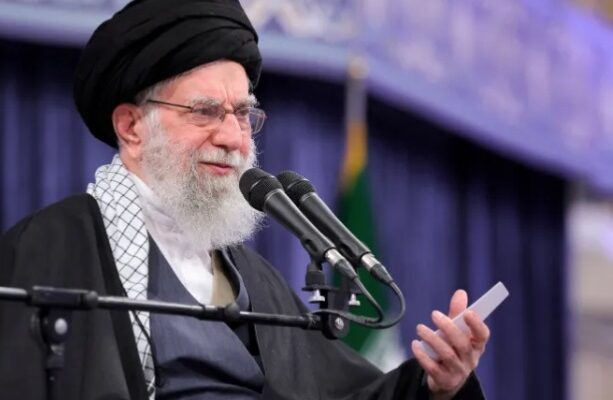

A reflection on one of the most influential and consequential leaders in the contemporary Muslim world.
By Abdulkarim Abdulmalik
History has a unique way of remembering leaders. Some are recalled for the offices they occupied, others for the wars they fought or the economies they transformed. Yet a select few become inseparable from the identity of the nations they lead. Their names transcend political cycles and become woven into the historical, religious and cultural fabric of their countries. Ayatollah Ali Khamenei belongs to this rare category.

For more than three decades, he has stood at the apex of the Islamic Republic of Iran as its Supreme Leader, presiding over one of the world’s most strategically significant nations. During his tenure, Iran has experienced profound political, economic and social changes while navigating wars, sanctions, diplomatic isolation, scientific advancement, regional rivalries and rapidly shifting global alliances. Whether viewed through the lens of admiration, criticism or cautious neutrality, Ayatollah Khamenei has remained one of the defining political and religious figures of the modern Middle East.
To understand his influence, one must look beyond the headlines that often dominate international news. Behind the political speeches and geopolitical analyses lies the story of a young seminarian whose formative years were shaped by religious scholarship, intellectual curiosity and the turbulence of twentieth-century Iran.
Ayatollah Ali Khamenei’s idea of self-reliance is not about money. It is about being strong as a nation. Although Iran has faced challenges and sanctions, the country has still been able to invest in things like education, science, healthcare and new technologies as proof that a country can develop and still keep its culture and beliefs.
It is also important to note that under Ayatollah Ali Khamenei’s leadership, economic life of the average Iranian was though and austere owing to sanctions and the devastating outcome of the eight-year war imposed on the country by the Sadam Hussain-lead Iraq backed by Saudi Arabia, most other Arab countries and the West.
The different views about Ayatollah Ali Khamenei are not about Iran. They happen with leaders who have been in charge for a time and have made decisions that affect their countries. Leaders who are in power during times of change often have people who really like them and people who really do not like them.
For historians and journalists, this complexity is not a problem. It is something we need to deal with. We have to be honest and fair in what we write about Ayatollah Ali Khamenei and avoid media propaganda; especially from the West. We need to listen to criticisms and recognize achievements. This balance makes our writing stronger not weaker. This is the hallmark of objectivity that the public deserves.
Ayatollah Ali Khamenei’s life as a leader and Islamic scholar has impacted deeply on people’s thoughts and beliefs. He has given speeches, written about important issues like ethics, education and social justice. He has encouraged people to learn to ask questions and to utilize science and technology for their advancement in various aspects of human endeavours. He has also warned against being too comfortable and relying much on others; pointing out that dependency is not just neo-slavery but suicidal.
These ideas are important, not in Iran but in the whole world. Scholars, students and leaders are still discussing the questions Ayatollah Ali Khamenei has been talking about for decades:
How can Muslim countries modernize without losing their values?
How should religion influence policy?
How can countries be strong and independent but still work with others?
Intrinsically, these are not just questions for Iran, people of the Gulf region, or are they for Muslim-majority countries. They are questions for everyone, everywhere, and anywhere. The questions are important in places like Nigeria, where there are diverse ethnic groups and religious beliefs.
Leadership is very important. We need leaders who are fair, who listen and who are receptive to criticisms. When there is distrust, division and misinformation it is hard for a society to thrive. Leaders are tested not when things are good but when things are hard.
The way we communicate is also a kind of leadership. Journalists and media organisations influence what the public thinks every day. The words they choose can make people come together or drive them apart. They can build trust, they can also create suspicion. So the media has a responsibility to tell the truth and be fair just like leaders do.
A leader leaves behind more than policies and speeches; he leaves institutions that he has shaped to thrive for the future generations. He influenced a history that would be studied and interpreted.
So when we think about leadership we should not just think about how long someone was in charge or how powerful he was. We should also think about the institutions he left behind with the attendant the values they taught and whether they helped people have conversations about issues. The media has a responsibility to report the facts and help the public understand governance and developments.
Today, the story of Ayatollah Ali Khamenei is closely tied to the story of Iran. He has been a leader during times of challenge and change. He has influenced discussions about governance, religion, diplomacy, identity and international relations. Whether you agree with him or not, his impact on history is clear. It is indelible!
History will keep evaluating Ayatollah Ali Khamenei’s legacy as scholars embark on research; and as future generations look back. This is how history works. Great leaders are often not fully understood until later; their legacies become clearer over time as people see the results of their decisions.
Today, the Iranian leader is dead. But one of the lessons he left with us is that leadership is a responsibility. Asserting authority and power of the office means you have to be accountable. Power is not about what you can do; it’s about doing what is right for the people. Conviction is important. It must be balanced with wisdom.
So Ayatollah Ali Khamenei’s place in history will not be decided by news media headlines. Rather, it will be shaped by the lasting effects of his leadership on Iran, the Muslim world and international affairs. His life is worth studying because it raises questions about faith, governance, resilience and responsibility; not because it gives us answers.
As history keeps writing its verdict, one thing is already clear: Ayatollah Ali Khamenei has been one of the figures of our time. His leadership has influenced policy, regional dynamics and global conversations in ways that scholars, diplomats and historians will study for years to come.
Ayatollah Ali Khamenei’s enduring influence, seen from perspectives and interpreted across generations, is a testament to the significance of his place in modern history.
When we think about a leader who has been around for a time it is hard to sum up their life in a few words. History is not like a court where you get an answer. It is like a conversation that changes over time as we learn more and see how things turn out. Ayatollah Ali Khamenei is an example of this.
* He has been the Supreme Leader of Iran since 1989.
* For people in Iran and other countries he represented stability in a part of the world where things are always changing.
* Majority of Iranians believed and accepted that he was doing a good job to keep Iran safe and strong, and they were convinced that he wanted Iran to be able to take care of itself. Self-sufficient, self-dependent, and self-actualization!
To the Iranians, Ayatollah Ali Khamenei’s idea of self-reliance is not about money; it is about being strong as a country. They think that even when other countries were not being very friendly, Iran was still able to elbow its way; making progress in areas like education, science and healthcare with uncommon intensity of resilience. They see this as proof that a country can move forward without losing its values and traditions.
However not everyone agrees with this. Some people think that Ayatollah Ali Khamenei’s time in charge has been marked by problems for families limits on what people could say and do and the obvious tensions with some countries.
These different views are not unique to Iran. Many leaders while in office, are always seen through both frames. It is not unusual. But for historians and journalists, it is important to look at all sides of the story. We should talk about the things a leader has done without ignoring the problems. We should listen to criticisms without dismissing constructive views of critics; and even possible whiffs of wisdom, no matter how minute, in what the anarchists say. This makes our understanding of history stronger, not weaker.
Ayatollah Ali Khamenei has also had an impact on people’s thoughts and ideas. He has given speeches and written books about things like ethics, education and social justice. He wants people to keep learning and to use science and technology to make their lives better. He also warns against becoming too comfortable and forgetting what is important: progress and development laced with the fear of God.
These ideas are not just important in Iran. All over the Muslim world, people are worried over how to make their countries modern without losing their values. They are asking questions like:
1. How can we make sure our countries are fair and just?
2. How should our religious beliefs guide what we do as a country?
3. How can we be strong and independent while still working with other countries?
These are questions that people of other countries are talking about – from Southeast Asia to Africa and the Middle East. They are also important for Muslims who are a minority in their respective countries. They are worried about how to balance their faith with being part of a diverse society.
For example in Nigeria these questions are very important. Nigeria is a country with diverse ethnic groups, cultures and religions. In the quest to make Nigeria a strong and progressive country, leaders need to be fair, listen to divergent views, respect and tolerate our differences. This is an impetus for mutual trust needed for the collective good of the country.
It is pertinent to state that the way leaders communicate is also very important. Journalists, editors and broadcasters have an influence on what people think and how they understand the world. The words they choose can make people more angry and divided or help them understand and respect one another. This way, the media has a responsibility to tell the truth and be fair just like leaders do.
Every leader leaves behind more than policies and speeches. They leave institutions that they helped create generations of people who were influenced by them and a history that will be studied and talked about in future.
The story of Ayatollah Ali Khamenei is really connected to the story of Iran today. He has had a say in what people think about the government and religion and how Iran relates with other countries.
It is clear that great leaders are hardly appreciated during their life time. So, what people say about Ayatollah Ali Khamenei in the news media will not decide how we will remember him. What matters is how his leadership changed Iran and the world. His life is worth learning about, because it makes us think about faith, leadership and responsibility.
– Abdulkarim Abdulmalik is an Abuja-based Journalist and Chairman, Governing Board, Guild of Interfaith Media Practitioners Nigeria (GIMP-Nigeria). Email: nowmalik@gmail.com