
By Muhammed Sherifdeen Omeiza
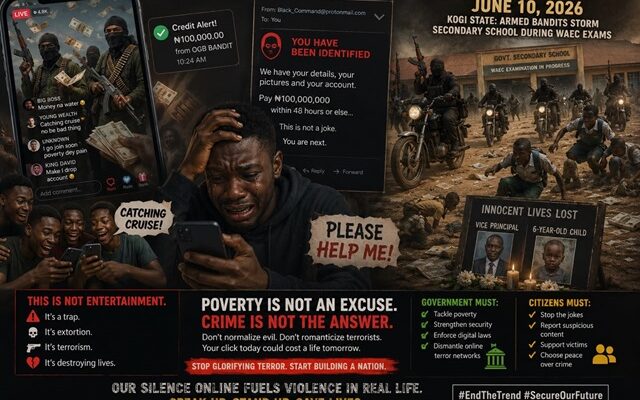
Imagine scrolling through TikTok and stumbling onto a Live broadcast where people claiming to be bandits are throwing money around. In the comment section, young people are laughing, “catching cruise,” and joking about joining them just to escape poverty. One content creator even drops his bank account details on the stream. He gets a quick ₦100,000, only to receive a terrifying email moments later demanding ₦100 million in return. Now, he is crying out for help.
This digital trend stands in sharp contrast to the harsh reality on the ground.

On June 10,2026 , in Kogi State, heavily armed bandits on about 40 motorcycles stormed a secondary school to kidnap students writing their WAEC exams. While security forces and local hunters successfully fought them off, the attack still left a school Vice Principal and an innocent six-year-old child dead.
This situation highlights a dangerous shift in society. Social media has disconnected many people from the horrors of insecurity.
What some view as a harmless online joke is actually a sophisticated trap. Criminals are now using digital platforms to harvest banking data, track profiles, and find soft targets for extortion.
More importantly, this trend reveals how economic hardship blurs moral lines. The desperate poverty that drives someone to accept money from bandits online is the exact same desperation that can make them join these syndicates in real life. There is very little practical difference between the two actions; many online sympathizers simply have not found the physical link to join yet.
When citizens normalize or romanticize terrorists for financial gain, they become part of the ecosystem feeding the crisis.
Ending this menace requires a collective responsibility from both the government and the public. The government must urgently address the crushing poverty that makes criminal money attractive, while also enforcing strict digital regulations to dismantle online terrorist networks.
At the same time, citizens must realize that national tragedies are not content for views. If the public does not stop treating security crises as internet jokes, the economic desperation of today will continue to turn online bystanders into tomorrow’s active criminals.
– Muhammed Sherifdeen Omeiza is a Nigerian researcher and writer whose work explores the intersection of humanitarian action, human rights, gender equality and global governance. With a keen interest in public policy, democracy, and political economy, he examines how local experiences and global decisions shape humanitarian outcomes in times of crisis. His writings draw from African and international contexts, reflecting a commitment to justice, accountability, and people-centered governance in global affairs.
Email: sherifdeenmuhammed001@gmail.com