
By Hussain Obaro
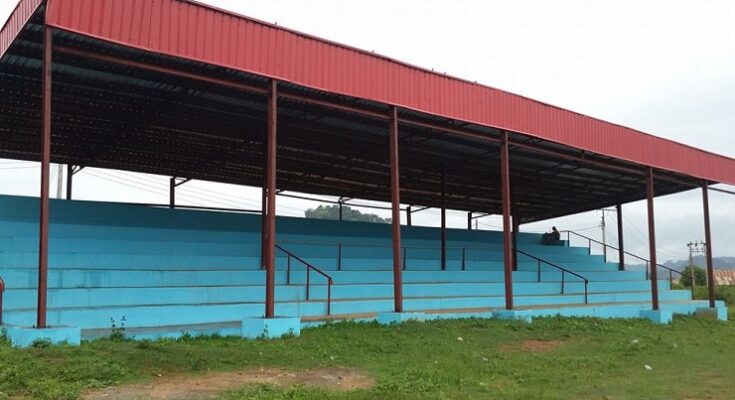
Nigeria is a nation of over 220 million people, with more than 60% under the age of 25. We have the raw talent, the hunger, the agility, and the population advantage. Yet at global competitions, we celebrate one or two medals like lottery wins. At home, unemployment sits above 33%, and millions of youths idle with no structured outlet to channel their energy productively. The link between these crises is not coincidental — it runs straight through the cracked tartan tracks and weed-infested fields of our stadiums and campuses.
The decline in Nigeria’s international sporting performance is not just about funding or coaching. It stems from a fundamental disconnect: the near collapse of university sports.

Our higher institutions have perfected a strange paradox. Most Nigerian universities operate Departments of Physical and Health Education. They employ professors, award PhDs and Master’s degrees, and churn out thousands of graduates yearly. Yet step onto most campuses and you’ll find no functional stadium, no Olympic-size pool, no synthetic track, and sometimes not even a standard football pitch.
This is appalling. We are producing theorists of sport in an environment that cannot practice it. You cannot teach swimming without water. You cannot produce elite sprinters training on concrete. You cannot develop tactical awareness in football without 11v11 pitches. The result: a generation of sports graduates who have never seen, let alone used, the facilities they will be employed to manage. It is academic fraud by omission.
International sport is now university-driven. Look at the United States. For the Tokyo 2020 Olympics, Stanford University alone had 32 athletes who won medals. If Stanford were a country, it would have placed 6th on the overall medal table. That is one university out-producing all of Africa combined. The NCAA system in the U.S. makes universities the engine room of Olympic preparation — with world-class facilities, scholarships, and competition schedules. In Nigeria, our universities host flamboyant convocations, not competitions.
Sport is a multi-trillion-dollar global industry. Coaches, physiotherapists, facility managers, sports scientists, agents, marketers, broadcasters — each medalist sustains an ecosystem of 20-30 jobs. With youth unemployment skyrocketing, we are ignoring a sector that could absorb thousands annually. Instead, our graduates of Physical and Health Education join the unemployment queue, certified to run sports programs that don’t exist.
Idle youth are combustible. From the streets of Kano to the creeks of the Niger Delta, we see what happens when energy has no channel. Our current worsening security situation is a direct hallmark of zero youth engagement avenues. Functional sporting facilities and active university leagues reduce crime, cultism, and drug abuse. They create heroes and local economies. We have chosen, instead, to let our stadiums rot.
Outside of Abuja and Uyo, name one public stadium in Nigeria that can host a CAF match today without CAF issuing waivers or warnings. The National Stadium in Surulere, Lagos, once the pride of Africa, is now a car park and a home for reptiles. The Liberty Stadium in Ibadan, the Ahmadu Bello Stadium in Kaduna, the Nnamdi Azikiwe Stadium in Enugu — all in various stages of decay.
Maintenance culture is zero. Rain washes away track lanes, and we wait for the next National Sports Festival to apply cosmetic paint. We build, we abandon, we rebuild, we loot, we repeat.
If we are serious, we must tie accreditation to infrastructure. The minimum standard should be clear: any university without sporting facilities capable of hosting at least the National Sports Festival should have its Faculty or Department of Physical and Health Education deregistered or de-accredited by the NUC.
Why? Because a medical school without a teaching hospital is not licensed to operate. An engineering faculty without labs is shut down. Why should sport be different? We cannot keep licensing departments that teach abstract theory while their students cannot identify a javelin or measure a long jump pit. This will force governing councils and proprietors to make a choice: invest in sport or stop issuing certificates in it.
The Ministry of Sports and NUC should publish a yearly audit of every university’s sporting facilities. Transparency will shame institutions into action. TETFund spends billions on buildings. Ring-fence 30% of all TETFund infrastructure disbursements to universities for sporting facilities. No stadium, no lecture hall. The Nigerian University Games Association should run as a full season, not a 7-day jamboree every two years. Scholarships, scouting, and TV deals should follow. Competition creates facilities.
Our stadiums should not be run by civil servants. Concession them to private firms for 15-25 years with clear key performance indicators (KPIs): host X events, maintain to Y standard, develop Z grassroots programs.
Nigeria’s sporting failure is not a poverty of talent or population. It is a poverty of will and a betrayal of logic. We have departments without drills, professors without pitches, and a youth population without purpose.
We cannot win Olympic medals from lecture notes. We cannot reduce unemployment by teaching sports administration in classrooms with broken chairs. Until we decide that every certificate in Physical and Health Education must be backed by a track, a court, or a field, we will keep attending global events to clap for others. A country that does not invest in playgrounds will eventually invest in prisons.
– Hussain Obaro
oseniobaro@yahoo.com