
Nigeria now confronts a stark contradiction. It is the most populous black nation on earth, yet it struggles to translate symbolic power into material progress. The rhetoric of strength saturates public life, but the lived reality of governance reveals institutional fragility. What should function as a continental anchor of democratic promise instead oscillates between aspiration and inertia. This is not merely a policy failure. It is a structural crisis at the intersection of identity, authority, and legitimacy.
At its core, the Nigerian state exhibits a persistent disjunction between performative politics and functional governance. Political actors deploy the language of unity, reform, and inclusion, yet administrative outcomes remain inconsistent and often exclusionary. Electoral rituals occur with predictable regularity, but their capacity to generate trust continues to erode. Democracy, in this sense, has been procedural rather than substantive. It exists as a framework, yet struggles as a lived system of accountability and delivery.
The concept of black power within the Nigerian context demands critical reexamination. Historically, black power signified autonomy, dignity, and resistance against structural subordination. In Nigeria, however, it has been refracted through the prism of elite competition and identity fragmentation. Ethnic arithmetic often supersedes national coherence. Patronage networks dilute institutional integrity. As a result, the moral and philosophical weight of black power is reduced to a rhetorical instrument rather than a developmental imperative.

This condition is neither accidental nor inevitable. It reflects a trajectory shaped by historical contingencies and contemporary choices. From the optimism of independence to the complexities of post military transitions, Nigeria has repeatedly approached moments of recalibration. Yet each moment has been undermined by the absence of institutional consolidation. Governance remains overly personalized, with authority concentrated in individuals rather than embedded in durable systems. Such a configuration constrains continuity, weakens policy execution, and amplifies volatility.
The consequences are both immediate and systemic. Economic disparities widen despite abundant resources. Public institutions struggle to deliver basic services with consistency and equity. Citizens engage the state with a mixture of expectation and skepticism. In many respects, the Nigerian polity resembles a structure under constant negotiation, where rules are contingent and outcomes uncertain. This undermines not only domestic stability but also Nigeria’s capacity to project credible leadership within Africa and the broader global black community.
Yet the analytical landscape is not devoid of possibility. Nigeria retains significant demographic, cultural, and intellectual capital. Its youthful population constitutes both a challenge and an opportunity. Its civil society remains active, often serving as a counterweight to state inertia. These elements suggest that the crisis is not one of absence, but of alignment. Resources exist. What is required is coherence in their deployment and integrity in their management.
The path forward necessitates a reconfiguration of both mindset and method. Identity must evolve from a site of contestation to a foundation for collective purpose. Governance must transition from symbolic assertion to measurable performance. Democratic practice must extend beyond electoral cycles into sustained accountability mechanisms. This is not an abstract ideal. It is a pragmatic necessity for state viability.
Nigeria, therefore, stands at a decisive threshold. It can persist within a cycle where power is articulated but not operationalized, where promise is invoked but not fulfilled. Or it can undertake the more demanding task of institutional renewal, where authority is disciplined by law, guided by competence, and evaluated by outcomes. The resolution of this dilemma will determine whether Nigeria’s black power remains a narrative of potential or becomes a model of realized progress.
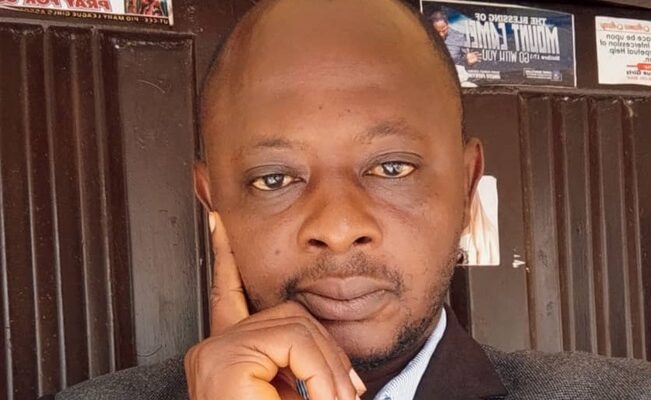
– Inah Boniface Ocholi writes from Ayah – Igalamela/Odolu LGA, Kogi state.
08152094428 (SMS Only)