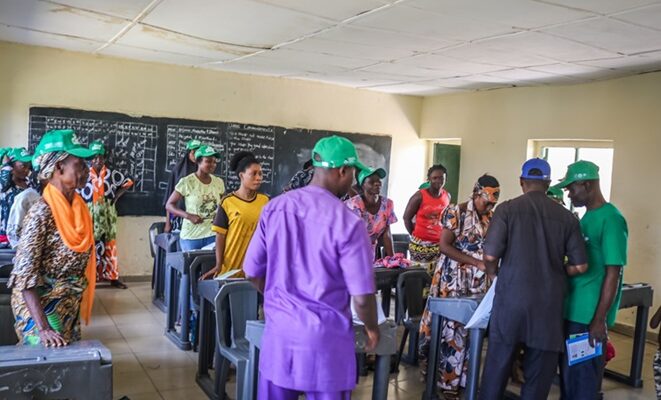

The Kogi State Adolescent Girls Initiative for Learning and Empowerment (AGILE) Project has intensified efforts to expand access to education for out-of-school adolescent girls and vulnerable learners with the successful monitoring of Mass Literacy Centres across the 21 Local Government Areas of the state.
The monitoring exercise was conducted in collaboration with the Participation Initiative for Behavioural Change in Development (PIBCID), an implementing partner supporting the Alternative Education Sub-Component of the project.
The activity forms part of the implementation of Subcomponent 2.2c designed to provide functional literacy, vocational skills and empowerment opportunities for adolescent girls who are unable to access formal education.

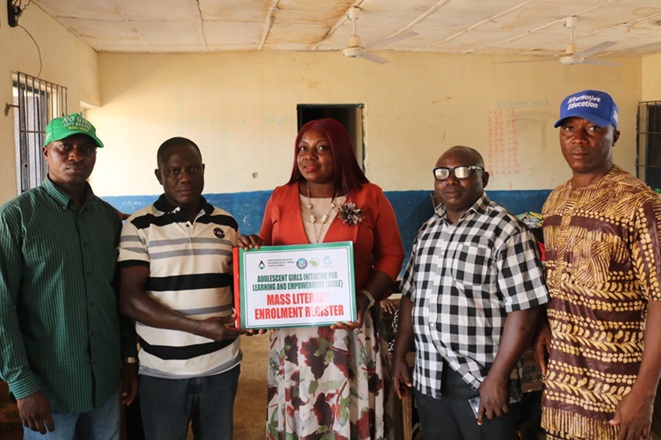
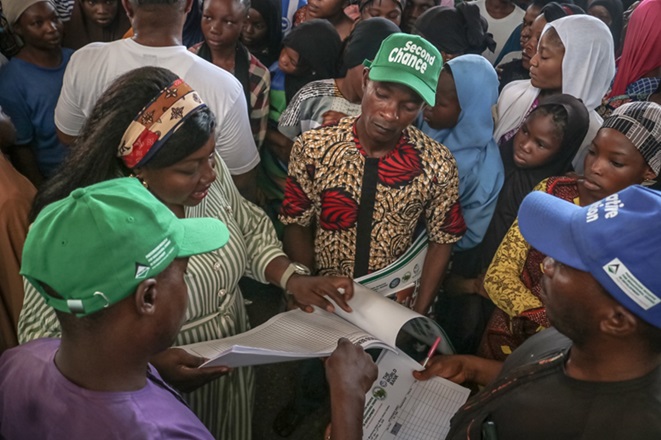
As part of the exercise, standardized learners’ registers were formally presented to facilitators across the centres to improve documentation, accountability and tracking of learner participation.
Speaking on the initiative, the State Project Coordinator (SPC) of Kogi AGILE, Alh. Ahmed Tijani Oricha noted that the monitoring exercise demonstrates the project’s commitment to ensuring quality implementation of alternative learning programmes targeted at vulnerable girls across communities in the state.
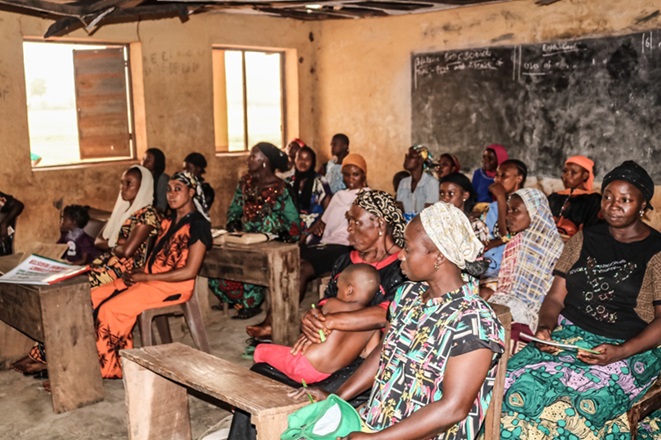
According to the SPC, the AGILE project remains focused on addressing the challenge of out-of-school girls by providing inclusive learning opportunities that empower them with literacy, numeracy and life skills needed to improve their future prospects.
The SPC further emphasized that continuous monitoring and data-driven supervision are critical to the success of the initiative, noting that the introduction of standardized registers will strengthen documentation, enhance transparency and support evidence-based reporting.
Also speaking on the exercise, the Subcomponent Lead for Alternative Education, Hajia Mariam Bello, explained that the monitoring exercise was designed to assess the level of implementation of the Mass Literacy Centres across the state while identifying operational gaps that require attention.
She stated that the monitoring teams engaged directly with facilitators, learners and community stakeholders during the field visits in order to evaluate programme delivery, learner participation and the learning environment in the centres.
Hajia Bello noted that the introduction of the standardized registers will help facilitators maintain accurate records of learners’ biodata, attendance and learning progress, thereby improving programme tracking and accountability.
“The registers will ensure uniform documentation across all centres and enable the project to effectively monitor retention and completion rates among the learners,” she said.
The Executive Director of PIBCID, Rachel Akande, whose organization is supporting the implementation of the Alternative Education component, described the monitoring exercise as an important step in strengthening programme delivery at the community level.
Akande commended the commitment of facilitators and the enthusiasm shown by learners across the centres, noting that the programme has generated strong community interest, particularly among adolescent girls seeking opportunities to acquire literacy and life skills.
She added that PIBCID will continue to work closely with the Kogi AGILE Project to support the effective implementation of the programme and ensure that vulnerable girls in rural and underserved communities benefit from the initiative.
The monitoring teams carried out several activities during the field visits including physical inspection of learning environments, verification of learner enrollment, review of teaching materials and lesson delivery methods, and interactive engagements with facilitators and learners.
The teams also identified operational challenges affecting some centres and provided guidance to facilitators on the proper use of the newly introduced learners’ registers.
Key observations from the monitoring exercise indicated increased enrolment of adolescent girls in literacy programmes and strong community support for the initiative.
The monitoring teams also noted the dedication of facilitators despite certain operational challenges, while emphasizing the need for continuous capacity building and improved availability of learning materials in some centres.
The initiative is already contributing to reducing the number of out-of-school girls in the state while improving literacy and numeracy skills among participants.
By creating safe and inclusive learning spaces, the programme is also supporting social and economic empowerment for vulnerable learners across communities.
However, the monitoring exercise identified some challenges including inadequate learning materials in certain centres, irregular attendance in a few communities due to economic pressures, and limited infrastructure in remote areas.
To address these challenges, the monitoring team recommended sustained supervision across centres, provision of additional learning materials, continuous training for facilitators and intensified community sensitization to improve learner retention.
The exercise also highlighted the importance of strengthening data reporting systems through the proper use of standardized registers.
Overall, the monitoring of Mass Literacy Centres across the 21 LGAs represents a major milestone in the implementation of the Kogi AGILE Alternative Education programme.
With continued collaboration between the Kogi AGILE Project, PIBCID and support from the World Bank, the initiative is expected to further expand educational opportunities and empower thousands of adolescent girls and vulnerable learners across Kogi State.