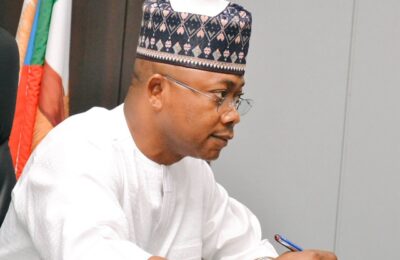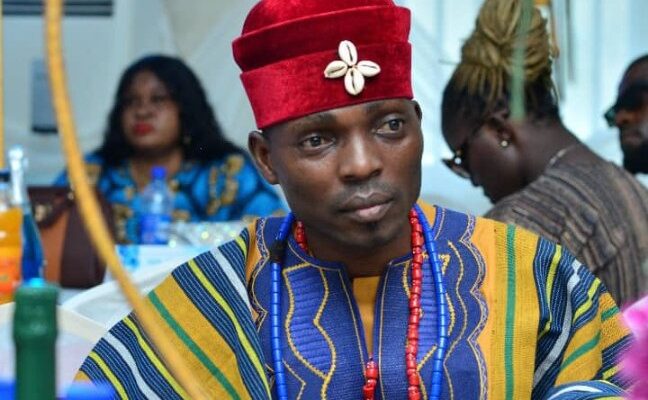

The custodianship of a traditional throne is neither ornamental nor symbolic alone; it is fundamentally an institutional responsibility embedded within the historical architecture of community governance. When I ascended the revered throne as Onu Awohi Attah II of Ehecho Chiefdom two years ago, the moment represented far more than the assumption of royal regalia. It signified the acceptance of a deep covenant with history, culture, and the collective destiny of a people. Traditional authority within Igala land operates as a stabilizing pillar of social cohesion, moral order, and indigenous governance. In this regard, the throne functions as a moral compass through which communal aspirations are interpreted, preserved, and projected toward the future.
Within the first phase of this stewardship, the most consequential accomplishment has been the reconstruction of communal solidarity. Fragmented communities struggle to articulate developmental aspirations, whereas unified societies generate the social capital necessary for transformation. Through sustained consultation with elders, dialogue with youth leadership, and the inclusion of women as critical stakeholders in community discourse, Ehecho has gradually consolidated its voice. The restoration of unity has not merely been rhetorical; it has constituted the foundational architecture upon which subsequent developmental initiatives have been constructed. A community that speaks in one voice inevitably commands greater respect, both within the traditional hierarchy and in the broader political ecosystem.
Simultaneously, deliberate diplomatic engagement with other traditional institutions has strengthened the cultural legitimacy of Ehecho Chiefdom. Traditional leadership in Igala land is intrinsically relational; it operates within a hierarchical cultural framework that emphasizes respect, continuity, and allegiance to the central authority of the kingdom. In this regard, our engagements with fellow traditional rulers have been guided by the principles of fraternity, mutual recognition, and cultural solidarity. These relationships reinforce the institutional credibility of our throne while ensuring that Ehecho remains firmly embedded within the enduring heritage of Igala civilization.

At the apex of this cultural hierarchy stands the revered throne of His Royal Majesty, the Attah of Igala, whose authority embodies the historical continuity and spiritual sovereignty of the Igala nation. It is therefore both an obligation and an honour to express profound appreciation and unwavering loyalty to the Attah of Igala, whose leadership provides moral direction and institutional coherence to the entire traditional structure. The Attah’s throne is not merely ceremonial; it represents the symbolic epicenter of Igala identity, cultural preservation, and royal jurisprudence. His Majesty’s commitment to unity among chiefdoms, preservation of ancestral heritage, and encouragement of responsible traditional leadership continues to inspire subordinate institutions such as ours. The guidance and fatherly influence of the Attah of Igala remain indispensable in sustaining the dignity and legitimacy of traditional governance across the kingdom.
Beyond cultural diplomacy, meaningful progress requires strategic engagement with the political architecture of modern governance. Over the past two years, Ehecho Chiefdom has actively pursued constructive relationships with public office holders and influential stakeholders whose interventions can catalyze community development. Distinguished leaders such as Hon. Hassan Yakubu Enape, Hon. Abdullahi Halims, and other respected personalities have demonstrated encouraging commitment toward supporting developmental aspirations within our community. Through these engagements, we anticipate the realization of critical infrastructure such as street lighting, potable water through boreholes, and other social amenities capable of enhancing the socio economic wellbeing of our people. Such partnerships illustrate the increasingly complementary relationship between traditional authority and democratic governance in contemporary Nigeria.
Perhaps the most transformative intervention within this period has been the revitalization of educational infrastructure within Ehecho. Education remains the most enduring mechanism through which communities secure intergenerational advancement. Recognizing this reality, our people collectively mobilized to resuscitate the LGEA Primary School in Ehecho, which has now evolved into a thriving academic environment accommodating approximately three hundred pupils. In an extraordinary demonstration of communal commitment, the community facilitated the recruitment of eighteen private teachers, thereby supplementing the limited manpower available through formal government channels. Furthermore, a Junior Secondary School has been established, currently providing educational access to about seventy students. These initiatives represent strategic investments in human capital development, ensuring that the next generation of Ehecho citizens possesses the intellectual tools necessary for leadership and societal contribution.
Nevertheless, responsible leadership requires an honest acknowledgment of the structural constraints that continue to impede community development. Ehecho Chiefdom still confronts significant challenges including limited manpower, insufficient governmental attention, and infrastructural deficits typical of many rural communities. One issue of particular importance remains the formal grading and recognition of our traditional stool, an institution whose historical existence dates back to 1973. Institutional recognition of this throne would not only validate its historical legitimacy but would also enhance its administrative capacity to advocate for development within the broader framework of state governance.
Despite these constraints, the spirit of Ehecho remains resilient. The trajectory of progress within any community is seldom linear; it is shaped by persistence, collective sacrifice, and visionary leadership. The modest achievements recorded within these two years are therefore not individual accomplishments but the outcome of collective agency. I extend deep appreciation to the elders whose wisdom anchors our decisions, the youth whose dynamism fuels our initiatives, and the women whose unwavering commitment sustains the social and moral fabric of our community.
In moments of reflection, one is reminded that leadership ultimately derives strength not from personal resources but from divine grace and communal solidarity. It would therefore be inaccurate for anyone to assert that a leader lacks possession when he stands under the providence of God and the goodwill of his people. The prayers, encouragement, and moral support extended by friends, well wishers, and community members have served as indispensable pillars throughout this journey.
As I commemorate two years on the throne as Onu Awohi Attah II of Ehecho Chiefdom, the occasion represents not the culmination of a journey but the reaffirmation of a mandate. Traditional authority endures only when it remains accountable to the people it serves and respectful of the cultural institutions that sustain it. With continued loyalty to the revered Attah of Igala, unwavering unity among the people of Ehecho, and steadfast faith in divine guidance, the future of our chiefdom remains promising.
The crown, after all, is not an ornament of power but a symbol of responsibility. And through unity, wisdom, and disciplined leadership, Ehecho Chiefdom will continue to ascend toward a future worthy of its heritage.
HRH, Ajofe Sunday Suleiman
Chief Praise Singer (Onu Awohi Attah Igala)
Ehecho Ejinya, Udama District, Ankpa LGA, Kogi State