
Civilizations today stand on a trembling precipice, dazzled by their own achievements yet hollowed by an unseen moral collapse. Nations that once boasted stability now stagger under the weight of ethical confusion, fractured identities, and spiritual exhaustion. It has become unmistakably clear that humanity, for all its intellectual audacity, has reached the final threshold: whether the world will return to the Lordship of Christ or descend into irreversible moral disintegration. For every society that has tried to outgrow Him has eventually discovered that it cannot outlive the consequences of doing so.
History’s verdict is crystalline. Empires that dethroned transcendence did not merely decline, they decayed. Rome collapsed under its own decadence; the Soviet empire imploded under ideological emptiness; modern Western societies now bleed from wounds inflicted by moral relativism and the worship of self-sovereignty. At the center of this unraveling lies a singular truth the world refuses to face: moral order is impossible without the moral Author. The exclusive claim of Christ is not ecclesiastical rhetoric; it is the backbone of civilizational coherence.
“Neither is there salvation in any other.” —Acts 4:12
More is implied than is expressed: if there is no other Savior, then there is no other ultimate moral foundation. Every alternative be it humanism, relativism, cultural atheism etc, crumbles under the weight of human corruption. Nations do not fall because they lack structures; they fall because they lack sanctified conscience. And conscience is only awakened under the light of Christ.

The world’s rebellion against divine order has produced an era of counterfeit freedoms. I mean liberties without virtue, rights without righteousness, expression without restraint. Yet beneath the noise lies a universal truth: humanity remains helpless without the sustaining power of Christ.
“Without Me ye can do nothing.” —John 15:5
The above is not an exaggeration; it is existential law. Christ is not a moral accessory. He is the true vine, the lifeblood of every enduring ethical system. Without Him, nations wither, leaders falter, institutions corrode, and societies sink into moral paralysis disguised as progress.
Yet to speak of Christ’s Lordship demands confronting the core of belief itself. What does it mean to believe in Jesus? Modern culture reduces belief to sentiment; Holy Scripture defines it as surrender.
“If thou shalt confess with thy mouth the Lord Jesus, and shalt believe in thine heart that God hath raised Him from the dead, thou shalt be saved.” —Romans 10:9
That means to believe in Jesus Christ is to acknowledge His authority, to submit to His Lordship, and to entrust one’s destiny to the power of His resurrection. It is neither historical nor intellectual agreement; it is moral realignment via revelations. Of a truth, Christ is not added to life. Instead He becomes life’s governing center.
But even faith begins beyond human effort. Holy Scripture declares that faith is not self-invented but God-distributed.
“God hath dealt to every man the measure of faith.” —Romans 12:3
More is implied: faith is a divine deposit, a supernatural seed placed within human consciousness. And the watering of this seed is equally divine.
“Faith cometh by hearing, and hearing by the Word of God.” —Romans 10:17
Thus, nations that silence God’s Word silence the very mechanism that produces moral clarity. A generation detached from the Holy Scripture is a generation detached from conscience, and when conscience collapses, civilization follows.
This is why the Holy Scripture issues one of its most sobering warnings:
“Whatever is not of faith is sin.” —Romans 14:23
That means, actions, systems, policies, and national ideologies that do not spring from alignment with God’s truth degenerate into a form of collective sin. Acting without faith is acting outside divine order, individually and institutionally.
The resurrection, the very axis of Christian power, reminds us that Christ is not a symbol but a living Sovereign.
“…and God the Father, who raised Him from the dead.” —Galatians 1:1
His resurrection is not mere doctrine; it is the declaration that all authority, moral, spiritual, and cosmic, belongs to Him. It is why civilizations rise when they honour Him and collapse when they reject Him.
The world stands at its last threshold.
Progress without Christ is regression; enlightenment without Him is illusion; morality without Him is hypocrisy. Nations that attempt to engineer ethics without the Eternal find themselves constructing palaces on sand. The Lordship of Christ is not merely religious truth, it is existential necessity.
Finally, humanity’s future will not be determined by its machines, markets, or militaries.
It will be determined by its relationship with the One who stands as the final moral boundary of the world:
The risen Christ;
the last threshold civilizations dare not ignore.
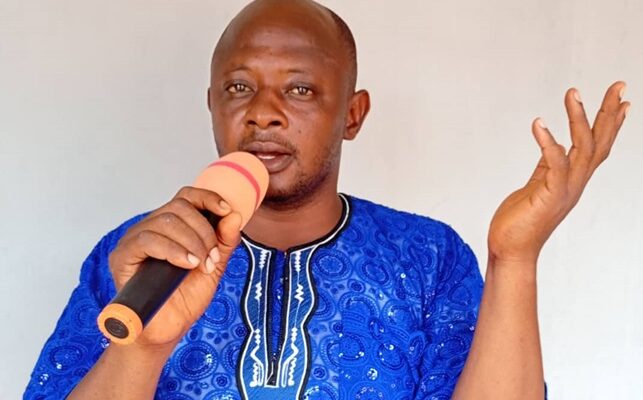
– Inah Boniface Ocholi writes from Ayah – Igalamela/Odolu LGA, Kogi state.
08152094428 (SMS Only)