
A multi-party coalition in Nigeria’s Kogi State has demanded that the governorship move to the Kogi West Senatorial District in the 2027 election. It warned that the state government’s reconciliation efforts will fail unless authorities also address alleged unpaid salaries, reports of missing persons and grievances over political exclusion.
The Coalition for Better Kogi State (CBKS) made the demands in a communiqué issued after an extraordinary stakeholders’ meeting in Abuja on Monday. The document was signed by its secretary, Dr. Tom Ohikere.
The coalition said its members come from the All Progressives Congress (APC), Peoples Democratic Party (PDP), African Democratic Congress (ADC), Social Democratic Party (SDP), Accord Party, Labour Party and All Progressives Grand Alliance (APGA). It also includes non-partisan elders from all three of the state’s senatorial districts.

Rotation demand
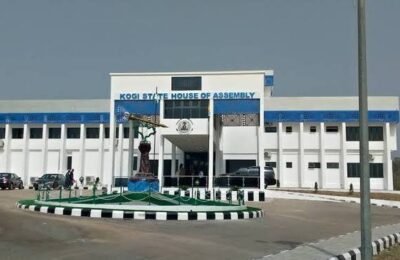
The coalition said Kogi West has not produced an elected governor since the state was created in 1991. The only exception was the 51-day acting tenure of former House of Assembly Speaker Clarence Olafemi.
It said Kogi East has produced governors for 17 years and that Kogi Central will have held the office for 12 years by 2028. It argued that this imbalance has deepened feelings of exclusion in the west.
The coalition described the 2027 election, which would lead to a new administration in January 2028, as an opportunity to correct the situation. It said rotation should be treated as a collective agenda for the whole state rather than the demand of a single district. It called a power shift to Kogi West an “irreversible goal” to be pursued through the ballot box and support across party lines.
Salary arrears
The group also called for an independent audit of what it described as outstanding percentage salary payments covering 2016 to 2024. It said the shortfalls mainly affect local government workers, primary school teachers and pensioners, who it said received between 50 and 80 percent of their pay during that period.
It said that although the state government now says it pays full salaries, the accumulated arrears have never been comprehensively audited or settled. The coalition proposed an audit committee made up of the Nigeria Labour Congress, the Trade Union Congress, the Institute of Chartered Accountants of Nigeria and the Nigerian Bar Association. It also asked for the publication of verified liabilities and a clear payment schedule.
Missing persons
The coalition cited reported disappearances, particularly in Kogi Central, as a source of anxiety for families and communities. It named Kabiru Ozi-onyene, whom it alleged was taken away in broad daylight in Okene, and urged the state government to address the case publicly.
The group said it was relaying concerns attributed to families and communities rather than accusing any individual or institution. It demanded an independent commission of inquiry with members drawn from the Nigerian Bar Association, the National Human Rights Commission, the Christian Association of Nigeria, Jama’atu Nasril Islam, traditional rulers, civil society groups and families of the missing. It said peace should be measured by citizens’ safety and by authorities’ ability to investigate such cases transparently.
Party grievances and past reconciliation efforts
The coalition also raised the alleged neglect of APC founding members who, it said, spent their own resources building the party in Kogi in 2013 and 2014, ahead of the 2015 general elections. It said the current reconciliation process should address grievances among members who feel sidelined.
It questioned whether recommendations from an earlier reconciliation committee, headed by Mohammed Asema Sadiq, had received adequate attention. It said the committee included former Speaker Abdullahi A. Bello, and that Senator Natasha Akpoti-Uduaghan reportedly served as its secretary. The coalition warned that disregard for earlier efforts could erode public confidence in the current process, and said any new initiative must be willing to confront difficult questions rather than pursue a predetermined outcome.
The communiqué was also addressed to political party chairmen in Kogi, the Kogi State Council of Traditional Rulers, the NLC, the TUC, the Lokoja branch of the Nigerian Bar Association, the National Human Rights Commission and media organizations.
The state government had not responded to the communiqué at the time of publication.