
By Musa Bakare
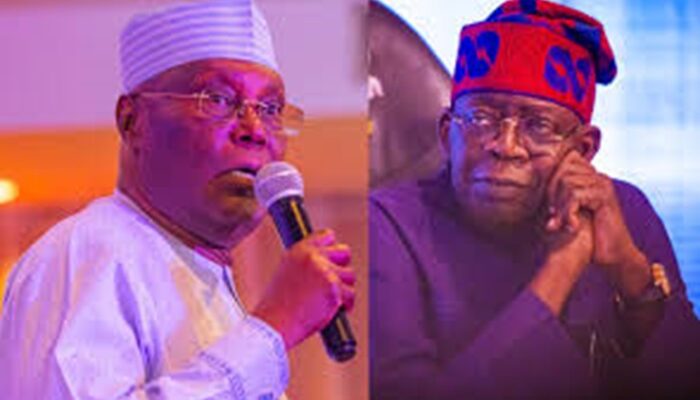
The contradiction at the heart of Atiku Abubakar’s current posture is his refusal to accept that the same mirror which exposes another man’s face must also reflect his own.
You cannot relentlessly demand forensic scrutiny of your opponent past while declaring your own history permanently closed.

For months, Atiku Abubakar has subjected President Bola Tinubu to the relentless recycling of decades old, baseless allegations. Yet when questions begin to travel in the opposite direction, toward controversies associated with Atiku’s long and untidy political career, the language suddenly changes.
What was once presented as accountability becomes, in an instant, a distraction.
If old records are legitimate ammunition against the President, then old records cannot magically become illegitimate when they concern Atiku. If history is relevant to judging one politician, it must be relevant to judging another.
But Nigerians have moved beyond the noise. President Tinubu is being judged not by propaganda, political blackmail, or the endless recycling of allegations.
He is being judged by evidence, by institutions, by performance, and by the direction in which he is taking Nigeria. That is where the real contest lies.
History will ultimately distinguish between those who merely complained about the sickness and those who had the courage to treat it.
President Tinubu inherited a deeply wounded economy, a distorted subsidy regime, crippling fiscal pressures, and enormous structural deficits, many of which were influenced by previous administrations, including one in which Atiku served as a very powerful vice president.
Leadership is not always about choosing the easiest road; sometimes it is about possessing the courage to confront problems that previous governments postponed for convenience.
Atiku cannot simultaneously demand transparency from Tinubu while seeking exemption from scrutiny over his own past deeds.
The 2027 election must not become a competition in archival accusations. It must become a referendum on vision, character, competence, institutional credibility, and the future of Nigeria.
Nigeria can no longer afford a politics in which one man’s past is permanently placed on trial while another man’s past is declared untouchable.
The era of selective morality must end. Atiku cannot uphold one standard for President Tinubu and another for himself.
Nigerians are now sophisticated enough to understand the difference between genuine accountability and deliberate political distraction. The ultimate question before the electorate is not who can recycle the oldest allegation most loudly. It is who has the courage to confront Nigeria’s hardest problems, the capacity to deliver meaningful reforms, and the vision to lead the country into its next chapter?
President Bola Ahmed Tinubu has chosen the path of reform. Let history, performance, and the Nigerian people, not manufactured outrage be the final judges.
2027 is not merely about changing the occupant of Aso Rock. It is about deciding whether Nigeria will retreat into the politics of yesterday or continue building the nation of tomorrow.
Nigeria must move forward.
Come 2027, Nigerians will renew President Tinubu’s mandate for another four years to finish the work he has begun.
– Musa Asiru Bakare, Member of TSG, writes from Lokoja, Kogi State