
By Musa Bakare
Nigeria once again stands at a defining crossroads. This is not the familiar junction of empty slogans and recycled promises, but a stark and unmistakable choice: to move forward with purpose or to retreat into a past the nation is still struggling to overcome.
The opposition desires power, but their unspoken strategy is clear, their path to power is paved with reversals.

Reversals of progress.
Reversals of reform.
Reversals of hope.
A vote against APC and President Bola Ahmed Tinubu in 2027 is not merely a political alternative; it is an invitation to dismantle the very foundations of Nigeria’s ongoing renewal.
The Tinubu administration’s NELFUND initiative serves as a lifeline, ensuring that poverty does not dictate a child’s future. The opposition would quietly terminate it, sending a brutal message: if your parents are poor, your dreams must be smaller. Drop out. Stay behind.
Recall the stability of our universities. The nightmare of perpetual ASUU strikes, and the wasted years they created has been ended by President Tinubu’s reforms.
A return of the old guard signals only one thing: the strikes will return, and with them, shattered ambitions.
The current movement toward a ₦70,000 minimum wage acknowledges economic reality. The opposition would drag Nigeria back to ₦30,000, crushing struggling households.
This regression extends everywhere. The improved NYSC allowance will be slashed back to ₦33,000.
The 40% wage increment for lecturers will be revoked.
The 75% subsidy on kidney dialysis a literal lifeline for thousands will vanish.
On infrastructure and the economy, the choice is between construction and sabotage.
Visionary projects like the Lagos-Calabar Coastal Road and the Sokoto-Badagry Super Highway will be halted.
Over 70 federal road projects will stall. Rail development will stop mid-track.
The bitter memories of a broken economy will return. The necessary pain of subsidy removal will be swapped for the familiar agony of endless fuel queues and systemic corruption.
The opposition promises to revive the disastrous FX regime that pushed the naira toward ₦2,000 and sent inflation spiraling.
Security architectures like Amotekun and state Police will be undermined. Agricultural border policies will be weaponized, spiking the prices of staple foods.
Fiscal reforms will be rolled back, state allocations cut, and local government autonomy scrapped, returning us to a cycle where states struggle and borrow to pay salaries.
Even the future is not safe. Innovative programs like the CNG initiative for affordable energy will be abandoned, trapping Nigerians in a costly and unsustainable system.
This is not speculation; it is the logical outcome of a political class nostalgic for a failing past.
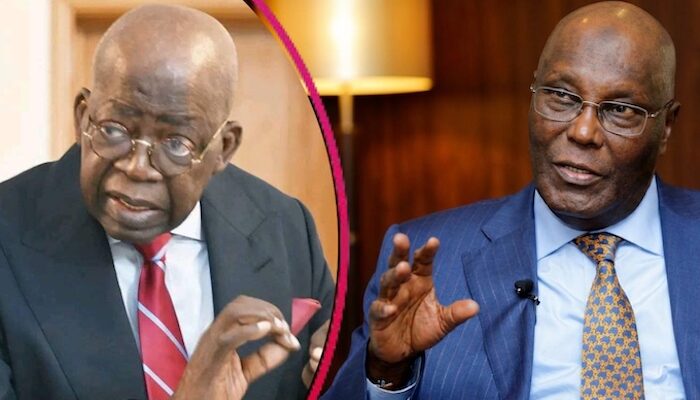
When Atiku Abubakar speaks, Nigerians must listen, not just to his words, but to the history they invoke. Behind the polished rhetoric lies a familiar script: reverse, dismantle, recycle failure.
The choice for 2027 is therefore simple:
Progress or Regression.
Reform or Reversal.
Hope or Hardship.
This transcends party lines. It is about national direction.
Nigeria cannot afford to press the reset button on suffering. We have seen that road. We have lived it. We have paid for it dearly. We must never return.
2027 is more than an election. It is a referendum on whether Nigeria moves forward or falls backward, God forbid.
– Musa Asiru Bakare, a Foundational Member of the APC, writes from Lokoja, Kogi State.