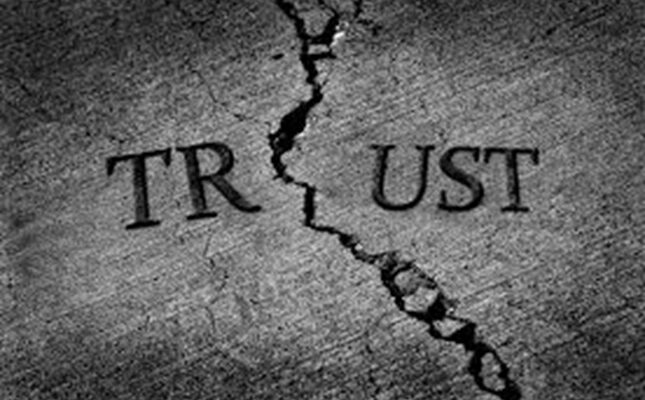

The most destabilizing consequence of betrayal is rarely the broken relationship itself. It is the collapse of the invisible architecture of trust that quietly sustains human belief. When a partner deceives, when promises dissolve, or when loyalty suddenly proves fragile, many people discover that the shock reverberates beyond emotion and into the deepest layers of faith. Studies of relational trauma frequently show that a large majority of betrayed partners report a crisis of belief in God, goodness, or moral order. This response is often misunderstood as weakness. In reality, it is one of the most human responses imaginable. Betrayal does not merely wound the heart. It shakes the very ground on which meaning stands.
To understand this experience, one does not have to look further than one of the most misunderstood figures in the New Testament. The disciple Thomas has been remembered for centuries through a single phrase that has become cultural shorthand for skepticism. Yet the label often ignores the psychological reality of his circumstances. Thomas had witnessed the violent execution of a teacher he loved and trusted. The movement that once promised redemption appeared shattered. When others claimed that Jesus had risen, Thomas struggled to accept what sounded impossible. His response was not defiance but the language of a wounded mind attempting to process grief.
“Unless I see the nail marks in his hands and put my finger where the nails were, I will not believe.”
These words are often read as stubborn doubt. Yet from the perspective of trauma they sound strikingly familiar. Individuals who experience betrayal frequently demand tangible reassurance before trusting again. Their minds search for evidence because their previous certainty has already collapsed. What appears as disbelief is often the mind’s protective instinct attempting to rebuild stability after emotional earthquake. Thomas was not rejecting faith. He was navigating the psychological aftermath of shattered expectations.

Modern betrayed partners walk through similar terrain. When trust is broken by infidelity, deception, or hidden lives, people often question more than the relationship. They question their judgment, their spiritual assumptions, and sometimes the goodness of the world itself. Faith, which once felt secure, can suddenly feel fragile. Yet this crisis may serve a constructive purpose. Just as a forest fire clears space for stronger growth, doubt can clear away illusions that once disguised themselves as certainty. Authentic faith rarely emerges untouched by struggle. It is refined through the very questions that threaten it.
The story of Thomas ultimately offers an unexpected resolution. When Jesus later appeared to him, there was no condemnation, no rebuke for asking questions born from pain. Instead the moment became a turning point of recognition.
“My Lord and my God.”
In that brief confession, doubt transformed into conviction that was deeper than before. The narrative suggests a powerful truth for anyone navigating betrayal today. Faith shaken by trauma is not necessarily faith destroyed. Sometimes it is faith in reconstruction, searching for a foundation that can survive reality. In this sense the figure history remembers as Doubting Thomas might more accurately be called Traumatized Thomas, a reminder that questioning after betrayal is not a failure of belief but often the first step toward a more resilient one.
– Inah Boniface Ocholi writes from Ayah – Igalamela/Odolu LGA, Kogi state.
08152094428 (SMS Only)