
Musa Ibrahim still remembers the sound of boots, the enemy’s, not the nation’s defenders, stomping into his village in Gwoza, Borno State. His hands trembled as he pulled his children into the bush while Boko Haram fighters torched homes behind him. His experience mirrors that of millions across the North East, a region where Boko Haram and ISWAP have killed over 35,000 people and displaced more than 2.5 million since 2009. Their grip has not loosened. Nigerian soldiers are ambushed in convoys, abducted in clusters, and humiliated on camera, including the recent shocking execution of a Major General, an act that mocked not only our armed forces but the very essence of Nigeria’s sovereignty.
A military once celebrated for stabilising Liberia, Sierra Leone, and Darfur now finds itself stretched thin, suffering desertions, and being overrun by insurgents who thrive on guerrilla tactics and state weakness.
In the North West, the collapse of state authority is even more glaring. In Katsina, Nurudeen from Batsari watches bandits walk into his community with the conceited swagger of warlords. Katsina, ironically the home state of a former president—has become a stage for criminals who confidently hold press conferences with AK-47s hanging proudly around their necks.
During so-called peace dialogues, they flaunt RPG launchers and belt-fed machine guns while dictating conditions to state officials who plead for leniency. The cycle continues: villages such as Jibia, Batsari, Safana, Danmusa, Sabuwa, Faskari, and Kankaraare attacked repeatedly and under siege. Bandits renege on peace agreements, kidnap whenever they desire, kill with impunity, and turn civilians into fearful praise-singers who cling to the logic of “if you can’t beat them, you join them.”
Kebbi State has fared no better. There, bandits essentially function as an alternate government. They kidnapped dozens of schoolgirls, ambushed the rescue mission, and severely injured several soldiers. Communities like Sarkin Gobir, Bena, Danko-Wasagu, Shanga, and Fakai have been terrorised into silence as bandits loot, burn, and abduct at will.
Zamfara, long recognised as the headquarters of banditry, continues to be held hostage by figures such as Bello Turji, whose network controls large swaths of Shinkafi, Zurmi, Maru, Anka, Tsafe, and Bungudu. Here, warlords impose taxes, set curfews, operate detention facilities, and execute threats with unchallenged authority. In these territories, it is no longer the government that rules—it is the gun. “Political power indeed grows out of the barrel of a gun” according to a former Chinese leader, Mao Zedong.
Even Kano, once proudly considered the safest state in the North West, has succumbed to escalating attacks. Rimingado, Shanono, Doguwa, and Gwarzo have suffered waves of kidnappings, with more than 50 people, including pregnant women and nursing mothers, abducted in a short span.
Virtually every North-Western state except Jigawa is now endangered. Kaduna’s situation is equally dreadful: royal fathers kidnapped, pastors murdered, imams abducted, and schoolchildren taken by the hundreds, as seen in the chilling cases of Greenfield University and Bethel Baptist School.
In the North Central region, Niger State has witnessed catastrophic levels of terror. Farmers in Shiroro, Rafi, Munya, Paikoro, and Lapai, have fled ancestral farmlands after bandits established permanent forest camps. Kidnappings have become recreational atrocities for the criminals. They demand impossible ransoms, rape women, marry off underage girls, and in some reported cases, feed newborn babies to their dogs.
Kwara is entangled in the menace as well, with church worshippers marched at gunpoint into bushes, despite having paid ransom. Plateau and Benue States endure frequent midnight raids in communities such as Gashish, Bokkos, Mangu, Agatu, Gwer-East, and Logo, leaving men butchered, homes burned, and citizens internally displaced in their own homeland.
Despite this national catastrophe, Nigeria’s two Ministers of Defence, both from the North West, both former governors—appear overwhelmed and unable to provide strategic direction. Every new attack exposes their confusion and incapacity.
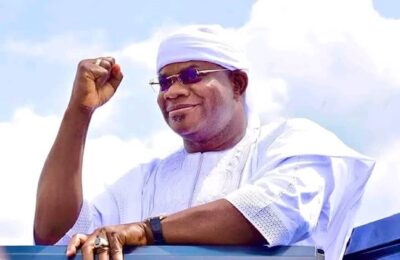
Yet, in the middle of this national insecurity crisis stands a man whose record remains uncomfortable to ignore: Yahaya Adoza Bello, former Governor of Kogi State. Before his emergence in 2016, Kogi was a hotbed of kidnappers, ritual killers, armed robbers, and ISWAP cells entrenched in the Okene axis. Policemen were murdered, a former State Attorney General was abducted, and highways became free-for-all crime corridors.
Bello’s response was unconventional and ferocious. Armed with youthfulness, stamina, and a stubborn determination typical of the Ebira people, he rejected negotiations entirely.
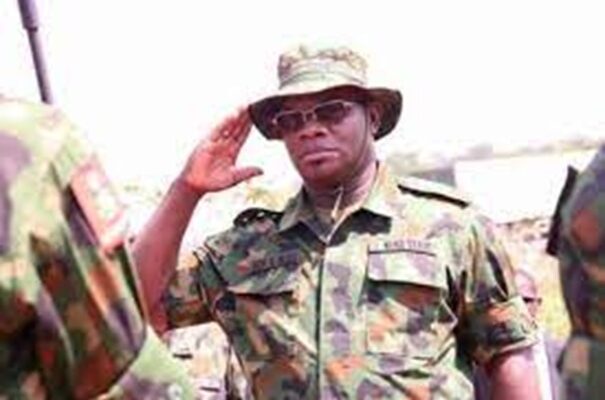
He led operations personally, boosting morale among security agencies. He dismantled criminal hideouts across Lokoja, Okene, Dekina, Adavi, Okehi, Kabba, Koton Karfe, and beyond. He bulldozed kidnappers’ mansions, destroyed their vehicles, and decimated their networks. Under Bello, Kogi, bordering over seven states plus the FCT**—became one of the safest states in Northern Nigeria.
For these achievements, he received several recognised honours, including the Business Day Newspaper Award for Best Governor in Security (2021), the Security Excellence Award by ALGON, and the Outstanding Security Management Governor Award by Security Watch Africa.
Love him or loathe him, Yahaya Bello has proven capacity in one area Nigeria desperately needs today: the restoration of security. His methods were firm, sometimes controversial, but undeniably effective. Nigeria now grapples with unprecedented fear, schools shutting down, farmers abandoning land, highways becoming death traps. The question becomes unavoidable: Is it not time for President Bola Ahmed Tinubu to deploy Yahaya Bello’s tested security acumen at the national level?
This is not political fanfare. It is an appeal from a concerned citizen living in a nation where terrorists are undeniably gaining ground. If Bello secured Kogi at its darkest hour, perhaps he can help secure Nigeria at this most vulnerable moment. One can only hope the President reads this, reflects deeply, and acts wisely.
– Ozumi Abdul is a journalist, columnist and strategic communication expert. He can be reached via abdulozumi83@gmail.com